



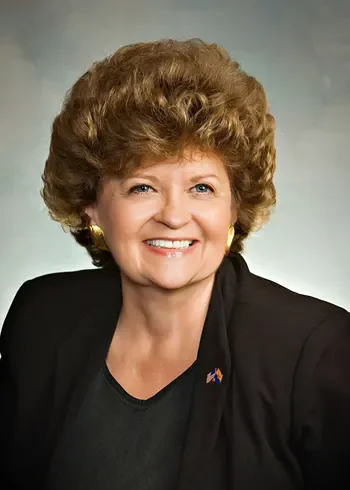
Senator Griffin earns ‘A’ from free market advocacy group
Senator Gail Griffin received top marks from a free market advocacy group here in Arizona. The Arizona Free Enterprise Club gave Senator Griffin an ‘A’ letter grade for 2013.
Senator Griffin was one of just seven Senators to receive the ‘A’ grade. All seven are Republicans. The grades are part of the group’s 2013 Legislative Scorecard, grading each member on their votes and actions during the past legislative session. More than two dozen votes were included in the scorecard, covering tax policy, campaign finance and healthcare.
“Her tireless work to protect taxpayers earned Sen. Griffin one of the highest grades for 2013,” AZFEC Executive Director Scot Mussi said. “She was a leader and a principled voice on promoting free market policies in Arizona.”
District 14 Representative David Stevens was one of twelve House members to also receive an ‘A’ grade.
The Arizona Free Enterprise Club was founded in 2005 as a free market, pro-growth advocacy group dedicated to Arizona issues and politics. AZFEC’s mission is to promote policies and candidates that encourage economic prosperity and limited government for all businesses and taxpayers.
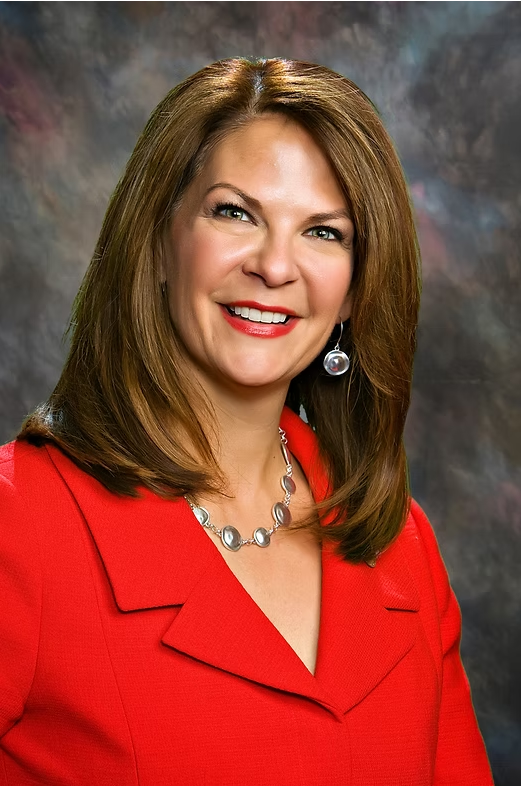
Senator Ward Named President of Western Legislators’ Group
Senator Kelli Ward has been elected class president of the Western Legislative Academy (WLA) 2013. Senator Ward was one of 38 legislators to complete the program in November at Colorado Springs, Colorado. Members of the Academy are selected on the basis of their dedication to public service; desire to improve personal legislative effectiveness and commitment to the institution of the legislature.
Each year the Council of State Governments West brings together national faculty to offer a training experience for Western state legislators in their first four years of service. As president of this year’s WLA, Senator Ward will serve on the CSG Executive Committee for the next year, representing the interests of the 500 alumni of the program, including almost 300 who are still serving in Western state legislatures.
Founded in 1933, the Council of State Governments is the nation’s only organization serving all three branches of state government. CSG is a region-based forum that fosters the exchange of insights and ideas to help state officials shape public policy.
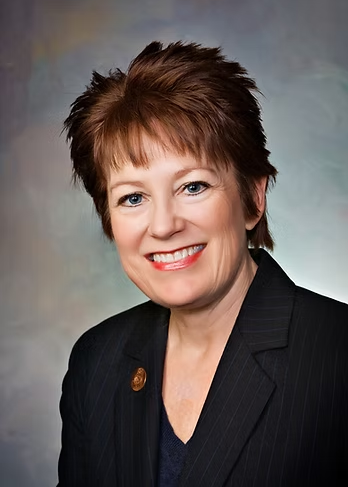
Statement from Senator Nancy Barto on release of work plan from the Department of Economic Security
“While I appreciate the urgency by which the Department has established a plan of action, I still feel that it lacks in detail and falls short on addressing the accountability that the public and legislators are demanding. Given what has transpired within DES, I am not confident that the agency can properly review each and every case in the short timeframe outlined and be assured that the issue is resolved once and for all, and that these cases have been thoroughly investigated. According to this work plan, DES assessed nearly 3,000 cases from November 15-17. How thorough could those assessments be?
The Child Protective Services Oversight Committee will want to review the work to date to deal with this caseload, but members will also want to ensure that tackling this group of cases doesn’t impact current caseload and backlog strategies. The report suggests that review of cases can place certain families in an alternative investigation category. We need to know what that entails and be assured that this does not further contribute to the backlog.
The systemic problem within CPS needs to be fixed. The public must know that this neglect of duty will never happen again and that the people responsible for this disturbing practice are held accountable. In addition, a long term reform of the agency is warranted to restore public confidence.”
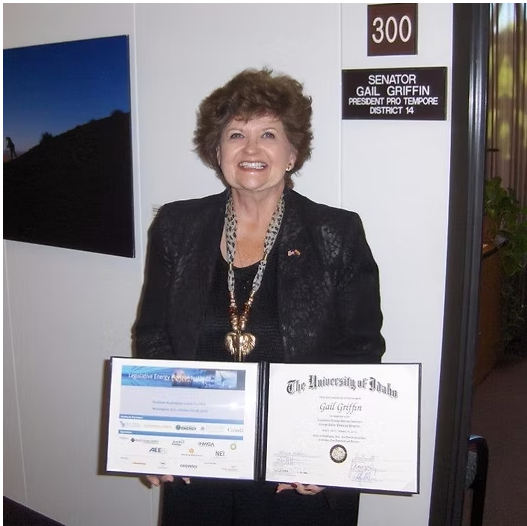
Senator Griffin earns certificate in energy policy planning
Senator Gail Griffin recently completed a 60 hour university program in energy policy planning. The program is awarded through the University of Idaho and the Pacific Northwest Economic Region’s Energy Horizon Institute, in a partnership with the National Conference of State Legislatures and support from the U.S. Department of Energy.
Forty legislators from across the country are selected for this distinguished program. The Institute educates legislators on the North American energy infrastructure and delivery system. The complex issues associated with electricity, natural gas, petroleum infrastructure; regulation governing this infrastructure; nuclear energy and alternative energy, including wind and solar are just some of the areas that legislators must understand to make responsible and informed policy decisions.
“The Legislative Energy Horizon Institute program gave me a much better understanding of how our energy infrastructure works,” said Senator Griffin, a Republican from Hereford. “I will use the information I received at the Institute to make smart decisions for my constituents and the State of Arizona on energy policy here at the legislature.”
The program was conducted in June in Richland, Washington and October in Washington, D.C.
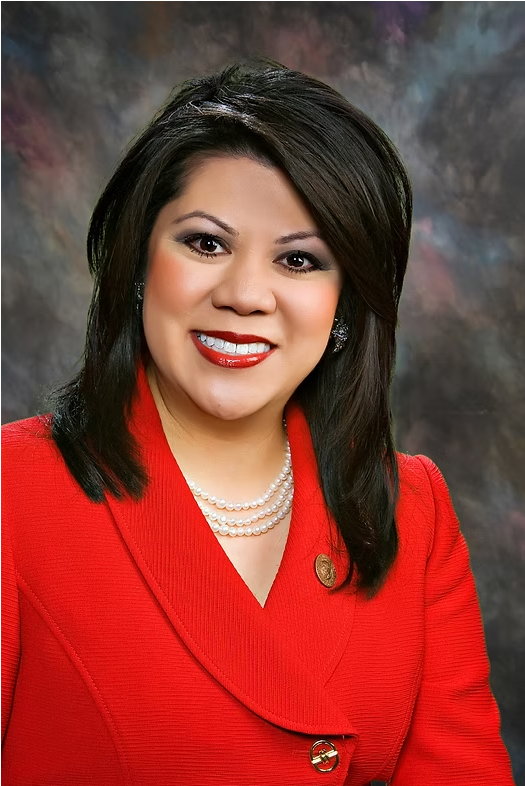
Arizona law requires schools to teach financial literacy
By Kyle O’Donnell Cronkite NewsFri Oct 25, 2013 2:49 PM
When Mitch Ruttenberg teaches economics at Trevor G. Browne High School, he ends each semester with lessons on credit cards, taxes, budgeting and other aspects of personal finance. “It’s the last thing they get from me because I know that’s what they need the most,” he said.
Because his and other economics classes in the Phoenix Union High School District provide that instruction, Ruttenberg said a new state law requiring academic standards in social studies to include personal finance won’t change much.
Although the law prescribes teaching subjects like spending, saving, investments and credit, school districts have flexibility when developing their lessons.
State Sen. Kimberly Yee, R-Phoenix, the law’s author, said many districts are well-prepared to comply.
To read the rest of the story, click here: http://www.azcentral.com/community/phoenix/free/20131022arizona-law-requires-schools-to-teach-financial-literacy.html
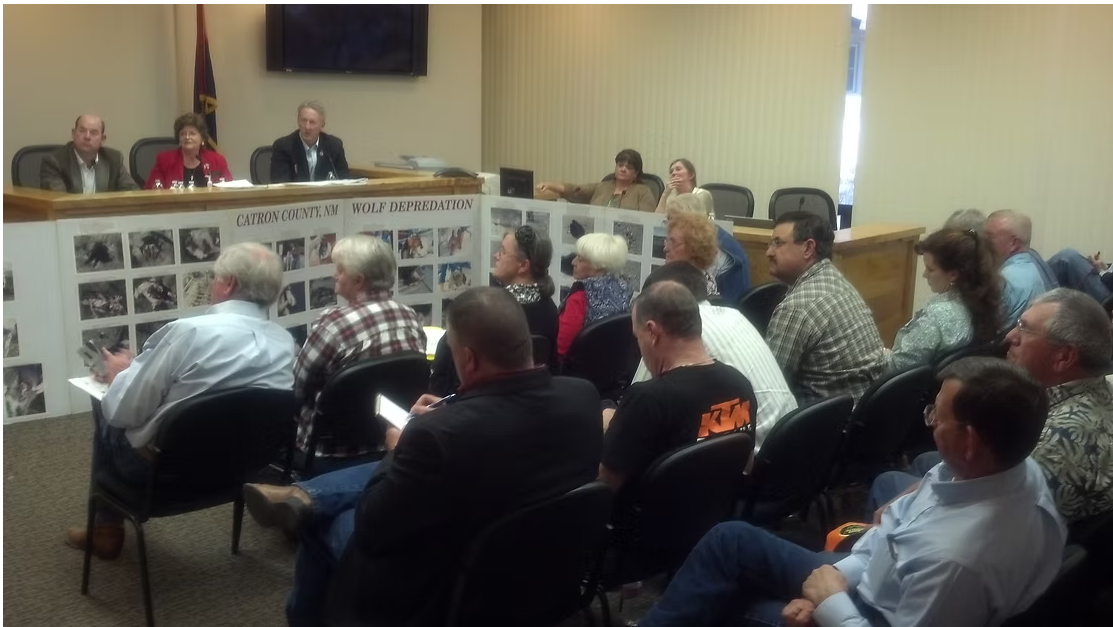
Griffin, Gowan, Stevens hold wolf hearing in Clifton
CLIFTON — It isn’t the wolf at the door that has residents of Arizona and New Mexico worried, rather it’s the federal government.
The program to reintroduce the Mexican gray wolf into portions of the desert Southwest of the United States was the focus of a legislative hearing hosted by state Representatives David Gowan, R-Sierra Vista, and David Stevens, R-Sierra Vista, and state Sen. Gail Griffin, R-Hereford, at the Greenlee County Board of Supervisors meeting room Saturday.
“The (Founding Fathers) believed in local government. This is local government and we’re going to do our darnedest to protect your livelihoods,” Gowan said. “It’s appalling to see this, and it’s our own government that did this.”
Almost 50 residents and elected officials of Greenlee, Graham and Apache counties in Arizona and Catron County, N.M., were on hand to offer input on the issue. Also taking part was Larry Voyles, director of Arizona Game and Fish Department.
To read the rest of the story, click here:

Senator Barto appears on Channel 3’s Politics Unplugged
Senator Nancy Barto, the Chair of the Senate Committee on Health and Human Services, appeared on Channel 3’s Politics Unplugged to talk about the report from the State Ombudsman’s Office on the State Medical Board:
http://www.azfamily.com/video/?video=250696fd0a8297536634b7dbada8f524c8c94850
Statement from Senator Nancy Barto on release of state report investigating the Arizona Medical Boar
“Today the Arizona Ombudsman released his office’s detailed report following complaints about the Arizona Medical Board (AMB). The 180 page report paints a disturbing picture of an Executive Director who ignored laws and created policies that jeopardized public safety. Under the guise of efficiency, the Board ignored or violated state laws and licensed potentially unqualified doctors in our state for a period of nearly a year and a half.
The report indicates a hasty licensing process took priority over the public health and welfare of Arizona citizens. The Executive Director instructed licensing staff to skip primary verification of education, hospital privileges and prior disciplinary actions, relying solely on a database system.
Because of this reckless policy, patients receiving care in Arizona may not know if the person treating them should even be licensed.
When employees came forward with their concerns for public safety, they were summarily fired. I would hope that the Board would reevaluate these dismissals in light of the findings.
While the Board agreed with all 19 of the findings and has accepted the ombudsman’s corrective action, it is troubling that the Executive Director received a mere reprimand and remains in office today. The Board has fallen short of its duties and missed the opportunity to demonstrate its proper authority to do the right thing.
Today’s report makes numerous recommendations and cited areas that could be legislatively addressed. I will be reviewing the report in its entirety and considering all of the options before the next legislative session.”
The complete report can be read here: http://www.azleg.gov/ombudsman/AMB_Report1202725.pdf
Senator Kimberly Yee’s bundle of joy has arrived!
Senator Kimberly Yee’s bundle of joy has arrived! Baby Mitchell was born at 6 lbs. 4 oz. and 20 inches and both mommy and baby are now home and doing great!
Sen. Griffin calls for change in approach to gray wolf
Arizona State Sen. Gail Griffin, R-Hereford, sent the following letter to Daniel Ashe, U.S. Fish and Wildlife Service director in Washington, D.C.
Dear Mr. Ashe,
It’s with great alarm that I write to express my vehement opposition to U.S. Fish and Wildlife Service proposals to further protect and promote the Mexican gray wolf in Arizona.
From the beginning, the U.S. Fish and Wildlife Service Mexican Wolf Recovery Program has been a fundamentally flawed effort that has relied on faulty science, inadequate communication and coordination with affected local stakeholders, and a misguided premise that puts the interests of dangerous predators ahead of the public’s interest, as well as the public’s safety. It has been and continues to be a program that is loathed by local residents, unsupported by state officials and opposed by nearly every relevant Arizona-based stakeholder group in Arizona.
For these reasons and others, the U.S. Fish and Wildlife Service, rather than expanding the program, should be considering how to end it.
Faulty data
It’s difficult to understand why the U.S. Fish and Wildlife Service is considering an expansion of the Mexican Wolf Recovery Program when it is clear that it has been formed by faulty data from the beginning.
From questions about whether these wolves are, indeed, wolves, or a dog-wolf hybrid, to issues surrounding the logic (or lack thereof) of attempting to restore a wolf population whose primary habitat is outside of the United States, the U.S. Fish and Wildlife Service has consistently ignored important questions about the data upon which the service is making its decisions.
There have been documented cases of female Mexican wolves breeding with dogs and producing a wolf-dog hybrid.
Similarly, from the program’s beginning, concerns have been expressed regarding the wolves’ ability to survive in the wild after being born and bred in captivity. Indeed, the program, since its inception, has failed to reach its goal of restoring 100 Mexican Wolves in the wild.
Why should Arizona taxpayers and, more specifically, Arizona property owners be subject to a program that has shown itself incapable of success?
One must also ask, what is the service’s determination of success? Since the initiation of the Mexican Wolf Recovery Program, the Service’s population goal has consistently been 100 animals. However, the U.S. Fish and Wildlife Service has recently, in both verbal and written statements, dismissed the original population goal but is not providing an alternate objective, measureable criteria, as required by the 10(j) rule. Nor is it providing a scientific analysis to support its dismissal of the longstanding population goal.
Finally, the Endangered Species Act requires that a team of scientists evaluate the basis for the U.S. Fish and Wildlife Service’s recent proposals before a decision is made. As standard procedure to ensure that the analysis meets standards for quality and independence, the U.S. Fish and Wildlife Service hired a contractor to select and oversee the peer review panel.
In June 2013, the U.S. Fish and Wildlife Service released a peer review plan; however, the more recently ordered review is slated for completion by Sept. 11, 2013, which is the very date on which the public comment period was scheduled to be closed. Although the U.S. Fish and Wildlife Service recently announced an extension of the comment period, the agency’s obvious intent to move forward with a decision based on a scientific study that could not be evaluated by affected stakeholders raises serious questions about the agency’s willingness to consider feedback from all stakeholders. In other words, how can stakeholders be assured that their comments will be considered when the original public comment period was slated to end on the same day that the scientific study was scheduled to be completed?
These questions illustrate why Arizona policymakers and stakeholders are mistrustful of the U.S. Fish and Wildlife Service’s Mexican Wolf Program. Its reliance on questionable data and ignorance of stakeholder feedback leave the public with little reason to trust U.S. Fish and Wildlife Service actions.
Inadequate communication and coordination with local stakeholders
Again, from the beginning, the viewpoints of local stakeholders have routinely been dismissed or ignored. This remains the case with the U.S. Fish and Wildlife Service’s most recent proposals. Section 10(j) of the Endangered Species Act mandates a process of engagement with public and cooperating agencies. This process is articulated around the two concepts of:
• Full communication to the public of all the components of the proposed actions and their alternatives; • Engagement of the public and cooperating agencies at the earliest possible stage of the process, prior to the agency plans being formalized and its course of action being committed.
By any objective measure, the U.S. Fish and Wildlife Service is currently in default of these two fundamental provisions of Endangered Species Act and NEPA for the following reasons: First, several critical components of the proposed actions, such as the Mexican Wolf Management Plan for Portions of Arizona, New Mexico, and Texas outside of the Mexican Wolf Experimental Population Area; the Mexican Wolf Revised Recovery Plan; the Scientific Peer Review for the Proposed Revision to the Nonessential Experimental Population of the Mexican Wolf; and, a Bi-National Mexican Wolf Collaboration Plan, have not been released to the public, making it impossible for the public to review the complete proposed actions prior to the end of the comments periods (see subsequent paragraphs).
Second, proposed actions have been developed by the U.S. Fish and Wildlife Service without engaging the public in Arizona and New Mexico in procedural public meetings on the Mexican wolf issues since 2007, therefore relying on 6-year-old outdated scoping information inconsistent with the U.S. Fish and Wildlife Service policy on compliance with NEPA, as described in the U.S. Fish and Wildlife Service policy manual in Chapter 1 of 550 FW 1.
Third, a letter by U.S. Representative Paul Gosar, R-Ariz., expressing concerns with the U.S. Fish and Wildlife Service approach to the issue of public engagement was met with a vague answer one month later in which U.S. Fish and Wildlife Service failed to adequately respond to Congressman Gosar’s requests. The U.S. Fish and Wildlife Service declined to engage in the number and locations of meetings that Congressman Gosar requested on behalf of his constituents, who will be affected by the U.S. Fish and Wildlife Service decisions.
Fourth, procedural actions taken by the U.S. Fish and Wildlife Service (78 FR 35664; 78 FR 35719; 78 FR 47268) directly contradict the Endangered Species Act and NEPA requirements for early public engagement to take place prior to the U.S. Fish and Wildlife Service plans being formalized and its course of action being effectively decided. The actions suggest that U.S. Fish and Wildlife Service is not sincere in its calls for public comment on its proposed actions.
In view of the above, and due to the scope, complexity and controversial nature of the proposed actions, as well as the flaws discussed in the subsequent sections, the U.S. Fish and Wildlife Service should suspend the comments process and make every effort to ensure that the public, local governments and their constituents are given multiple opportunities to participate in a meaningful way in the engagement process through a series of public scoping meetings held across the entire area potentially affected by the proposed actions, which encompasses the entire states of Arizona and New Mexico.
Anything less would signal to Arizona stakeholders that U.S. Fish and Wildlife Service is not sincerely interested in the viewpoints and feedback of the public and their elected representatives.
Misguided premise
Undergirding the entire Mexican Wolf Recovery Program is the premise that these dangerous carnivores warrant protection from the public by the federal government. This is a flawed premise that must be questioned, especially in light of the U.S. Fish and Wildlife Service proposal to dramatically expand the program, thereby impacting literally millions of Arizona residents.
Mexican Gray Wolves are documented predators who feed on large-game wildlife, including deer, elk and cattle. While it’s true that documented wolf attacks on humans are rare, the mere fact that such attacks are possible — some would say inevitable — should have ended any consideration of the program’s existence decades ago. However, the possibility of such attacks was ignored and the program was created. Also ignored were concerns of local ranchers in Greenlee County, who correctly predicted that Mexican wolves would feed on their cattle, resulting in an economic impact to families that have ranched in this region for generations.
Fifteen years later, these predictions have proven true. Contrary to U.S. Fish and Wildlife Service claims that wolves would only feed on deer, released wolves have consistently depredated a large number of privately owned cattle. Many local ranchers have not been compensated for their losses, resulting in thousands of dollars in financial losses that can be directly attributed to the federal government.
Instead of responding to these impacts to local ranchers by ending the program, the U.S. Fish and Wildlife Service is now proposing to dramatically expand the program to include the entire state of Arizona between I-40 in the north to I-10 in the south. This expansion has the potential to affect, and put at risk, virtually all Arizonans who live within that area.
Along with an expansion of the geographic area in which wolves would be released, the U.S. Fish and Wildlife Service is proposing to increase (to an unnamed goal) the number of Mexican wolves to be recovered, raising the possibility that hundreds, if not several thousands of Mexican wolves could be roaming throughout central Arizona, again, putting at risk dramatically more people than are currently threatened by the program in its current form.
In light of these wolves’ predatory instincts, their documented ability to kill large cattle and wildlife, and their potential ability to kill human beings, one must ask: Why is our federal government spending tens of millions of dollars to promote this predatory species?
The only logical answer to this question is that the supporters of the Mexican Wolf Recovery Program place a greater priority on protecting animal life than they do on protecting the public. For this reason, the U.S. Fish and Wildlife Service and the supporters of the Mexican Wolf Recovery Program should be ashamed.
Gail Griffin Senator, District 14 Arizona State Senate
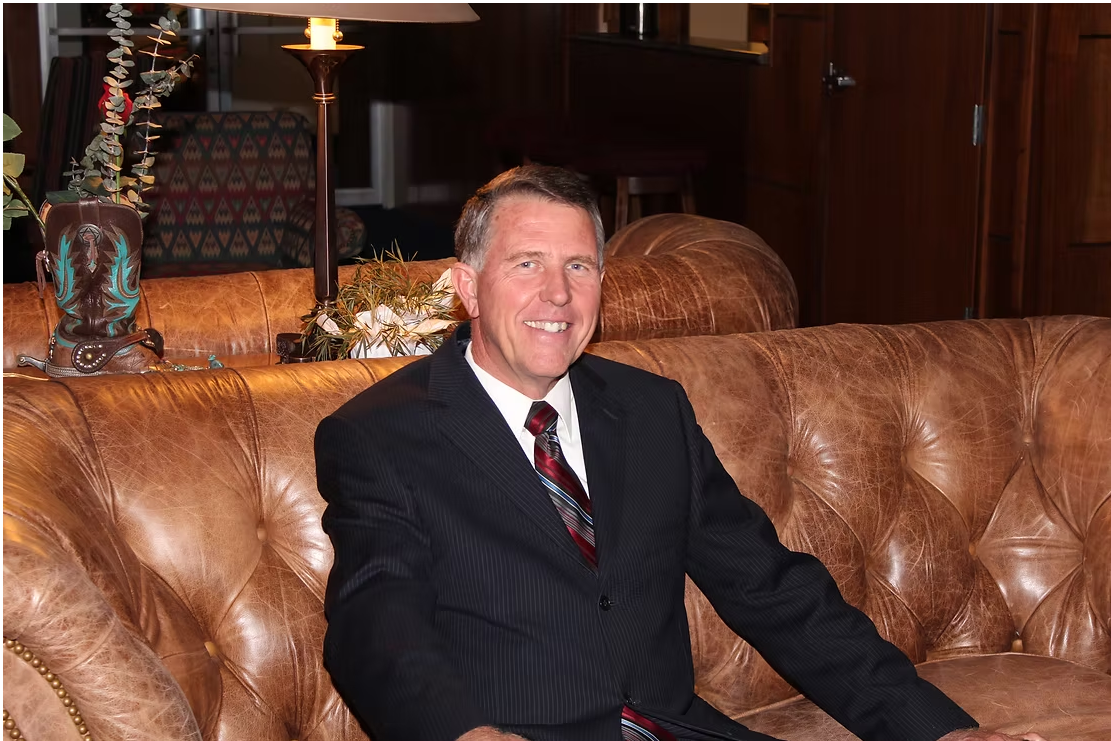
New Senator sworn in: David Farnsworth
David Farnsworth is the newest Member of the Arizona State Legislature. The Republican was sworn in this afternoon by Arizona Supreme Court Chief Justice Rebecca White Berch. Senator Farnsworth was appointed unanimously by the Maricopa County Board of Supervisors on Wednesday. He will represent Legislative District 16, serving the Mesa and Apache Junction area. Senator Farnsworth served in the Arizona House of Representatives in the mid-1990s.
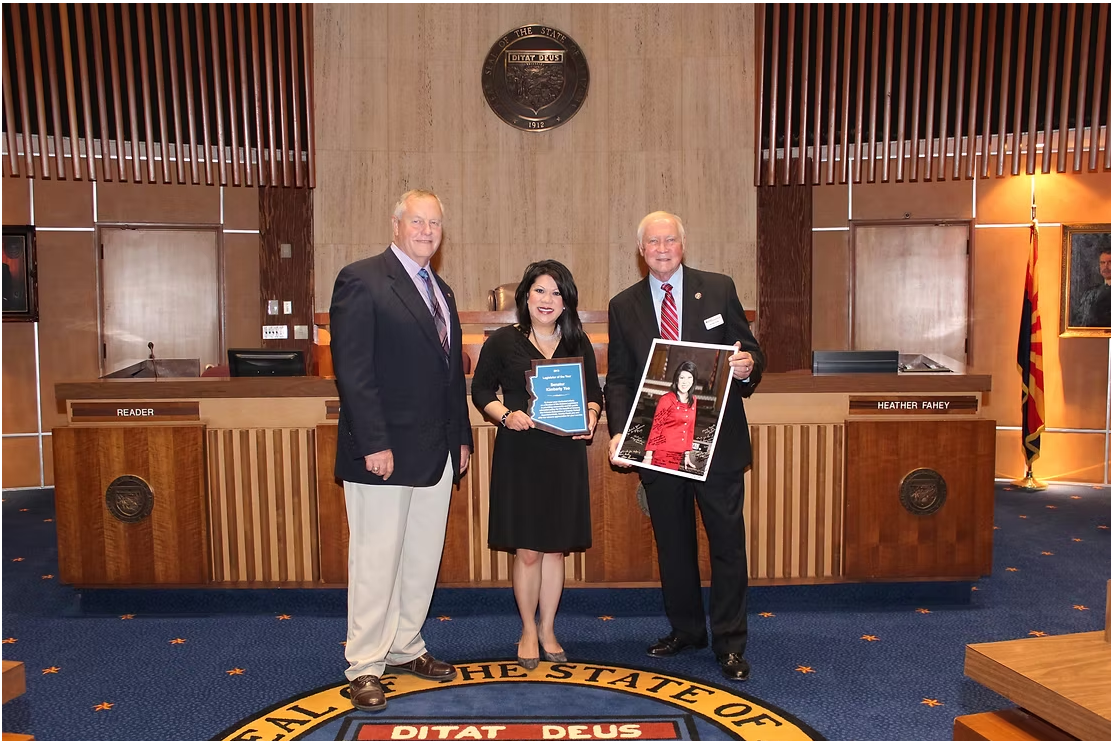
Senator Yee Named 2013 Legislator of the Year
Senator Kimberly Yee today received the 2013 Legislator of the Year award from the Arizona Association of County School Superintendents. Senator Yee was honored for her efforts of behalf of K-12 public education. Yee chairs the Senate Committee on Education.
The award states, “To honor your dedicated efforts as a Member of the Arizona Legislature in providing reasonable and fair public education policy for the benefit of Arizona, the Arizona Association of County School Superintendents, hereby thanks you and offers our sincere appreciation for your service.”
The award was presented to Senator Yee on the floor of the Arizona State Senate by two members of the Association, Maricopa County Superintendent of Schools Don Covey and Yavapai County Superintendent of Schools Tim Carter.
“I am truly honored to receive the 2013 Legislator of the Year award from the Arizona Association of County School Superintendents,” said Senator Yee. “We share a deep passion for our school children and making education a priority at the state and county levels. I look forward to continuing to work closely with the Association on important education issues facing Arizona schools.”
Although the Senate is not in session right now, Senator Yee is staying busy with her focus on education. She is co-chairing the School Safety Program Oversight Committee at the Legislature. Additional school safety funding is one of the Senator’s highest priorities.
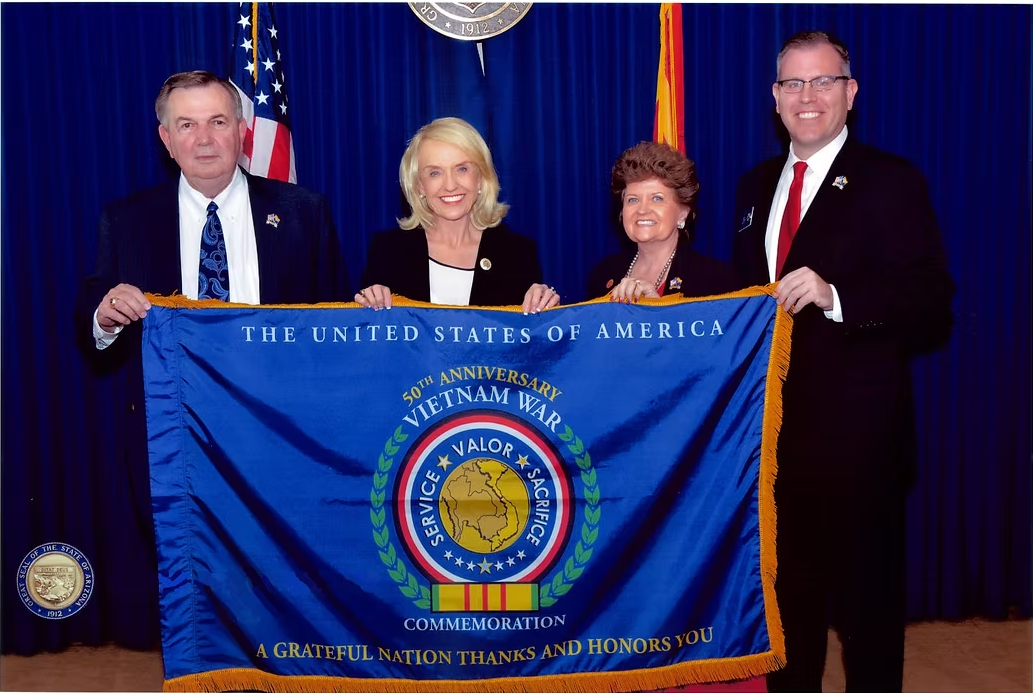
Vietnam War Commemoration Flag Arrives in Arizona
Arizona Governor Janice K. Brewer welcomed Senator Gail Griffin to the Executive Tower recently for a ceremony recognizing the 50th anniversary of the Vietnam War. A commemorative program was established in 2008 to thank and honor veterans of the Vietnam War, highlight the service of the Armed Forces during the war and pay tribute to the contributions made on the homefront by the people of the United States during the Vietnam War. Part of the program is the unveiling of the Vietnam War Commemoration Flag. Arizona is only the third state in the nation to receive the flag from the Department of Defense. On the flag are the words “Service, Valor, Sacrifice”, virtues demonstrated by our veterans during the war. At the bottom of the flag is the phrase “A Grateful Nation Thanks and Honors You”. Senator Griffin was the sponosr of SCR 1014, a resolution establishing Arizona as a commemorative partner in the 50th anniversary events. Senator Griffin read the resolution on the floor of the State Senate this session.
Changes in elections law will help, not hurt, voters
By Michele Reagan My Turn, Fri Jul 12, 2013 6:29 PM
Much has been said lately about House Bill 2305 and the changes it makes to our elections laws. I’ve recently read some wild accusations that this bill is an attempt to disenfranchise certain voters. Really? Nothing could be farther from the truth.
This bill was written with one goal in mind: being accountable to the voter, by protecting the integrity of our elections system and ensuring that votes get counted in a fair and timely manner.
It’s time to stop all the nonsense hyper-accusations about HB 2305 for a minute and look at the real facts.
Fact: Prior to this bill’s passage, Arizona was one of only a handful of states that did not have a specific law on who can handle or return a ballot. In fact, when speaking to legislators from other states, whether red, blue, or purple, I found the practice of mass collection of ballots is unheard of.
One man turning in 4,000 ballots? That doesn’t really happen, does it? Surprisingly, yes. This fact was stated in testimony before my Senate Elections committee.
Regarding the ability of county elections officials to remove someone from the permanent early-voting list — every other state that has early balloting has a way for the county recorders to keep their lists clean and up to date.
Fact: Voters move and some voters have passed away. Many people are on the early-voting list, but choose to vote at the polls instead. How in the world can the voter lists be kept clean without the ability to update them as necessary?
I would agree that the word “permanent”probably wasn’t the best choice for a name when our elections officials set up this system, but the early-voting portion of this bill is administrative cleanup and nothing else.
Critics of HB 2305 incorrectly stated that this cleanup is retroactive to 2010. That is false. Any changes are only applicable to 2012 and 2014, meaning the first time any changes can be made is in 2016. The goal is to get our lists up to date in time for the next presidential election. Why? Because after our last general election, voters demanded change. They waited in long lines, and it took 15 days for the results to be counted.
And the hollow argument that this bill is aimed at a particular segment of our voting population? Fact: According to our county elections officials, the district expected to have the most early-voting list changes is District 23 (Scottsdale and Fountain Hills), which has one of the lowest Latino voter populations in the state.
So it seemed quite odd to me when I read that this bill is an attempt to offend minority voters, when in fact this bill is nothing more than the solution to complaints made by these very same minority groups who picketed and protested after ballots took g so long to count in the last election.
Discussions underway for proposed ‘Red Rock’ railroad classification yard
Representatives from Union Pacific Railroad, the State Land Department, and Pinal County have announced that a one-year study period is currently under way to explore the possible sale of State Trust land to Union Pacific for the construction of a major rail yard.
Initially proposed by Union Pacific in 2006, the project would involve the purchase of 950 acres of state trust land by Union Pacific near Red Rock in central Pinal County. The land would be developed into a Union Pacific classification yard where rail cars would be separated and classified and trains assembled, improving Union Pacific’s ability to create value for its many customers in Arizona. Advocates of the project believe the new yard will create jobs and generate new tax revenue for local governments and schools.
A focused dialogue among the interested parties has culminated in an agreement to a study period of roughly one year in which a series of unanswered questions regarding Union Pacific’s ability to purchase the property will be addressed. The stakeholders will carefully study how to protect the provision of access to the I-10 freeway and neighboring parcels of state land, address drainage and flood control and determine land value. The negotiations are expected to last at least one year, with a possible decision on whether to auction the land as early as 2014.
Zoe Gisela Richmond, Director of Public Affairs for Union Pacific, acknowledged that discussions are under way. “Union Pacific is committed to working with the State Land Department and Pinal County to purchase the land for the proposed ‘Red Rock’ classification yard. Union Pacific believes that the project will benefit not only the State Land Trust, but also the residents of central Pinal County who are eager for new jobs in their community.”
Vanessa Hickman, Arizona State Land Commissioner, emphasized her Department’s role in the negotiations process. “I am pleased that our ongoing dialogue with Union Pacific has transitioned into focused, small-group meetings dedicated to finding solutions that will enable this project to move forward. As the parties are aware, the State Land Department has a Constitutional obligation to ensure that all transactions are in the best interest of the State Land Trust, which provides funding to Arizona’s public schools, universities, and other institutions. The scope of the process we have collectively defined is critical to establishing the framework which could make the sale of this property a win for the Trust.”
Steve Miller, Chairman of the Pinal County Board of Supervisors, expressed his gratitude to the parties involved for their willingness to work together on the details of a potential transaction. “Pinal County strongly supports the proposed Red Rock project and is grateful for the opportunity to work with Union Pacific and State Land on the issues that need to be resolved for the project to move forward.”
Miller continued, “Pinal County is determined to do everything possible to ensure the project’s success, and to ensure that the concerns of nearby land owners and residents are fully addressed.”
“The railroad classification yard will allow for greater capacity and efficiency in serving the Arizona marketplace, benefitting the statewide economy,” said Sandra Watson, President and CEO of the Arizona Commerce Authority. “The Arizona Commerce Authority applauds all of the parties in these negotiations for their willingness to meet and determine an outcome with such a significant statewide impact.”
State Senator Bob Worsley (R-Mesa), who initiated the discussions between the parties at the encouragement of longtime project supporter, State Senator Al Melvin (R-Saddlebrooke), offered his thanks to each stakeholder for their willingness to work together. “Let’s be clear—this is going to be a comprehensive process, but the meetings we’ve held so far have been positive and productive. I look forward to continuing the dialogue we’ve started so that we can generate more money for Arizona schools, more jobs for Arizona residents, and more growth for Arizona’s economy.”
Senator Ward Appointed to CSG-WEST Health Committee
Senator Kelli Ward has been appointed to the Council of State Governments-WEST Health Committee. Founded in 1947, CSG-WEST is a nonpartisan organization created to serve western legislatures through regional cooperation and advocacy. It serves legislatures in Arizona and twelve other states.
In addition to being a state Senator, Sen. Ward is also a practicing physician in Lake Havasu, and will bring her unique medical background to the committee. Senator Ward moved to Lake Havasu fourteen years ago, when she opened a medical practice with her mother. She helps educate future physicians at Kingman Regional Medical Center where she serves as the Director of Medical Education.
Senator Ward recently returned from the CSG Medicaid Health Policy Academy in Washington, D.C. Her first meeting on the Health Committee will be on July 31, at the CSG-WEST annual meeting in Las Vegas. This year the Health Committee will focus on health insurance exchanges and the marketplace and innovative bills. The Committee will also have a session addressing the cost of diabetes in western states.
“I am honored to represent Arizona on the CSG Health Committee and I look forward to adding the perspective of a practicing physician to the healthcare debate. As an osteopathic family physician, I strive to treat the whole patient, not just the symptoms, and I believe we need to apply this philosophy to the challenges facing our healthcare system,” says Senator Ward.
Highlights of the 51st Legislature First Regular Session
Highlights of the 51st Legislature First Regular Session
Appropriations
The Republican Majority has made tremendous strides in the past three years in balancing the books of the State of Arizona. We are already seeing signs that Arizona is one of a small number of states poised to come out of the lingering recession with solid growth and strong balance sheets. Budgeting is now required to be done not just for the current fiscal year but three years out. By FY 2016, we can now predict that Arizona will have a structurally balanced budget. Our annual revenues will exceed annual expenditures. This is impressive given the doomsayers who predicted massive cuts or increased taxes because of the end of the temporary one cent sales tax extension. In fact, the ending balance in FY 2014 is estimated at $304 million. The pessimistic predictions of an insurmountable fiscal cliff in FY 2014 have failed to materialize.
Leadership in the legislature has managed to maintain spending levels, but increase funding in just a few key areas. Total spending increased in FY 2014 by $289.9 million, or 3.35%. Noted below is additional spending above the JLBC baseline:
• K–12 Education – $99.1 million • DES – $57.4 million • Universities – $30.8 million • School Facilities – $13.8 million • Counties – $7.2 million
In addition, we have held on to the $450 million Rainy Day Fund, put in place last session to prepare us for emergencies.
Certain worthy budget items that were included in the Senate engrossed budget were stripped from the final budget passed by the Legislature. The Senate budget contained one-time funding of $850,000 for Graham County and $400,000 for Navajo County. These two counties continue to struggle financially, and this additional money was designed to provide short term relief to assist in the loss of county revenues.
The Senate engrossed budget also would have established a 3-year pilot program dedicated to online English language learner instruction. This program would have been funded for up to $3 million per year from the Structured English Immersion Fund. It would have provided a more efficient way to directly help students who are learning English as a second language. This component was also stripped from the final Legislative budget.
For the rest of the document, click here: 2013 Accomplishments of the Majority Caucus https://azsenaterepublicans.files.wordpress.com/2013/07/2013-accomplishments-of-the-majority-caucus.pdf
Senator Ward receives Chamber Award
Senator Kelli Ward is this year’s recipient of the Whelan Leadership Award, presented by the Lake Havasu Chamber of Commerce. The award is given each year to a graduate of the Havasu Leadership Development program.
Senator Ward graduated in the 2007 class, after a nine month training program. Ward worked with her class to build Friendship Park at the Western Arizona Humane Society.
Senator Ward moved to Lake Havasu fourteen years ago, when she opened a medical practice with her mother. She is an active member of the Lake Havasu Rotary Club. She helps educate future physicians at Kingman Regional Medical Center where she serves as the Director of Medical Education.
Senator Ward received the Whelan Leadership award at the Chamber’s Annual Meeting June 7 in Lake Havasu.
Statement from Senate President Andy Biggs and House Speaker Andy Tobin on the Governor’s call for a
“This evening, Governor Brewer summoned legislators to convene a special session to address the FY14 budget and Medicaid expansion. The special session was called without any consultation with Senate or House leadership, and was designed to commence at the precise moment it was conveyed. We are disappointed and stunned that the Governor and her staff would resort to such an unnecessary, impulsive and unprecedented tactic.
Since the beginning of the session, Senate and House leadership have made the budgetary process a top priority. Additionally, the debate regarding the full implementation of Obamacare in Arizona was already fully under way. In fact, these two specific items have not only consistently been a top legislative focus, but the other essential bills of the legislature have also been moving through our respective chambers. Instead of allowing the process to proceed in an orderly manner, the Governor made the impetuous decision to intercede and collude with the democrat minority in order to force an expedited vote on her sole legislative priority of Obamacare.
We are frustrated and bewildered by her overt hostility and disregard for the budgetary process which was already well under way. The blatant disrespect and reckless practices exhibited by this Executive are less than what was expected of her and more than should be tolerated.”
Senator McComish named to Workforce Arizona Council
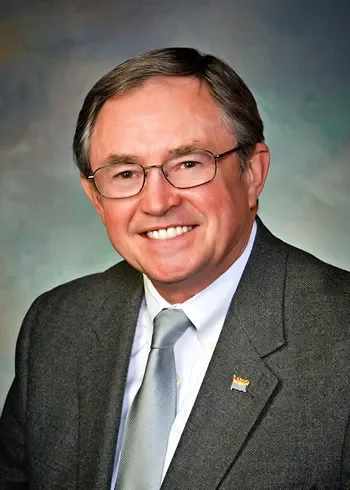
Senate President Andy Biggs has named Senator John McComish to the Workforce Arizona Council. The Council was formed in January by Executive Order from Governor Janice K. Brewer.
The Workforce Arizona Council provides leadership and direction and establishes policy for delivery of a quality workforce system. The centerpiece of the effort is a centralized, “one-step” workforce system in Arizona. The Workforce Arizona Council oversees more than 50 one-stop service centers, serving the employment and training needs of both job seekers and businesses throughout the state. The Council also reviews funding and resources of workforce development programs, increases public awareness of state workforce programs and improves communications between state agencies that work together to foster workforce development.
Members of the Council include people from the private sector, city and state government, large and small businesses, youth groups and higher education. The Senate President has two appointments. He named Senator Michele Reagan of Scottsdale along with Senator McComish