


Arizona Firefighters Salute LD14 Legislators
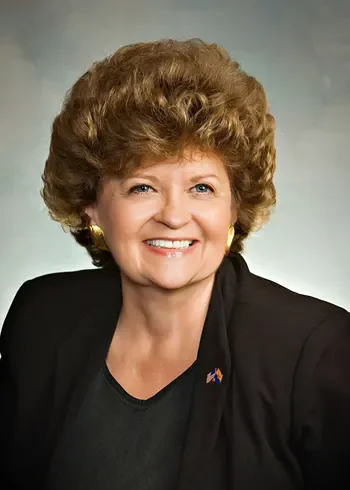
Firefighters across the state are paying tribute to Arizona’s LD14 legislators, for their efforts to create a special license plate in support of firefighters.
HB 2524 was sponsored by Rep. David Stevens and strongly supported by Sen. Gail Griffin and Speaker of the House David Gowan. It was signed into law by Governor Ducey on March 23. It establishes a Firefighter Special License Plate to help the Arizona Firefighters Fund.
The fund was established at the Arizona Community Foundation in 2012. The Arizona State Fire School conducts classes for nearly 1,000 firefighters. Supporters have been attempting to build a permanent endowment covering the Fire School’s tuition costs for 500 rural firefighters each year. Funds from sales of the license plate will help those efforts.
“The Arizona State Fire Training Committee and the rural firefighters in Arizona are very appreciative in all the hard work by our local legislators. Senator Griffin, Representative Stevens and Speaker Gowan have supported the fire service by passing legislation for the new Fire Training License Plate. The revenue generated by the plate will go to providing critical life safety training to rural Arizona firefighters by supporting the Arizona Firefighters Fund,” says 2014 Arizona Fire Chief of the Year Randy Redmond, recently retired from the Sierra Vista Fire Department.
For more information on the Arizona Firefighters Fund, go to www.helparizonafirefighters.com
Statement from President Andy Biggs on release of Legislative Democrats’ education funding plan
“The much-hyped education funding plan from Democrats in the Legislature is out, and to say I am underwhelmed would be an understatement. I don’t think it’s fair to other plans to even call this a ‘plan’.
The bulk of the money in their concept is based on the hope that revenues will continue to grow at a level of $250 million or more for the next seven years. Nothing new or creative here; just project that we are going to grow at a brisk pace and, voila, there’s money for K-12 funding. In this proposal, there is no mention of settling the Cave Creek lawsuit, and in fact the education funding inflator is not even discussed.
Something else that is a bit ironic. The increased revenues that they are sweeping to increase K-12 funding only exist because of the conservative budgets enacted by Republicans in the past several years. Budgets they angrily opposed at the time.
In their proposal, the Democrats are also not providing any increased funding to other state needs; it all goes to K-12. What about higher education, public safety and transportation? Do you agree with Legislative Democrats that those areas deserve no increase in funding?
In their zealous desire to oppose any Republican idea, Democrats have rolled out a simple plan that’s not worth the napkin it was written on.”
Sen. Yee Announces Plan for Reforms, Accountability at State Boards and Commissions
Follows her investigation into per diem abuse at Industrial Commission.
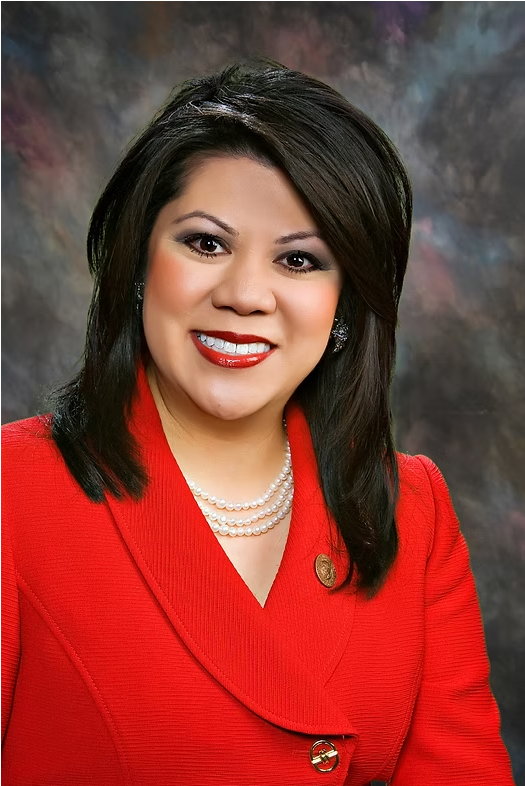
Senator Kimberly Yee today announced her intentions to introduce legislation in the upcoming session to address much needed reforms and heightened accountability on Arizona boards and commissions.
The announcement follows the Senator’s discovery of abuse of per diem at the Industrial Commission of Arizona (ICA). On August 18, Senator Yee met with representatives of the ICA, asking questions in advance of a Sunset Review Hearing. She learned commissioners receive $50 per day in unlimited per diem payments. Senator Yee requested more detail of those payments.
On August 25, Senator Yee chaired that Sunset Review and reported her findings. In FY 2015, one commissioner requested 292 days of per diem at a cost of $14,600. Another requested 253 days of per diem at a cost of $12,650. Following the hearing, Senator Yee received work logs of the two commissioners, and found some of those $50 requests were for responding to a single email or reading a news article.
“Members of Arizona boards and commissions should be honored to serve the public and should be accountable to the people of this State. Serving on these important boards and commissions is a public service and should not be an opportunity for these members to receive a second salary or supplemental income,” said Senator Yee.
“Taxpayers deserve to know how their money is being spent on these boards and commissions. We cannot continue to foot the bill on a system where there is an abuse of over-the-top payments made to board members and commissioners being paid thousands of dollars for simply reading a news article or responding to a work-related email.”
Senator Yee’s legislation will focus on how boards and commissions are spending administrative funds to reimburse appointees. It will also address much needed reforms to the ICA to get back to its original mission of protecting workers’ occupational health and safety.
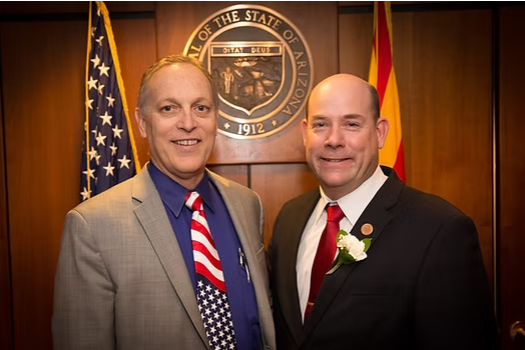
Senate President & House Speaker Announce Education Funding Plan
As part of an ongoing commitment to funding K-12 education, Senate President Andy Biggs and Speaker of the House David Gowan today announced a proposal to place additional money into classrooms across the state. The proposal uses four revenue streams that would infuse as much as $5 billion in new money over the next 10 years.
“K-12 funding has been one of our highest priorities in the budget each year, and as we climb out of the recession and see growing revenues, we see the opportunity to provide additional money for our classrooms, while still keeping state finances balanced,” said Senate President Andy Biggs.
The funding plan would be done without raising taxes on Arizonans, another priority for President Biggs and Speaker Gowan.
“In 2012 voters rejected a plan to raise taxes to fund education by an overwhelming margin. There clearly is no interest to increase taxes for this purpose. This proposal keeps faith with the voters by responsibly investing billions of dollars into Arizona’s classrooms without a tax hike,” said House Speaker David Gowan.
The new funding plan has four components: a commitment to continue a supplement to annual basic state aid which began in the last budget process, a new increase to annual basic state aid, a partial shift of money from the state’s First Things First program, and a plan to use increased earnings from the state trust land. In the first year alone, these four sources would bring $500 million in new money to the classroom and as much as $5 billion over the next decade.
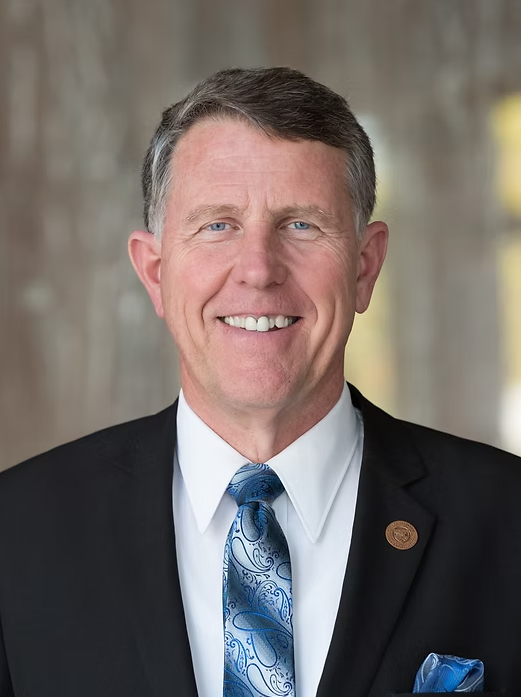
Senator Farnsworth to host town hall discussions
Senator David Farnsworth will be hosting several town halls in his district, beginning with a discussion with residents on August 18 at Superstition Manor in east Mesa. The town hall begins at 7 p.m. at 10744 E. Brown Road.
Senator Farnsworth says these town halls will be a great opportunity to meet with ‘real people’. “Even though I have an open door policy at my office here at the Capitol, I know there are many people who are just not able to make the trip. With these gatherings, I am coming to you, to hear your concerns.”
Senator Farnsworth says there is no issue off-limits, big or small. “I want people to get involved in the political process, so we can help improve their lives. They’re discouraged, and feel the government is out of touch. I am going to listen to them and make sure they know they can make a difference,” said Senator Farnsworth, a Republican from Mesa.
In addition to the August 18 town hall, Superstition Manor will also host Farnsworth town halls on September 15 and October 20. Sen. Farnsworth will hold two town halls in Apache Junction, at Tres Banderas Restaurant, 1422 E Broadway Ave. at 7 pm August 27 and at the Hitching Post Bar and Grill, 2341 N Apache Trail on September 5 at 7 pm.
Statement from Senate Leadership on today’s U.S. Supreme Court ruling on health care
“We are disappointed that the Chief Justice and five other justices continue to uphold socialized medicine, ruling it constitutionally acceptable.
There is clear meaning in the law that subsidies are available only to people buying insurance on ‘an exchange established by the state’. Arizona is one of several states that did not set up an exchange, and relied on the federal government exchange.
In his majority opinion, Chief Justice Roberts acknowledged the clear meaning of that language, but then in essence said we should ignore what the law states, because of the ‘context and structure of the act’.
Affordable health care needs to be about the patient, and the federal government has shown us time and again that by inserting itself into health care delivery it harms the patient.
As government’s role in health care expands, costs continue to rise and health care options are reduced. With today’s ruling, it now becomes clearer that the era of socialized medicine can only be ended with a legislative solution, repealing this fatally flawed law.”
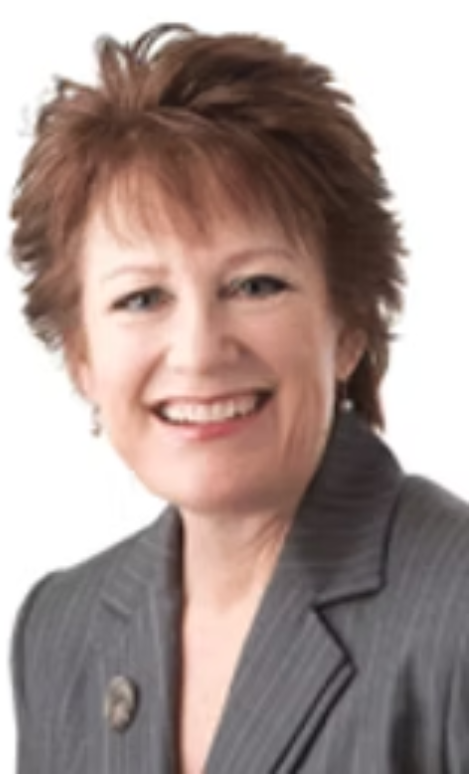
Sen. Barto named Senator of the Year by Small Business Group
Senator Nancy Barto received the Senator of the Year Award today from the National Federation of Independent Business/Arizona. NFIB honors two legislators each year for their efforts in assisting small business in our state.
The Arizona state director for NFIB says Senator Barto has been one of the staunchest champions of small business at the Arizona Legislature for almost a decade. “During the 2015 legislative session, Senator Barto took the lead to ensure that small businesses providing home support services for many of our most vulnerable Arizonans would continue free of unnecessary and destructive state government interference,” said Farrell Quinlan. “It is because of Nancy Barto’s leadership and faith in Arizona’s small business owners that countless thousands will continue to receive the care they need, especially as their services become more and more crucial with the Baby Boom Generation reaching retirement age.”
Senator Barto also received a trophy recognizing her leadership as a Guardian of Small Business. Rep. Warren Petersen was named 2015 Representative of the Year.
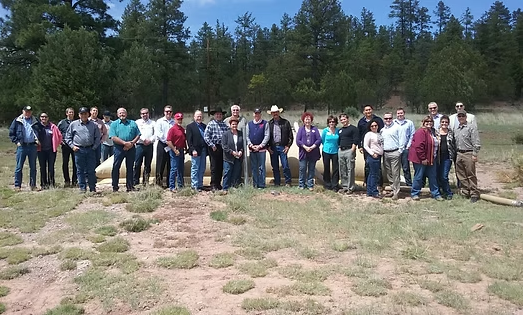
Senator Allen, other lawmakers tour much of Eastern Arizona
Senator Sylvia Allen recently hosted a dozen fellow legislators, county supervisors and local leaders for the Eastern Arizona Counties Organization 2015 Field Trip. The trip enabled officials from across the state to see firsthand the state of our forests and the industries that rely on them.
The Eastern Arizona Counties Organization (ECO) is collaboration between Apache, Gila, Graham, Greenlee and Navajo Counties. ECO takes a leading role in natural resources and public lands management issues in Eastern Arizona.
The three day event in mid-May included a flyover of the C.C. Cragin Watershed near Payson, a field visit to a forest restoration project by Canyon Creek Logging and a tour of the Novo Power Biomass Power Plant near Snowflake. The elected officials also visited the Forest Energy wood pellet plant in Show Low, the Reidhead Brothers Lumber Mill in Nutrioso and Arizona Log and Timberworks in Eagar.
“All of these industries and projects are critical to the health of the forest and to improving our watersheds and wildlife. The bonus is the hundreds of jobs created and the revenue to local governments,” said Senator Allen.
Just 25 years ago, Arizona had a thriving timber industry, contributing $500 million and 11,000 direct jobs per year to the state’s economy. Fifteen sawmills provided jobs and supported rural economies. Then, excessive regulations and lawsuits brought all of that to a standstill.
“What I saw last week was the re-birth of this industry,” said Senator Allen. “I also learned about the challenges of keeping the wood supply coming and the federal dollars needed for the studies that have to take place first before the work can be done. Some of my neighbors and friends are putting all they have on the line to bridge the gap between timber sales and thinning projects.”
Among the issues discussed at the field trip was the need to make more acreage available for restoration projects, an increase in the maximum truck weight limit in Arizona and the importance of defensible space, as we approach fire season.
Highlights of the 52nd Legislature
HIGHLIGHTS OF THE 52ND LEGISLATURE
Budget
After years of papering over imbalanced state budgets, the new Governor and Republican Leadership in the Legislature committed to achieving a structurally balanced budget. A budget that spends only those monies that are available provides the state with fiscal stability, improves credit ratings, and establishes a better climate for businesses looking to expand.
As our state economy slowly continues to improve after the recession, there is a temptation to immediately expand state services. By holding to a conservative approach as revenues increase, Arizona will be in a stronger position to prioritize and allocate available resources to help the most crucial areas of our state.
Structurally Balanced Budget by FY 2018:
$717 million projected shortfall in FY 2015
$257 million projected shortfall in FY 2016
$125 million projected shortfall in FY 2017
$33 million projected positive structural balance in FY 2018.
Even as difficult decisions were made to produce a structurally balanced budget, leaders made sure K-12 education was not harmed. In fact, K-12 spending has a net increase of $105 million General Fund spending from FY 2015 to FY 2016. That growth is significant given that Arizona was facing a $1 billion deficit going into budget discussions.
K-12 – Overall Total K-12 Spending Increased by $105 million:
$91 million to fully fund formula increases
$85 million increase in K-12 inflation funding
$74 million for additional K-12 inflation funding
$0.5 million for Teach For America
$1.0 million for JTED Soft Capital
Arizona’s pension system demands a solution
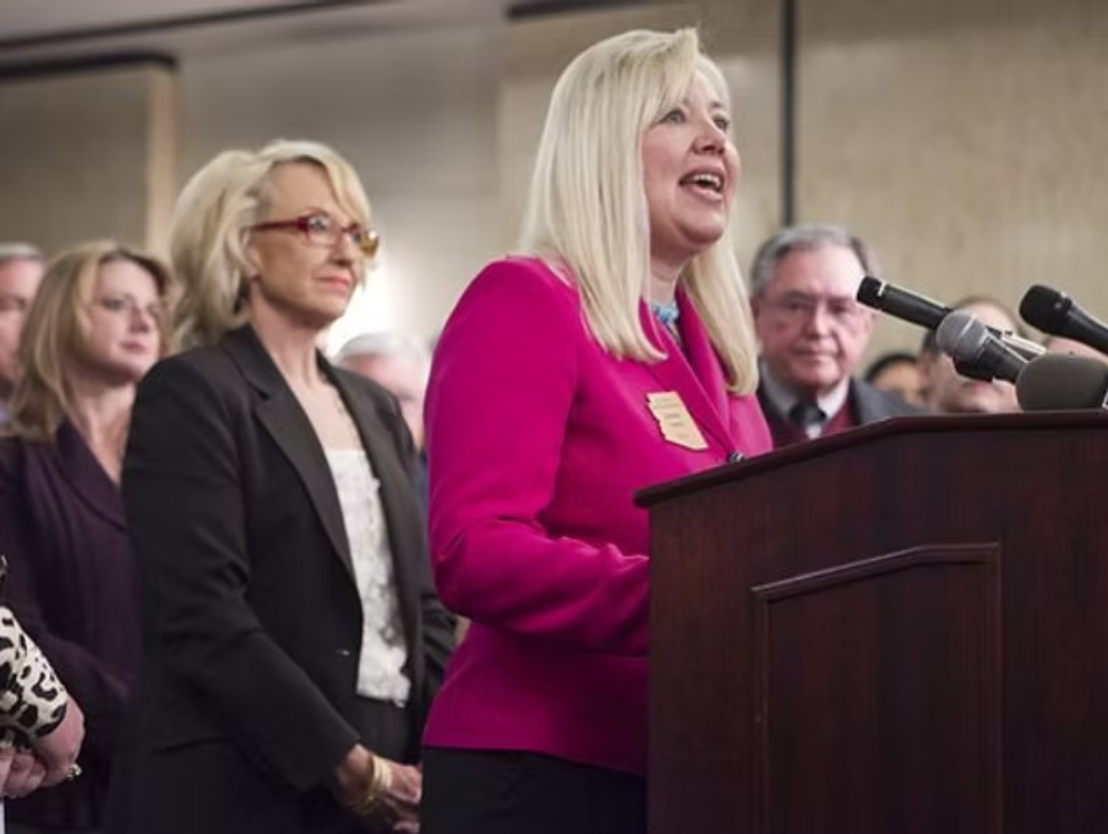
Into the Mind: Debbie Lesko discusses how to fix pensions without breaking the taxpayer bank.
You’ve pulled together a committee to study the state’s pension systems. Why?
I am leading a pension study group specifically focused on the Arizona Public Safety Retirement System. The goal is to keep the public pension system sustainable without breaking the backs of the taxpayers. This is a critical time. Pension costs are skyrocketing. We need to figure out a way to protect retirement accounts for our valuable employees in a way that doesn’t eat up entire budgets.
Who is in the group?
Our study group is made up of a diverse group of people and interests. The group includes firefighter and law enforcement associations from across the state, the Free Enterprise Club, staff from the public safety retirement system, the League of Cities and Towns, the governor’s office, Republican and Democratic legislators from both the House and the Senate, the Reason Foundation and the Goldwater Institute.
For the rest of the story, click here:
President Biggs appears on Arizona Horizon
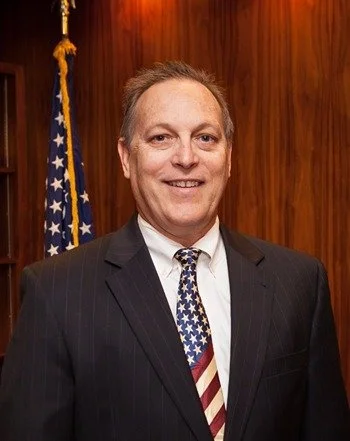
Senate President Andy Biggs appeared on the Arizona Horizon program on April 8. He talked with host Ted Simons about the just-completed legislative session.
Gov. Ducey signs into law Sen. Lesko’s bill helping AZ contractors
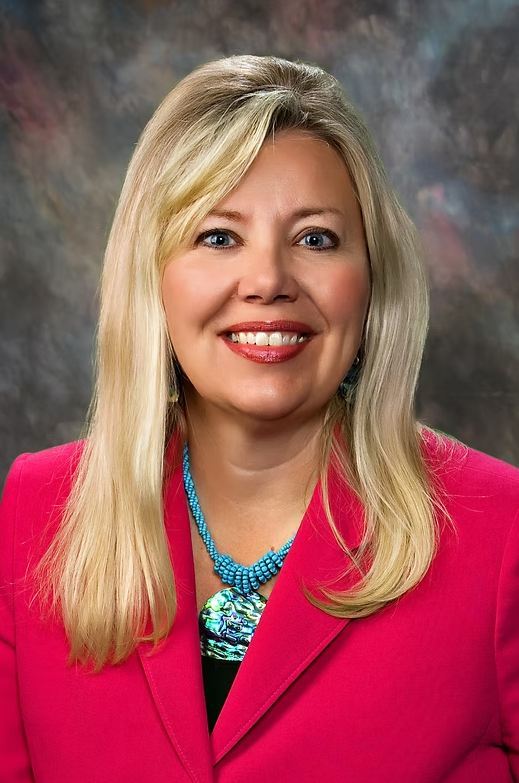
Governor Doug Ducey has signed into law SB 1446, a bill sponsored by Senator Debbie Lesko that will have a major positive impact on the way thousands of Arizona contractors do business.
The bill centers on how the work contractors do and the materials they use are taxed. Because of SB 1446, contractors who do maintenance, repair, replacement and qualified alteration jobs will not be required to have a Transaction Privilege Tax (TPT) license. The contractors will simply pay tax upfront as they buy their materials. The legislation also clarifies the process for contractors who keep their TPT license. This will greatly streamline the process for contractors, and the state will have much better control over revenues.
“I am so pleased to see this important bill become law in Arizona. This has been a continuing work in progress to reform TPT going back to 2012, so this has been three years in the making. We listened to all the parties involved and made changes when necessary. This finished product is a good example of legislation working for Arizonans,” said Senator Lesko.
With this law, Arizona now has a tax system that closely mirrors how contractors operate, with reduced risk for contractors and a simplified audit and tax payment process. Contractors will also now be able to interpret projects and bids the same way. Because of the learning curve to this new procedure, the law says if a contractor acts in good faith to properly report taxes, but was in error, there will be no interest, penalties or additional tax due.
“It is my intent to continue to work with the contractor community and the cities to move to a system where all contractors pay tax on only materials, just like what is already done in 46 other states,” said Sen. Lesko.
Ariz. law boosts school loan repayment for doctors in ‘underserved’ areas
Posted: Wednesday, February 25, 2015 7:53 am | Updated: 8:45 am, Wed Feb 25, 2015.
By Howard Fischer, Capitol Media Services
PHOENIX — Gov. Doug Ducey signed legislation Tuesday designed to draw more doctors into the rural and “medically underserved” areas of Arizona.
SB 1194 sharply boosts the amount of money the state will repay of a medical student’s loan if they agree to go where the state says they are needed. The measure will take effect this summer.
Arizona already has a medical loan repayment program for both physicians and dentists. But the maximum repayment is $20,000 for the first two years, $22,000 for the third year and $25,000 for the fourth year.
But Kristen Boilini who lobbies for the Arizona Alliance for Community Health Centers, said that does not make much of a dent in student debt. She said the average medical school graduate starts practice with $170,000 in loans; for dental school grads the figure is $240,000.
The new law sponsored by Sen. Gail Griffin, R-Hereford, makes doctors who go where directed eligible for up to $65,000 for the first two years of service. Potentially more significant, they can get another $35,000 repaid for every year they remain after that, with the only cap being the total number of dollars they owe.
For the entire article, click here:
http://www.eastvalleytribune.com/arizona/article_defd73e9-f4d4-5657-ac34-758938ab90b1.html
Measure seeks to entice doctors to rural areas
State lawmakers are moving to get more doctors into rural and medically underserved areas of the state.
A Senate panel voted Tuesday to expand an existing program that helps doctors repay their medical school debts if they agree to go where they are needed. SB 1194, proposed by Sen. Gail Griffin, R-Hereford, now goes to the full Senate.
Rep. Heather Carter, R-Cave Creek, introduced similar legislation in the House. That measure, HB 2495, is awaiting a hearing.
The proposal likely stands a good chance of becoming law despite the state’s financial situation.
That is because the expansion is structured so it would not require any additional state dollars. Kristen Boilini, lobbyist for the Arizona Alliance for Community Health Centers, said the change permits the program to take private donations which she said will be offered.
She said the state needs another 442 full-time primary care physicians, 441 dentists and 204 behavioral health providers and psychiatrists.
That includes not just the rural areas of Arizona. She said while physicians are attracted to some urban areas, there are inner-city areas in both Pima and Maricopa counties where the number of medical providers falls short.
“Generally, they’re communities with high uninsured, underinsured folks,” Boilini said, with a high percentage of residents getting their coverage through the Arizona Health Care Cost Containment System, the state’s Medicaid program.
For the complete story, click here: http://azdailysun.com/content/tncms/live/
Focusing on Education Results, not just funding
Focusing on Education Results, not just funding
By Vicki Alger
One of education’s most important annual rituals began last week, when Education Week released its annual Quality Counts report, which grades states based on a variety of criteria, including spending. On cue came the predictable hand-wringing over K-12 education funding.
On Thursday Florida’s Duval County Public Schools Superintendent Nikolai Vitti told the Florida Times-Union that underfunding is undermining student achievement. “[I]magine how much stronger our students would perform if the policy commitments were maintained and balanced with an increase in per pupil funding,” he said.
In the school spending category, the states at the bottom include North Carolina, Texas, Arizona, Nevada, Utah, and Idaho which ranked the lowest 49th in K-12 spending, depending on the source and its methodology. Among the states earning this distinction were Alabama, Arizona, California, Illinois, Nevada, Oklahoma and Texas.
California’s 49th place ranking was cited in the 2014 UCLA Undergraduate Students Association resolution, based on per pupil spending adjusted for regional cost-of-living differences. Florida ranked 49th according to the National Education Association. And based on Wallet Hub rankings per capita school spending, Tennessee deserved 49th place. Still other 2014 studies by the Missouri Public School Advocates and the Open Sky Policy Institute gave 49th to Missouri and Nebraska, respectively.
What these identical rankings prove is that you can aggregate data and sift statistics to prove almost anything you want. And what teachers unions and politicians want is more money. Too bad there’s no direct correlation between dollars spent and what matters most: student achievement.
Consider the Education Department’s data on “instructional” spending, which across the U.S. averaged more than $6,500 a student during the 2010-11 school year (the latest data available). Among the dozen states that supposedly ranked 49th in funding last year, Idaho’s instructional spending was reported to be the lowest, around $4,100 a student, followed by Arizona and Oklahoma, which spent about $4,200 and $4,300 respectively. Illinois and Nebraska spent the most, around $7,000 and $7,700, respectively.
How did these states do in terms of student performance? The best answer is to look at the performance of low-income students, those who qualify for the national school-lunch program. Based on public-school results from the 2011 National Assessment of Educational progress (NAEP), the average nationwide reading and math performance among low-income eight grade students was pitiful, with a 48% proficiency rate in both subjects.
The big spenders paid more for worse results. In Nebraska which spent nearly $8,000 per student, a mere 39% of disadvantaged eighth-graders scored proficient or better in reading and math. For the approximately $7,000 a year Illinois spent on instruction, its low-income eighth-graders did no better than the national averages in reading and math.
States that spent less per pupil tended to have better educational outcomes. More than 45% of low income students in Idaho – with its relatively puny $4,100 per pupil spending- tested proficient in reading and math. Low income student in stingy Arizona, which spent $4,200 per pupil on instruction, had 51% proficiency rates in both subjects. And students in penny-pinching Oklahoma, which spent around $4,300 per pupil, achieved a 53% proficiency rate in reading and 52% in math.
One of the most striking differences between these two sets of states is the availability of parental-choice programs. Unlike Nebraska or Illinois both higher-scoring Arizona and Oklahoma have parental-choice scholarship programs that enable parents of disadvantaged students to choose the schools they think are best, including private schools. Schools have to compete for students, which forces them to improve their performance.
Instead of obsessing over who is at the bottom of spending, it would be better to focus on which states are producing the best results for every education dollar spent- and replicate what they’re doing. Student achievement is the only measure that counts.
Ms. Alger is a research fellow at the Independent Institute, Oakland, Calif.
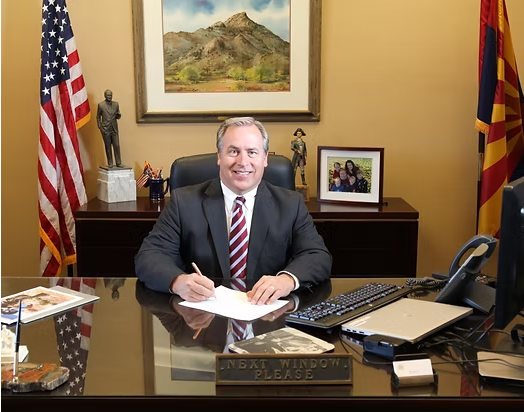
Senator Goldwater returns to the U.S. Capitol
Arizona will unveil its new statue tomorrow in a special installation ceremony at Statuary Hall in the U.S. Capitol to honor the late Senator Barry Goldwater’s place in our nation’s history. This is the story of how it happened, from the State Senator who made it happen:
“No individual has had a greater influence on Arizona’s first century than Senator Barry Goldwater. He was known across the country as Mr. Arizona. That is why it is so fitting that we honor his legacy to our great state by placing his likeness in Statuary Hall in the U.S. Capitol, where he will stand among the greatest men and women in our nation’s history.
Statuary Hall was authorized by Congress in 1864 to allow each state to provide two statues of notable citizens for display at the U.S. Capitol. Arizona has been represented by John Campbell Greenway since 1930 and Father Eusebio Kino since 1965. The Greenway statue was sculpted by the renowned Gutzon Borglum, creator of Mt. Rushmore.
In the summer of 2007, during my first year in the Arizona legislature, I visited Washington, D.C. with my young family and we were able to take a tour of the U.S. Capitol through Congressman John Shadegg’s office. During the tour, we visited Statuary Hall, and while I was standing in front of the Greenway statue, I looked to my left and saw Daniel Webster from New Hampshire and looked to my right and saw Robert E. Lee from Virginia. I knew those two prominent figures in U.S. history, but I knew very little about John Greenway, other than the road and high school that bear his name in Phoenix. I wondered to myself, ‘wouldn’t it be more appropriate for Arizona to be represented by Mr. Arizona himself, Barry Goldwater?’ When I got back to Phoenix, I did a little research and learned that it was possible to add a new statue.
Congress had enacted legislation only a few years earlier in 2000 enabling states to request the Joint Committee on the Library of Congress approve the replacement of the statue the state has provided, if the request has been approved by the legislature and approved by the Governor.
Before the 2008 legislative session, I carefully drafted a bill that would enable Barry Goldwater to replace John Greenway in Statuary Hall. During my research, I had learned quite a few things about John Greenway, and developed a great deal of respect for him. I did not mean to dishonor or disrespect the legacy of John Greenway in anyway, but I thought that as Arizona was approaching its centennial, it was fitting that she be represented in Statuary Hall by someone who had a greater impact on the first 100 years of statehood. I gathered bipartisan support for the measure and it passed both the House and the Senate and was then signed by Governor Janet Napolitano.
Once approved, the project got off to a very slow start. There were many distractions, it was an election year and by the next legislative session, Governor Napolitano had resigned and Governor Brewer took over during one of the toughest economic recessions in state history. Still, gradually the pieces of the puzzle were put together as the Joint Committee on the Library of Congress approved the Goldwater placement in 2010 and a committee was established to select an artist and raise the money for the endeavor.
More than 20 artists asked to be considered for the prestigious commission. The committee narrowed that group to five and asked that they produce a small maquette as an example of their vision for the statue, along with a life-sized likeness of Senator Goldwater’s face. Ultimately Deborah Copenhaver Fellows from Sonoita, Arizona was selected as the artist.
We could not be more pleased with the finished product. Deborah Copenhaver Fellows has such an amazing talent and has painstakingly poured her soul into this work of art. She has captured Senator Goldwater’s spirit and presence in what I believe is one of the most lifelike and impressive statues in Statuary Hall.
The statues in the Hall rest on pedestals that are usually about three feet high. The statues can be up to 7 feet tall, for a total of 10 feet in height. One of the things I noticed when visiting Statuary Hall is that most of the faces of the statues were so high in the air and looking straight ahead. It was difficult to see the individuals’ faces. I suggested to Deborah before she started the project that it would be a good idea if Senator Goldwater’s head could be slightly tilted down, as if he were making eye contact with the person looking up at him. She loved that idea and has incorporated it into her work and it really looks impressive.
I am so grateful to all those who played a part in this process. It is amazing to me that a whimsical idea I had seven years ago as a new state legislator would take hold and would actually come to pass. There were so many who dedicated their time, energy and talents to pay this tribute to an important Arizona leader. The entire process was extremely challenging to get where we are today. No tax payer funds were used on the project, which is exactly how Senator Goldwater would have wanted it. It is great to have Mr. Arizona back where he belongs, representing Arizona in the U.S. Capitol.”
Senator Adam Driggs District 28
2015 Opening Day of Session
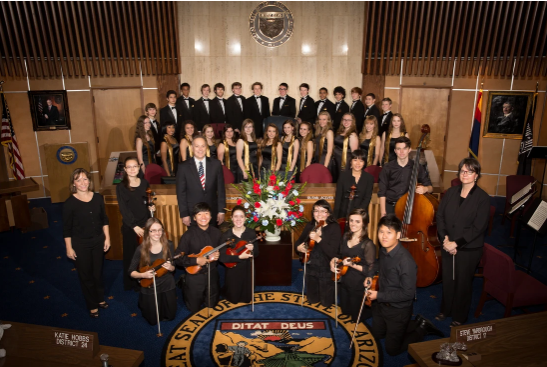
OPENING DAY CEREMONIES Fifty-Second Legislature – First Regular Session Monday, January 12, 2015 12:00 Noon
12:00 Noon - First Regular Session Convenes, Senate Chamber (Reserved seating in the Senate Gallery for Legislators’ Guests. Guests should be seated by 11:50 a.m.)
Call to Order The Honorable Olivia Cajero Bedford, Senator, District 3
Prayer Bishop Jim Buehner, Elliot Ward, Gilbert Arizona Stake, Church of Latter-day Saints
Presentation of the Colors Luke Air Force Base Honor Guard
Pledge of Allegiance to the Flag Daniel Biggs
Playing of the National Anthem Arizona School for the Arts Chamber Singers, Dana Bender, Conductor
Oath of Office Chief Justice Scott Bales, Arizona Supreme Court
Senate Business Election of the President of the Senate
Recess Arizona School for the Arts Chamber Singers and Chamber Orchestra A Gaelic Blessing-John Rutter
Remarks Adjutant General Michael T. McGuire
2:00 p.m. Joint Session, House Chamber (Reserved seating on the House Chamber Floor and in the Gallery for Legislators’ Guests.)
State of the State Address The Honorable Doug Ducey, Governor of Arizona
Senate Reconvenes upon Adjournment of the Joint Session, Senate Chamber (If necessary to complete Senate Business)
Senate Business
Arizona State Senate Announces Committee Assignments
Senate President Andy Biggs today announced assignments to Senate committees for the 52nd Legislature. The legislative session begins January 12, 2015.
Committee on Natural Resources
Sen. Steve Pierce-Chair
Sen. Don Shooter-Vice Chair
Sen. Adam Driggs
Sen. David Farnsworth
Sen. Barbara McGuire
Sen. Robert Meza
Sen. Catherine Miranda
Committee on State Debt & Budget Reform
Sen. Jeff Dial-Chair
Sen. Debbie Lesko-Vice Chair
Sen. Ed Ableser
Sen. Lupe Contreras
Sen. John Kavanagh
Committee on Commerce & Workforce Development
Sen. Kimberly Yee-Chair
Sen. Steve Smith-Vice Chair
Sen. Olivia Cajero Bedford
Sen. Jeff Dial
Sen. David Farnsworth
Sen. Robert Meza
Sen. Catherine Miranda
Sen. Bob Worsley
Committee on Water & Energy
Sen. Gail Griffin-Chair
Sen. Sylvia Allen-Vice Chair
Sen. Carlyle Begay
Sen. David Bradley
Sen. Judy Burges
Sen. Debbie Lesko
Sen. Lynne Pancrazi
Committee on Rules
Pres. Andy Biggs-Chair
Sen. Steve Yarbrough-Vice Chair
Sen. Sylvia Allen
Sen. Olivia Cajero Bedford
Sen. Gail Griffin
Sen. Katie Hobbs
Sen. Martin Quezada
Committee on Federalism, Mandates & Fiscal Responsibility
Sen. Judy Burges-Chair
Sen. David Farnsworth-Vice Chair
Sen. Ed Ableser
Sen. Nancy Barto
Sen. David Bradley
Sen. Olivia Cajero Bedford
Sen. Steve Smith
Committee on Rural Affairs & Environment
Sen. Sylvia Allen-Chair
Sen. Gail Griffin-Vice Chair
Sen. Andrea Dalessandro
Sen. Barbara McGuire
Sen. Don Shooter
Committee on Transportation
Sen. Bob Worsley-Chair
Sen. Judy Burges-Vice Chair
Sen. Ed Ableser
Sen. Carlyle Begay
Sen. Jeff Dial
Sen. Catherine Miranda
Sen. Steve Pierce
Committee on Appropriations
Sen. Don Shooter-Chair
Sen. John Kavanagh-Vice Chair
Sen. Sylvia Allen
Sen. Olivia Cajero Bedford
Sen. Steve Farley
Sen. Katie Hobbs
Sen. Debbie Lesko
Sen. Kelli Ward
Committee on Public Safety, Military & Technology
Sen. Steve Smith-Chair
Sen. John Kavanagh-Vice Chair
Sen. Judy Burges
Sen. Lupe Contreras
Sen. Barbara McGuire
Sen. Kelli Ward
Committee on Finance
Sen. Debbie Lesko-Chair
Sen. Steve Yarbrough-Vice Chair
Sen. Steve Farley
Sen. Lynne Pancrazi
Sen. Kimberly Yee
Committee on Health & Human Services
Sen. Nancy Barto-Chair
Sen. Kelli Ward-Vice Chair
Sen. David Bradley
Sen. Katie Hobbs
Sen. Debbie Lesko
Sen. Lynne Pancrazi
Sen. Kimberly Yee
Committee on Government
Sen. John Kavanagh-Chair
Sen. Sylvia Allen-Vice Chair
Sen. Judy Burges
Sen. Lupe Contreras
Sen. Robert Meza
Sen. Martin Quezada
Sen. Steve Smith
Committee on Financial Institutions
Sen. David Farnsworth-Chair
Sen. Steve Yarbrough-Vice Chair
Sen. Andrea Dalessandro
Sen. Adam Driggs
Sen. Steve Farley
Sen. Gail Griffin
Sen. Catherine Miranda
Committee on Education
Sen. Kelli Ward-Chair
Sen. Kimberly Yee-Vice Chair
Sen. Sylvia Allen
Sen. Carlyle Begay
Sen. David Bradley
Sen. Jeff Dial
Sen. Steve Smith
Committee on Judiciary
Sen. Adam Driggs-Chair
Sen. Nancy Barto-Vice Chair
Sen. Lupe Contreras
Sen. Andrea Dalessandro
Sen. Steve Pierce
Sen. Martin Quezada
Sen. Bob Worsley
President Biggs also announced today that Sen. Sylvia Allen will serve as President pro tempore.
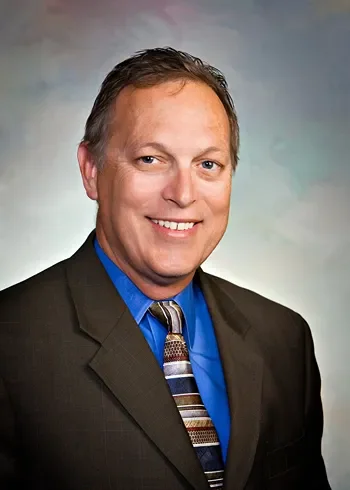
State Senate announces leadership team
Senator Andy Biggs of Gilbert will remain as President of the Arizona State Senate, after a post-election organizational meeting by the Republican Majority.
This will be Biggs’ second term as President, after being elected to the post in January 2013. He will be joined on the leadership team by Majority Leader Steve Yarbrough and Majority Whip Gail Griffin.
President Biggs entered the State Legislature in 2003. Before serving as Senate President, he was Senate Majority Leader and Appropriations Chair.
Majority Leader Yarbrough also entered the Legislature in 2003. He is currently the Chair of the Senate Finance Committee and Chair of the Ethics Committee. He lives in Chandler.
Majority Whip Griffin was sworn into the Senate in 2011, after serving in the House of Representatives. She is currently President Pro Tempore of the Senate. Senator Griffin is Chair of the Government and Environment Committee. She lives in Hereford.
New leadership will be effective at the start of the next term in January, the 52nd Legislature, First Regular Session.
Arizona State Senate Announces Committees, Chairs
Senate President Andy Biggs today announced Senate committees and the chairs overseeing them for the 52nd Legislature.
Senator Don Shooter will continue to chair the Senate Committee on Appropriations. The Health & Human Services Committee will remain chaired by Senator Nancy Barto and Senator Steve Pierce continues to chair the Committee on Natural Resources.
Senator Gail Griffin chairs the Committee on Energy. Senator Kelli Ward will now chair the Committee on Education. Senator Kimberly Yee will now run the Committee on Commerce & Workforce Development.
Senator Adam Driggs moves into the chair for the Judiciary Committee. The Transportation Committee will now be chaired by Senator Bob Worsley. Senator Judy Burges now chairs the Committee on Federalism, Mandates & Fiscal Responsibility, and Senator David Farnsworth heads the Committee on Financial Institutions.
The four Senators-elect moving over from the House of Representatives will chair committees: Sen.-elect John Kavanagh/Government Committee, Sen.-elect Debbie Lesko/Finance Committee, Sen.-elect Steve Smith/Public Safety, Military & Technology and Sen.-elect Jeff Dial/State Debt & Budget Reform. Sen.-elect Sylvia Allen returns to the Senate to chair the Committee on Rural Affairs & Environment.
President Biggs will serve as Rules Committee Chair.
Appropriations Sen. Don Shooter
Health & Human Services Sen. Nancy Barto
Natural Resources Sen. Steve Pierce
Energy Sen. Gail Griffin
Education Sen. Kelli Ward
Commerce & Workforce Development Sen. Kimberly Yee
Judiciary Sen. Adam Driggs
Transportation Sen. Bob Worsley
Federalism, Mandates & Fiscal Responsibility Sen. Judy Burges
Financial Institutions Sen. David Farnsworth
Government Sen.-elect John Kavanagh
Finance Sen.-elect Debbie Lesko
Public Safety, Military & Technology Sen.-elect Steve Smith
State Debt & Budget Reform Sen.-elect Jeff Dial
Rural Affairs & Environment Sen.-elect Sylvia Allen
Rules Pres. Andy Biggs