



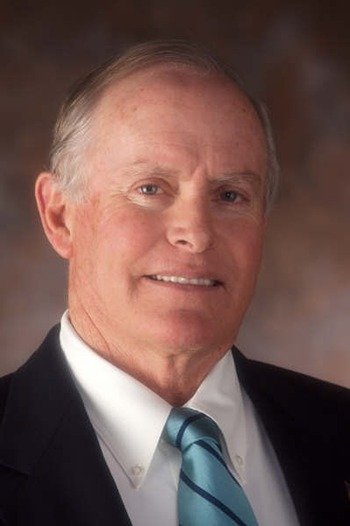
Superintendents recognize Pierce
The Arizona Association of County School Superintendents has named Senate President Steve Pierce, R-Prescott, as the 2012 Legislator of the Year.
Pierce was honored at a ceremony July 25 in Flagstaff as part of the association’s annual legislative retreat.
To read the rest of the story, click here: http://www.trivalleycentral.com/articles/2012/08/06/casa_grande_dispatch/news/doc501ff6acce14e462121015.txt
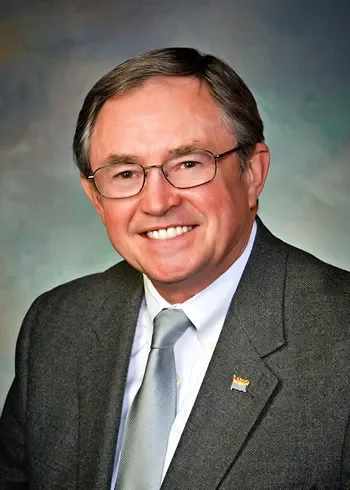
What will Healthcare Act Mean for Arizona?
Senator John McComish, Chairman of the Arizona Senate Banking and Insurance Committee, is investigating the impact that the Patient Protection and Affordable Care Act will have on Arizona. The U.S. Supreme Court recently upheld the individual insurance mandate contained in the law, but ruled that the federal government could not act punitively towards states to force them to expand their Medicaid populations.
This week Senator McComish held his most recent meeting of stakeholders to discuss health care issues in general. Topics have ranged from insurance coverage, medical liability costs to access to healthcare. However, at the heart of the discussion was whether or not the Affordable Care Act would stay in place or leave states to design programs and solutions at the local level. “Now we know what hand we are dealt. I am just beginning to understand where we are headed. I am hoping in the coming months we will have good data to make a sound decision moving forward. I hope to partner with the stakeholders and collaborate with the Executive on next steps.”
“There are many unanswered questions left by the recent court ruling. Specifically, what will expansion of Medicaid cost the state? What is the state and federal contribution to the system and will it be a sustainable program in the years to follow? Can we afford it?”
Another key issue is whether the state will implement the health insurance exchange created by the health care law. What options are best for Arizona is a central focus to McComish’s investigation. “I am getting input from folks in the health care arena as to what are the advantages and disadvantages to this new commercial market created by Obamacare. It’s quite an extensive and expansive infrastructure that will govern the delivery of health care for everyone.”
State lawmakers speak out against new EPA regulations
Senate President Steve Pierce joined a coalition of policymakers, business and community leaders protesting new regulations being considered by the Environmental Protection Agency (EPA) that have the potential to cost Arizona residents hundreds of millions of dollars in higher electricity costs.
The Senate President’s comments came at a July 31 public hearing conducted by the EPA to solicit feedback on the agency’s decision to reject Arizona’s federally-mandated plan to reduce regional haze (a visibility, not health issue) in favor of a new regulations requiring Arizona utilities to install exorbitantly expensive technology at three power plants that provide electricity to millions of Arizona residents.
If implemented, the regulations would require Arizona Public Service (APS), Salt River Project (SRP), and the Arizona Electric Power Cooperative (AEPCO) to spend hundreds of millions of dollars to upgrade their facilities with Selective Catalytic Reduction (SCR) technology, which makes no perceptible improvement in visibility compared to measures already required under Arizona’s plan.
While the EPA has publicly claimed that its plan is designed to improve visibility, many Arizona leaders believe that the driving force behind the regulations is an EPA effort to force utilities to abandon the use of coal as a clean, inexpensive, and reliable source of energy in favor of other “green” sources of energy that have proven to be less reliable and much more expensive.
The end result of such a move, Pierce argued, would be higher electricity costs and, consequently, higher prices for goods and services.
“What we’re really talking about is taking hundreds of millions of dollars from Arizona residents and employers to pay for new technology that makes no significant improvement in air quality,” Pierce declared. “That’s not just unfair, it’s outrageous. It reflects a staggering disregard for the state’s economy and a disturbing willingness to sacrifice economic growth in favor of a reckless environmental agenda. As Senate President, I call upon the EPA to abandon its plan and work with the state to find a logical and common sense solution.”
President Pierce’s comments were echoed by statements from Senator John Nelson (R-Phoenix), an engineer and chairman of the Senate Natural Resources Committee, and Senator Gail Griffin (R-Hereford), whose district includes the Apache Generating Station, owned by AEPCO.
Nelson, a former council member and interim mayor of the City of Phoenix lambasted the EPA’s plan. “I have to tell you in all candor that in my nearly 3 decades of public service, I have never seen something as arbitrary, unfair, and illogical as this plan and its demand that Arizona utilities install SCR technology on their plants,” Nelson said.
Senator Griffin agreed. “Let’s be very clear—these regulations have nothing to do with public health and everything to do with the Obama Administration’s radical push to eliminate coal as a source of cheap electrical power.”
In addition to state lawmakers, prominent community and business leaders from throughout the state spoke out against the regulations, including the Arizona Chamber of Commerce and Industry, and the National Federation of Independent Business. Together with President Pierce, these leaders expressed alarm that the high cost of installing SCR technology may force Arizona utilities to:
Dramatically increase utility rates, putting Arizona at a competitive disadvantage in its effort to attract new employers.
Shutter one or more units at their generating facilities, leading to job losses and a reduction in property tax revenue for local schools and public safety.
Purchase electricity on the open market at much higher cost to Arizona consumers
Arizona Chamber of Commerce and Industry President and CEO Glenn Hamer applauded President Pierce’s testimony. “We appreciate the willingness of President Pierce, Senator Nelson, and Senator Griffin to stand with Arizona job creators against unreasonable, unwarranted, and unnecessary environmental regulations that threaten our economic recovery. Arizona needs strong leaders like President Pierce who have the courage to protect Arizona employers and working families from overzealous federal regulators.”
Pierce concluded by urging the EPA to work with the state on a solution that achieves the goal of reducing regional haze without sacrificing the state’s economy.
“Failure to do so would send a clear message that the Obama Administration is more concerned about eliminating coal than it is about creating jobs and improving our economy.”
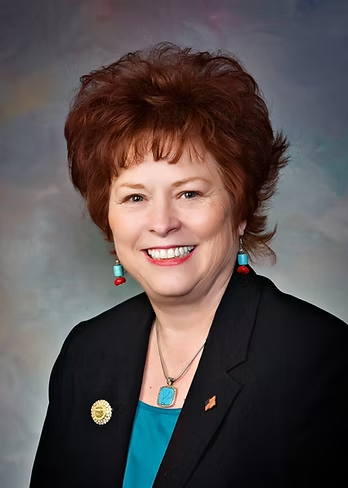
Statement from Sen. Sylvia Allen on Snowflake mill closing
“Catalyst Paper announced today it is closing its paper mill in Snowflake. The decision means more than 300 people are losing their jobs in September. Hundreds more in the community who do business with the mill will also be impacted by the closure.
I am heartbroken by this announcement. These are my friends and neighbors who are losing their work. The mill is the lifeblood of the Snowflake-Taylor area. It’s been operating for more than 50 years.
Catalyst says it has struggled to make a profit because the demand for the newsprint it produces is down ten percent, but there is more to this. The troubles go back to before Catalyst even bought the plant. Back in the ‘90s, the paper mill was a profitable plant that used pulp wood to make paper. Then, federal policies and radical environmentalists shut down the forests due to the Mexican Spotted Owl. The mill was forced to switch from pulp wood to recyclable paper in an attempt to keep the mill going, but recently there have been so many factors working against Catalyst. Fuel costs have been soaring, the dollar has lost its value, China is producing paper at much lower costs, and our country is facing a debt crisis. The closure of the mill is another reminder of just how sick our national economy is today.
I will not rest until we can find work for these great employees. I’m calling on the company to help these fine folks secure employment. I’ve talked with the Arizona Commerce Authority and the Governor’s Office and am encouraged that they will do all they can. It’s a sad day in Navajo County, but I have faith that the people of Snowflake will bounce back from this sad development.”
Prominent legislative leaders oppose new restrictions on public lands in Arizona
Determined to protect the rights of Arizona residents and strengthen the state’s economy, Senate President Steve Pierce (R-Prescott) and State Senator Gail Griffin (R-Hereford) joined the Arizona Game and Fish Commission, Arizona Cattle Growers Association, and Friends of the Arizona Strip in opposition to a radical proposal to prohibit ranching, mining, and forest thinning on nearly 2 million acres of land in northern Arizona.
Disingenuously titled “The Grand Canyon Watershed National Monument”, the proposal calls on President Obama to declare 1.7 million acres of public land north of the Grand Canyon as a national monument and outlaw any future use of the land by private industry. The plan was submitted to the Bureau of Land Management (BLM) earlier this year by some of the most extreme environmental groups in the country, including the Sierra Club and Center for Biological Diversity.
“This irresponsible proposal is just the latest in a series of moves by extreme environmentalists to ‘protect the environment’ at the expense of the economy and jobs,” President Pierce declared.
“By prohibiting responsible development of the some of our state’s most valuable natural resources, the plan would further hamper Arizona’s economic recovery and hurt rural Arizona communities already devastated by the recession and federal environmental policies.”
Pierce pointed out that the proposed monument would preclude mining at a time when new technology minimizes mining to the point that it is almost unnoticeable. “We’re punishing those industries that are working the hardest to protect the environment.”
In her opposition to the proposed national monument, Griffin, who chairs the Senate Water, Land Use, and Rural Development Committee, pointed out that 87% of land in Arizona is already owned by the government. According to documents submitted to the BLM, the proposed National Monument would encompass a large portion of the Kaibab National Forest both north and south of the Grand Canyon and would include much of the Arizona strip between the existing Grand Canyon Parashant and Vermillion Cliffs national monuments.
“With only 13% of Arizona land in private hands, Arizona’s economy is at a significant disadvantage compared to other states. We need less federal regulation of our land, not more,” Griffin declared.
Pierce and Griffin are not the only Arizona leaders to express opposition to the proposed plan. On May 11, the Arizona Game and Fish Commission adopted a resolution opposing the proposed national monument, citing a number of concerns and concluding that “the new monument is being proposed to ‘preserve’ and in some cases lock away these lands rather than conserve them, which could impact public access, recreation, grazing, and the ability of the commission to manage wildlife.”
Game and Fish Commissioner Kurt R. Davis pointed out that, “It’s not as if these lands aren’t already being managed and conserved. This is really about changing the status of these lands and adding another layer of federal bureaucracy, which has far-ranging implications.”
In a statement on the group’s website, the Friends of the Arizona Strip also deplored the proposed monument, saying that the group “vigorously oppose[s] the creation of the Grand Canyon Watershed National Monument because it is not necessary and because it violates the express declaration by the United States statute that the land, owned by the people, must serve their interests best. That means all people, not just a select few that think that they know the best way to preserve the public’s assets.”
Concern with the plan is not limited to local and state leaders. Federal elected officials, including Senators Orrin Hatch (R-Utah) and Jim Matheson (D-Utah), have publicly expressed their opposition as well.
Senator Griffin urged all Arizona residents to contact their federal representatives and ask them to oppose the proposed monument.
“We’ve seen where the radical environmentalists’ agenda takes us,”Griffinsaid. “In their efforts to protect the forest, they burn it down. In their efforts to preserve the Spotted Owl, they destroy its habitat. In their efforts to clean the air, they threaten our economy.
“Arizona can’t afford their ‘protection’ any longer.”
Statement from Sen. Sylvia Allen on U.S. Supreme Court ruling
“The U. S. Supreme Court has ruled that ObamaCare is constitutional. I wonder what Constitution the justices were using? No other issue has gotten more grassroots, citizen political involvement than ObamaCare. It gave birth to the Tea Party.
Since the secret backroom deal of this single-party legislation passed without anyone reading it, we have had time to become acquainted with the 2,000-page bill and are more afraid than ever of the consequences. It is very clear that for ObamaCare to work, we must have high taxes and heavy-handed enforcement.
The Congressional Budget Office (CBO) recently revised its earlier cost estimate, saying that ObamaCare will cost more than $2 trillion, double its original estimate. Where on earth do we get the money? From the people.
This country is already $16 trillion in debt, with this year’s budget $1.4 trillion out of balance. It will be a huge sacrifice at the expense of our children’s future.
The elderly will be penalized the most in delaying, rationing, and denying treatment. The doctors who serve them will find their payments slashed. What provider will want to take care of them if they can’t be paid a reasonable amount for services rendered?
President Obama’s sound bites today suggest that he apparently has not read the bill yet, judging by all the misinformation he spews. Your liberty and freedom in the area of healthcare is about to be taken from you. Good, sound, free-market principles and reforms that are needed to save our health care system have to be trashed and replaced with socialist European controls, not to mention that state sovereignty is out the door.
Today our Constitution hangs by a thread, and the only thing that will save us from one of the largest tax increases in history and the destruction of our liberty and freedom is “We the People.”
The Supreme Court is not the last word. We the People still have the power to change this. In November, we must elect Governor Romney and clean up Congress so that ObamaCare can be repealed.”
Statement from Senate President Steve Pierce
“Today’s decision by the U.S. Supreme Court comes as both a tremendous disappointment and dangerous precedent for years to come. Forcing Americans to buy a private product or service of the government’s choosing, under threat of financial penalty, opens the door for unchecked federal power for future generations. There is simply no limiting principle after today’s decision, and federal mandates that a citizen purchase a certain kind of car or consume healthier foods are no longer as far fetched as they once seemed.
The so-called Affordable Care Act, or ObamaCare, will have devastating effects on Arizona once it is fully implemented. The Medicare tax increase takes effect in 2013, as well as taxes on medical devices and other products, which will have a detrimental effect on job creation.
The centralized bureaucracies and endless new regulations and mandates will accelerate Arizona’s already dangerous doctor shortage. As the Arizona Republic recently pointed out, our state needs 2,400 physicians just to come up to the national average. The Court’s limited reading of withholding Medicaid funds notwithstanding, the law would increase Medicaid enrollment in Arizona by 36% or more, while Arizona taxpayers will be forced to pay for 10% of these new enrollees by 2020, at a cost of over $850 million.
There is now only one remaining opportunity to overturn this terrible law – this November’s elections. Any remaining doubt that this coming election is the most important in generations should now be settled.”
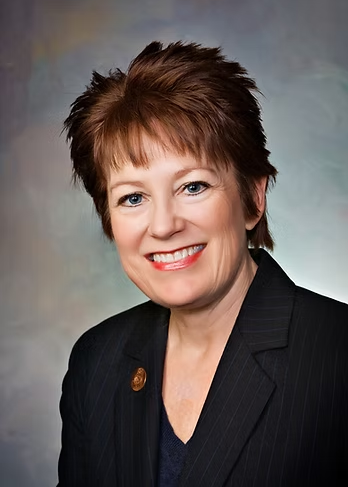
Statement from Sen. Nancy Barto on today’s Ruling by U.S. Supreme Court
“Stopping Obamacare is now up to the American people. The Court’s decision to uphold the mandate forcing Americans to purchase government-approved insurance based on its being a tax is disappointing to say the least, as it was sold to us expressly as NOT being a tax. In fact, this is the largest tax increase imposed on America in our nation’s history. A $500 billion tax increase And it’s only the beginning. It’s catastrophic to America’s health.
Now, the only way to save the country from ObamaCare’s budget-busting government takeover of health care is to elect a President and Congress who understand the answer to rising health care costs is not, and never will be, bigger government and more government control.
ObamaCare is hurting the economy and must be repealed. Even though it has been held constitutional, it is still bad law. Healthcare costs continue to increase exponentially – despite the web of new government rules and regulations. It makes it harder for small businesses to hire workers and expand. It limits Americans’ choice in healthcare and intrudes on the doctor-patient relationship and it creates trillions in new government spending we cannot afford, while slashing Medicare.
Only full repeal can end this damage and stop things from getting worse.
America needs real health care reform, and that means repealing ObamaCare.
We should enact commonsense, step-by-step reforms based on the free market and not dictated by the government. We must protect Americans’ access to the care they need, from the doctor they choose, at a lower cost. This is possible and Americans know it.”
State Senator Jerry Lewis responds to Supreme Court ruling on SB1070
“This mixed ruling by the Supreme Court demonstrates that now more than ever we need a permanent and complete immigration plan. Arizonans know that immigration was not the cause of all our problems and SB1070 was never intended to be the solution to all of our problems.
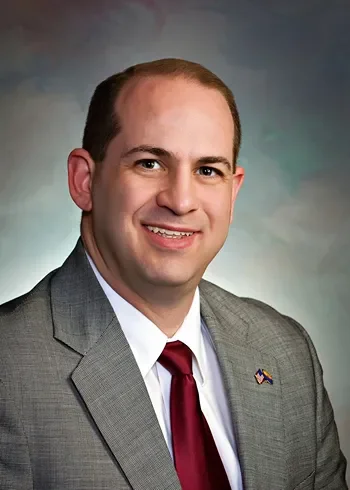
Statement by Sen. Rick Murphy on U.S. Supreme Court SB 1070 Ruling
“I’m pleased, and not surprised, that the U.S. Supreme Court upheld the core component of SB1070. The ruling honors state sovereignty and, by extension, the right of citizens to pass laws to protect themselves. Claims that SB1070 will cause racial profiling are fear-mongering at its worst. Properly implemented, SB1070 will strike the right balance between protecting citizens and the rights of suspects. I look forward to seeing experience prove the naysayers wrong.”
State Senator Sylvia Allen issued the following statement in response to today’s Supreme Court rulin
As a proud supporter of SB1070, I was glad to see the Court uphold the most important aspect of the law—allowing local law enforcement to question someone’s immigration status during a lawful stop. I was saddened to see the Court strike down several other provisions of the law that made certain immigration-related activities state crimes.
To me and other policymakers concerned with the federal government’s total failure to protect our border, the issue boils down to whether states have the ability to protect their citizens. On this issue, I agree wholeheartedly with Justice Scalia, whose opinion pointed out that Arizona is dealing with:
“A Federal Government that does not want to enforce the immigration laws as written, and leaves the States’ borders unprotected against immigrants whom those laws would exclude. So the issue is a stark one. Are the sovereign States at the mercy of the Federal Executive’s refusal to enforce the Nation’s immigration laws?” (p. 21)
The real winners of the federal government’s failure to protect our border are the violent billionaire cartels, the drug-and-human smugglers, and the “open border” advocates. Criminal drug and human smuggling networks reach throughout our state and nation with dirty money. These networks build criminal corruption and destroy the lives of our citizens and their families. There are even concerns about terrorism spilling over our southern border.
As Chairman of the Border Security, Federalism, and State Sovereignty Committee, I understand how critical and urgent it is for the federal government to secure the Tucson sector of the border as they have the Yuma sector. If I and many others know where the smuggling routes are located, then it only stands to reason that the federal government knows also. It’s time to get the resources on the border needed to stop these criminal invaders. We have the technical ability. We have the knowledge. We have the manpower. We just need the political will. Upholding provisions of SB1070 is a great start. I fully agree with Justice Scalia:
“… to say, as the Court does, that Arizona contradicts federal law by enforcing applications of the Immigration Act that the President declines to enforce boggles the mind.” (p. 21)
Statement from Senate President Steve Pierce
U.S. Supreme Court Upholds Key Part of SB 1070
“This morning the United States Supreme Court announced that justices have ruled unanimously in favor of the central part of Arizona’s SB 1070. This ruling upheld what Arizonans have known all along; Arizona is not precluded from taking action herself to help secure our southern border.
Our state has grown frustrated by the lack of security at our border with Mexico and inaction by the federal government. SB 1070 grew out of that frustration. It was a common sense bill that I supported, along with nearly every member of our Caucus.
It only gave local and state law enforcement the power to enforce existing law. Illegal immigration is an issue that directly affects Arizona’s economy, overburdens our corrections system, strains local budgets and leads to increased costs on our citizens for vital services such as health care and education.
Perhaps now we can deal with the issue as a sovereign state, just as we should be able to with the mismanagement of our forests. Natural resources are going up in smoke due to even more of the Feds inability to do what is right.
It is an election year, but I hold out hope that the Obama Administration can finally move past the rhetoric and work toward a solution to this and other very important problems that impact not only Arizona, but the nation as well. While we need the Border Patrol agents to improve security, we also need more U.S. Customs and Border Security agents to get commerce moving immediately.
Today’s decision is a clear sign that the days of inaction and excuses are over.”

Griffin testifies before congressional subcommittee
State Senator Gail Griffin (R-Hereford) testified last week before members of a Congressional subcommittee that federal agencies are threatening access to critical supplies of water and undermining economic development in southeast Arizona.
“The proper management of our lands would produce jobs and a healthy environment,”Griffin declared. “Please do not allow any more federal acquisition of land. They have proven they can’t take care of what they have.
Griffin’s comments came at a rare field hearing conducted by members of the U.S. House of Representatives Subcommittee on Water and Power, which came to Phoenix to hear testimony from Senator Griffin and other elected officials and business leaders concerned about the impact of federal policies on Arizona’s economy.
Providing a southern Arizona perspective, Griffin informed the Subcommittee that federal actions are threatening the Town of Tombstone’s water supply and complicating the City of Sierra Vista’s efforts to facilitate new development.
“Tombstone’s water infrastructure is located in the Coronado National Forest, which supports both adequate safe drinking water and fire suppression.Tombstone’s water rights date back 130 years prior to any designation of land by the Forest Service,”Griffin explained to the committee.
“Huge mudslides [following last year’s Monument Fire] forced boulders . . . to tumble down mountainsides, crushing Tombstone’s water lines and destroying reservoirs, shutting off Tombstone’s main water source.”
Griffin explained that the whole Town of Tombstone is at risk unless the Forest Service allows the Town to repair its water infrastructure. Inexplicably, however, the Forest Service has prohibited the Town from using motorized equipment to make necessary repairs, putting the Town at risk. The Forest Service has even prohibited the Town from using any mechanized equipment, to include wheel barrels, to make repairs.
“Should a fire occur, Tombstone structures could be history.Tombstone does not have the water to fight a major fire,”Griffindeclared. “The Forest Service’s motto is, ‘Caring for the land and serving people’. They have done neither in this case,” Griffin said.
Griffin also made the Subcommittee aware of the Bureau of Land Management’s (BLM) efforts to halt development in Sierra Vista. In April of this year, the BLM sent a letter to the Department of Water Resources demanding that the State of Arizona halt the long awaited Tribute development in Sierra Vista, claiming that the development’s water supply is “legally unavailable” because it is near the San Pedro National Conservation Area.
“[B]y claiming that sufficient water for the development is physically available, but legally the property of the federal government, this administration is signaling its determination to control the water not only in the San Pedro River but anywhere near it as well,” Griffin declared.
Griffin was joined at the hearing by representatives from Salt River Project, Grand Canyon Electric Co-op Association, the Gila River Indian Community, and the Arizona Cattle Growers Association, all of whom asked Subcommittee members to reform federal policies threatening Arizona’s access to affordable water and power.
Of particular concern to the Subcommittee is the Environmental Protection Agency’s (EPA) efforts to require electric utilities, including rural co-ops such as the Arizona Electric Power Cooperative, which runs the Apache Generating Station near Benson, to install prohibitively expensive emissions controls that could force these power plants to close. Such closures would cost Arizona hundreds of jobs, and lead to dramatically higher prices for electricity and water. For example, if the Navajo Generating Station (NGS) near Page were to close, the Central Arizona Project would have to purchase electricity from other, much more costly sources, leading to significantly higher water rates for Arizona residents in Maricopa, Pinal, and Pima Counties.
Subcommittee members, including California Congressman Tom McClintock and Arizona Congressmen Paul Gosar and David Schweikert, thanked Senator Griffin for her testimony.
“What we’re doing here today is extremely important,” Congressman Schweikert said.
Senator Griffin pledged to continue her fight against federal encroachment on property rights and local control. “I applaud Congressmen Gosar and Schweikert for their focus on these critically-important issues. We need their leadership to push back against the growing power and intrusion of the federal government in Washington D.C.”
Judge blocks Phoenix police from paying officers for union work
Sen. Murphy: Ruling shows SB 1486 was right idea
A Maricopa Superior Court judge Tuesday ruled the City of Phoenix and the Phoenix Law Enforcement Association can’t spend taxpayer money to pay officers for union work, instead of law enforcement duties. A contract agreed to by Phoenix and PLEA allows more than one million dollars to be spent for six police officers to do union work instead of traditional law enforcement.
Superior Court Judge Katherine Cooper ruled the so-called release time is likely a violation of Arizona’s gift clause, because it is not for a public purpose, but instead serves the private interests of PLEA.
Today’s ruling is vindication for Senate Bill 1486, sponsored by Senator Rick Murphy. That bill prohibited a public employer from compensating a public employee for non duty-related union activities. Instead of agreeing to reasonable restrictions, the unions gambled on an all-or-nothing approach, and with this ruling, they have nothing.
“Judge Cooper made the proper decision, and we are going to see the end of release time in our state,” says Senator Murphy. “Taxpayers expect our great men and women in blue to protect and serve, not lobby for legislation that benefits the union.”
SB 1486 passed comfortably in the Senate in February, but died in the House of Representatives when House leadership blocked the bill from going to the floor.
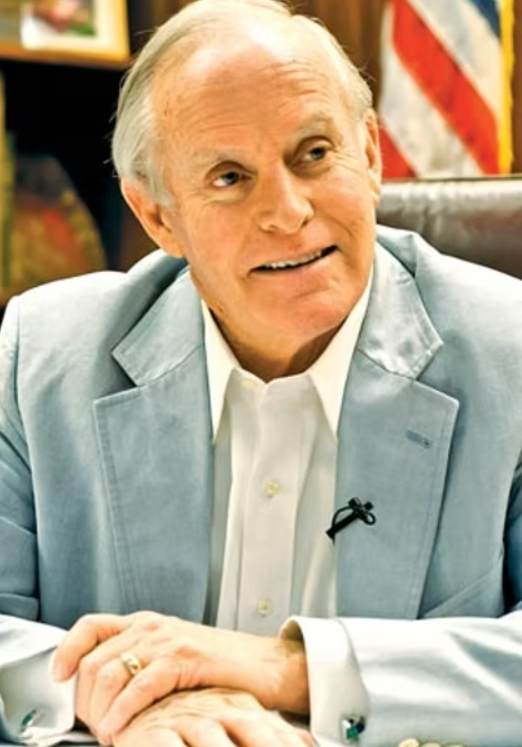
Steve Pierce: Keeping GOP out of the news was biggest challenge
Steve Pierce: Keeping GOP out of the news was biggest challenge
Senate President Steve Pierce. (Photo by Evan Wyloge/Arizona Capitol Times)
Extraordinary events put Steve Pierce at the helm of the Arizona Senate — and those same events made the job of leading the chamber, which is already difficult by itself, even more challenging.
The Prescott rancher was elected as Senate president following the ouster of Russell Pearce, who lost a November recall election to a rival Republican. While some of Pearce’s colleagues had no love lost for the former senator, others remained loyal to him.
Pierce had to manage a caucus that not only fractured on these emotional grounds, but one that was also sometimes split on philosophical issues.
For the complete Arizona Capitol Times interview, go here: http://azcapitoltimes.com/news/2012/05/25/steve-pierce-keeping-gop-out-of-the-news-was-biggest-challenge-in-2012-legislative-session/
Channel 5 updates viewers on the border fence project
Last night Channel 5 in Phoenix updated viewers on buildtheborderfence.com. The report featured an interview with Senator Steve Smith.
Channel 5 report on the border fence: http://www.cbs5az.com/video?autoStart=true&topVideoCatNo=default&clipId=7318478
Senator supports legislation on Wildfire Prevention
Also sponsors state legislation to improve response to fires.
Thousands of acres of Arizona land are burning today, and it’s already looking like another long and dangerous wildfire season.Today State Senator Gail Griffin expressed her strong support for a bill just introduced in the U.S. House to help avoid these wildfires.
The National Catastrophic Wildfire Prevention Act of 2012 is sponsored by Congressman Paul Gosar. It makes a number of changes to federal public lands policies in an effort to reduce the risk of catastrophic wildfires. These changes include:
Expediting forest restoration projects on federal lands to reduce fuel loads and minimize the risk of fire.
Streamlining process-related delays for projects on national forest system lands.
Authorizing wildfire prevention projects focused on fuel reduction and protection of endangered species habitat.
Supporters of the Act realize we can no longer stand by and watch as our valuable lands burn, destroying land, endangering lives and damaging our fragile economy.
“Last year’s record fire season dramatically illustrated that our forests are overgrown and that federal policies must be reformed to enable the Forest Service to do its job,” Senator Griffin declared. “The Wildfire Prevention Act accomplishes this by allowing the Forest Service to expedite forest restoration projects to protect at-risk communities.”
“Without these thinning projects, we are going to keep seeing these monster fires like the Wallow, the Horseshoe II and the Monument last year,” says Senator Griffin. “Eight of the nine largest fires in Arizona history happened in the past ten years. Our forests haven’t been thinned properly, and we are paying a heavy price.”
Senator Griffin’s concern for the conditions of Arizona’s forests and the safety of forested communities led her to sponsor a number of pieces of legislation in the recently-completed legislative session, including SCM1001, which urged Congress to support an innovative plan to reform the Forest Service and SCM1008, which called on Congress to adequately fund the Forest Service.
Senator Griffin also co-sponsored legislation requiring the state forester to develop and implement a comprehensive wildfire deployment plan of statewide resources for wildfire suppression activities and to ensure training and certification for wild land firefighters.
Accomplishments of the 50th Legislature, Second Regular Session
Accomplishments of the 50th Legislature Second Regular Session Prepared by Senate Majority Staff 5-17-12
The Majority in the Arizona State Senate gathered in January with a goal of building upon the successes of the First Regular Session, enacting another truly balanced budget and creating an economic environment that will continue to grow us out of this sluggish economy. The Republican caucus delivered with a responsible budget that is balanced through 2014 and sets aside reserves to improve Arizona’s credit rating and plan for future needs. Legislators also made reforms to improve Arizona’s business climate and expand our nationally-recognized lead in school choice. Some of the key proposals are outlined as follows:
Budget
As a direct result of the responsible fiscal management of the state’s finances in FY 2012, the Legislature was not only able to avoid making cuts to the state budget in FY 2013, but it also balanced the FY 2014 budget, even with the temporary 1% sales tax increase expiring. The state economy is showing slow but consistent growth, and jobs are continuing to be created. In February and March, 47,000 jobs were created in Arizona. With the knowledge that the economy could slow at any time, the Legislature insisted on continuing a cautious fiscal policy. In addition to a balanced budget, Senate Republicans insisted on no fund sweeps, no gimmicks, no cuts to Education, Public Safety, Transportation, or Health Care, and a “rainy day fund” for unplanned contingencies.
The Legislature has always held the fiduciary responsibility of the “power of the purse”. This ensures that necessary money management decisions are best made by legislators, elected to respond to the will of the voters. However, a large number of federal funds do not go through the Legislature; thereby, limiting the amount of impact Arizonans have over financial decisions. In an effort to address this issue the Senate passed SB 1488. The bill is designed to allow the Legislature, rather than the Executive, to appropriate non-custodial federal grants, placing all budgeting authority back with the constitutionally-authorized Legislature. Unfortunately, despite easily passing the Senate, SB 1488 was never assigned to a committee in the House and perished without the opportunity for a hearing.
Balancing a budget becomes increasingly difficult with the imposition of unfunded or General Fund mandates. Instead of providing funding to address areas of critical need, money may be forced to a low priority area. To mitigate this problem, the Senate passed SCR 1031 and SCR 1037. If it had been enacted, SCR 1031 would have required a review cycle whereby all ballot measures with a fiscal impact would have to be reauthorized via a general election every 8 years. SCR 1037 dictated that an initiative that fails to identify a sufficient non-General Fund revenue source and thus requires general fund revenues, the General Fund revenues are subject to legislative appropriation. Both resolutions died in the House Appropriations Committee.
The current presidential administration’s failure to address runaway expenditures and the associated level of debt spells trouble for states and citizens alike. To avoid similar destructive fiscal practices at the state level, SCR 1030 would have allowed voters to amend the state’s Constitution to limit the expenditure of revenues to the prior year’s expenditure plus population and inflation increases. The state cannot afford another round of deficit spending. Resolutions such as this allow for the steady and responsible expenditure of state revenues. SCR 1030 failed in the House Appropriations Committee.
Pre-recessionary spending devastated Arizona’s economy and led to record deficits. Following the lessons learned from the late 2000s, the necessity for constructing balanced state budgets became a key Republican tenet. This is reflected in several measures to limit overspending during times of high revenues. SB 1275 called for a joint legislative hearing if appropriations exceed estimates. This would give legislators and the public a chance to voice their opinions when decisions are being made to increase spending beyond estimated revenues. SB 1275 was vetoed by the Governor. Through responsible fiscal spending and a willingness to prepare for the future, Arizona was able to start its recovery. HB 2567 statutorily requires the General Appropriations Act to include a three year estimate of revenues and expenses. Future budgets will be constructed through this process of incorporating long term revenue and expenditure estimates.
Education
Parental choice is vital when it comes to education. Parents should have the choice to send their children where they feel they will receive the best education. They should also be empowered to participate in open discussions with the school board in developing plans to help schools succeed. HB 2598 requires school districts to develop a parent involvement strategy if the district has received a letter grade of “D” or “F” for two consecutive years.
SB 1256 would allow charter schools to offer preschool programs for children with disabilities. The Governor vetoed SB 1256.
SB 1255 requires the State Board of Education to adopt rules that establish competency-based educational pathways. The rules must include a mechanism to allow students in grades seven through twelve who have demonstrated competency in a subject matter to immediately obtain credit for the mastery of that subject. The bill also establishes options for students pursuing a competency-based diploma. Current law states an employer cannot hire, promote, deny employment or prevent promotion based on an individual’s religious beliefs. Unfortunately, there have been instances in which individuals were not hired because of holding a certain religious belief. The Legislature remedied this by passing HB 2770, prohibiting a post-secondary institution from making employment decisions based on religious beliefs.
It is important that our youth have a choice in learning about the contribution the Bible has had on Western civilization and the founding of our nation. The Legislature passed HB 2563 to allow school districts and charter schools to offer a high school elective course on how the Bible has influenced Western culture.
Schools continue to look for ways to fund student programs. SB 1373 expanded the extracurricular tax credit to allow contributions made to a public school for educational activities to be claimed under the public school tax credit. Parents would be able to support their school activities while lessening their tax burden. The bill was held in the House.
Last session, the Legislature established the Arizona Empowerment Scholarship Accounts program. This year the legislature attempted to increase the qualifications for eligible students. HB 2626 expanded eligibility for the Arizona Empowerment Scholarship Accounts program to include students who attended schools with a letter grade of “D” or “F”, previously received an Arizona Scholarship for Pupils with Disabilities, are a member of the United States Armed Forces, have been identified as a gifted pupil, and/or they previously attended a public school and were deemed eligible to receive a scholarship from an Student Tuition Organization (STO). It also added educational therapy and extracurricular activities to the list of qualifying expenses. HB 2626 was vetoed by the Governor, but many of its provisions were added to HB 2622. In addition to containing the provisions of HB 2626, HB 2622 prohibits schools from displaying a classification or ranking that is no longer current unless they indicate the year the ranking was received.
The Legislature has taken great steps to encourage the use of technology throughout the education system. This session the legislature passed SB 1259, allowing students in grades seven through twelve to enroll in up to two online courses per academic semester. Increasing the educational options students can utilize has consistently led to a higher-quality education. SB 1259 was vetoed by the Governor.
HB 2161 creates a specialized teaching certificate for classroom teachers with expertise in science, technology, engineering or mathematics (STEM) fields. The bill outlines a list of requirements a teacher must satisfy to be eligible for the program and charges the State Board of Education to administer the program.
HB 2712 is a protective measure to keep minors from accessing inappropriate materials on public computers. The bill mandates that public access computers deploy and enforce technology protection measures to prevent minors from gaining access to information and visual depictions that are pornography, harmful to minors, or obscene. It also grants the Board or Superintendent the option to direct the Department of Education to withhold up to 10% of the monthly apportionment of state aid if it is determined that the school district or charter school has failed to comply with this Act within 60 days after a notice has been issued.
Current law mandates that the Arizona Department of Education compile an achievement profile annually. ADE currently has two achievement profile grading systems; one is a letter grade (A through F) and the other is based on performance levels (Highly Performing through Failing to Meet Academic Standards). For the 2013 academic year, SB 1458 requires that ADE transition entirely to letter grades for school achievement profiles.
The Senate has consistently sought for teacher accountability in the classroom. HB 2823 makes numerous changes to principal and teacher evaluation statutes. A model teacher and principal evaluation framework must be adopted by ADE by December 1, 2012. This evaluation shall be conducted annually. HB 2500 requires schools assigned a letter grade of “D” or “F” for 2 consecutive years to implement a STEM intervention strategy under the supervision of the State Board of Education. HB 2501 prohibits charter schools from employing a teacher whose certificate has been surrendered, unless the SBE has reinstated the certificate.
HB 2663 downgrades a “D” school to an “F” school in less than three years if the SBE determines that the school is not reasonably likely to achieve an average level of performance. The bill’s intent is to help underperforming schools get back on track.
Republicans have consistently fought to reduce regulatory requirements imposed by the State and Federal government. This year the successful passage of several bills will lighten the burdens of schools and give incentives to highly performing schools and their students. If a school district has received an “A” rating for three consecutive years, HB 2599 allows the school district to be exempted from certain regulatory requirements.
SB 1253 makes it easier for an elementary school district to withdraw from a Joint Technological Education District (JTED). SB 1199 no longer requires charter schools to change auditors at least every six years. HB 2697 exempts persons applying for a secondary education certificate from the subject knowledge portion of the proficiency examination if the state board determines that the person has work experience in STEM areas and can demonstrate adequate knowledge of a particular subject through a postsecondary education degree or twenty-four credit hours of relevant coursework.
HB 2641 removes the following requirements for community colleges: to report the number of students under 18 who have not completed high school and who are enrolled in community college programs; to conduct tracking studies of subsequent academic or occupational achievement of former students who took a dual enrollment course; to comply with solar design regulations for college buildings; and to submit bonding information to JCCR.
Designed to allow community college districts to create classroom space, HB 2333 removes the cap on the amount of revenue bonds community colleges can use for classroom construction and limits total bonded indebtedness for community colleges to 8% of current expenditures.
Funding for K-12 education continues to be a priority of the state and this Legislature. Through HCR 2056 the voters of Arizona will have an opportunity to ensure that the state’s land trust earnings for K-12 education, in both prosperous and stagnant economic times, will be a steady source of revenue for the K-12 system. The resolution states that the annual distribution from the Permanent Fund shall be a guaranteed 2.5 percent.
SB 1257 establishes a tax credit for voluntary contributions made to an “A” or “B” ranked charter school for capital projects. The tax credit is limited to a maximum $500 for an individual, $1000 for a married couple filing jointly, and $1000 for a corporation. SB 1257 was held in the House.
SB 1047 establishes a tax credit for excess contributions to certified school tuition organizations, and provides administrative and qualifying changes to school tuition organization statutes relating to the corporate and individual programs.
Healthcare
With the passage of the Medical Marijuana Act in 2010, implementation of the measure has highlighted the deficiencies and unintended consequences of voter approved initiatives. For instance, the measure did not create proper oversight of physician prescribing authority and distribution of marijuana. As a result, when Arizona Department of Health Services (ADHS) monitored the activity of a group of physicians and found the group did not adhere to prescribing protocol, no investigative or enforcement capabilities were in place. HB 2035 makes it an act of unprofessional conduct for a healthcare professional to recommend medical marijuana for a nondebilitating medical condition and grants ADHS the authority to report the physicians to their professional boards for disciplinary action. In addition, the Legislature enacted HB 2349, which prohibits a medical marijuana cardholder from possessing medical marijuana on a college and post secondary campus, at any grade level school and in day care settings.
Community Health Centers (CHCs) have served a vital role in the state’s healthcare delivery system by making health care accessible and affordable to low income and uninsured individuals. Upon meeting the certification requirements by the Department of Health Services, they provide a comprehensive level of services to patients. HB 2063 enables CHCs to expand services to include urgent care services for walk-in patients. This will help alleviate the problems that Arizona hospitals are currently facing with prolonged wait times in emergency rooms and the costs associated with uncompensated care.
The state of Arizona has continued to support research efforts in finding a cure for and early detection of cancer. As such, ADHS administers a Well Woman Healthcheck Program (WWHP). However, if a woman is diagnosed with breast or cervical cancer outside of the WWHP program, they cannot qualify for treatment through the Arizona Heath Care Cost Containment System (AHCCCS), regardless of their eligibility status. This year the Legislature addressed this restriction by allowing providers that are recognized by the WWHP program (not through the agency) to make a diagnosis so that women can receive the much needed treatment to battle their conditions. This was originally contained in HB 2472 and was included in the budget.
Significantly impacted by budget reductions over the past few years due to the economic downturn, nursing home facilities proactively pursued a funding mechanism outside of the General Fund to avoid closure and negative operating balances of care homes throughout the state. HB 2526 allows nursing home facilities to charge an assessment on health care services to obtain enhanced federal dollars to supplement Medicaid payments to facilities, not to exceed upper payment limits.
Health care facilities also impacted during the economic downturn that are challenged by uncompensated care will find relief through enhanced federal match money enacted in the budget. The Indian Gaming initiative which passed in 2002 allocates a portion of the tribal revenue for trauma and emergency services throughout the state. By federalizing the trauma dollars, the state will draw down additional money for hospitals. The formula for distribution gives greater preference to rural hospitals, with approximately $6 million to be directed to those facilities.
Through enactment of HB 2625, religious employers will not be mandated to provide coverage for contraceptive, abortifacient, abortion or sterilization prescriptions if they object based upon religious beliefs. It was a priority to ensure that organizations which had a moral objection to providing birth control to their employees could practice their beliefs without undue harm to their workers. This was achieved by making this objection only applicable to an entity whose articles of incorporation clearly state that it is a religiously motivated organization and whose religious beliefs are central to the organization’s operating principles. The Senate ensured that the bill would in no way discriminate against employees for use of contraception and applied the exemption prospectively for future health policies.
Economic Development/Tax Reform
In an effort to improve Arizona’s business climate, the Legislature adopted several regulatory reform measures designed to improve the state’s responsiveness to Arizona businesses and industries. These measures included HB2744, which makes a number of substantive changes to the rule-making process used by state agencies, with the goal of making the process more transparent and efficient. The Legislature also adopted SB1287 and SB1289, which remove costly and duplicative requirements for companies such as developers and mining operations that are required to obtain specific environmental permits. Finally, the Legislature passed HB2199, which allows companies in Arizona to proactively conduct internal audits to determine their compliance with environmental laws and regulations without being required to disclose the results of those audits to regulators. Based on laws already on the books in other states, the measure is designed to promote a more business-friendly climate by encouraging companies to correct their own mistakes rather than be penalized by state and federal regulators.
Arizona’s Unemployment Insurance Program (UI) is an important program for employers, employees and communities. The vitality and role of the UI system has been highlighted in the recent economic downturn and slow recovery, particularly with the extension of benefits imposed by the failed Obama administration’s stimulus package. It presented an opportunity to reform the program so that UI is truly serving individuals appropriately and not exposing employers to higher costs through increased taxes to maintain a solvent trust account. This year the Legislature enacted a number of measures to improve the UI system. (HB 2519; HB 2150; HB 2628) require individuals to actively seek employment during at least four days of the week and demonstrate at least three work search contacts, and disqualifies individuals who do not actively seek work or refuse or fail a drug test required as a condition of employment. Statutes were updated to reflect current wage levels that will benefit recipients, modify the administrative appeals process and provide a potential decrease in UI taxes for employers also providing job training. Finally, restrictions were put in place so that forprofit charter school employees are not eligible for UI benefits for any week of employment that begins during a period between two successive academic years or terms, or any holiday or vacation period if there is reasonable assurance that the individual will perform the same services in the second of the academic years or terms.
The Legislature remains committed to developing a framework for a workers’ compensation benefits program that provides for an equitable distribution of the compensation dollar that reduces litigation and is dedicated to eliminating abuses within the current system. HB 2155 allows the Arizona State Board of Pharmacy to release data that is collected from the controlled substances computerized central database tracking system to a physician who is authorized to perform an Independent Medical Exam (IME) on an employee entitled to workers’ compensation. This ensures that employees are not doctor shopping and are receiving appropriate care.
Codifying this access to information helps prevent IME doctors from facing undue lawsuits filed by plaintiff’s attorneys. In addition, HB 2368 updates the current calculation of wages by referencing a national index. This broader reference creates a more stable and predictable wage payment that does not ebb and flow with a local economy. The Senate modified this measure to require that evidence based medicine be used for the treatment of injured workers. This has been a long-sought-after reform to ensure that workers received proper medical care that is cost effective and returns the employee to work more quickly. Finally, the workers compensation system was modernized to allow employees to receive electronic payment for their benefits.
In addition to the numerous business development efforts pursued this session, the Senate passed a measure that would attract motion picture projects to the state by providing corporate and individual income tax credits for qualified productions (SB 1170/HB 2127). The proposal contained a 20% tax credit for multimedia productions that spend at least $250,000 in Arizona (capped at $15 million per project and $70 million annually). Companies that use private facilities in the state would gain an additional 5%. In an effort to encourage studio and sound stage construction, the bill provided a 25% tax credit for companies that film half of the production at a facility that costs at least $50 million to build in Arizona. Not only would the legislation serve as a stimulus to the economy through complimentary industries, including hospitality, but it would give Arizona a competitive edge in landing film projects that are currently bypassing the state. The legislation was twice approved by the Senate but stalled in the House.
SCR 1012 raises the level of business personal property exemption from $68,000 to $2.4 million. If approved by the voters, the higher exemptions will incentivize the creation of new businesses, the expansion and/or refitting of existing businesses, and the manufacturing of new machinery and equipment. While SCR 1012 benefits small businesses, SB 1442 is designed to assist major manufacturing companies. SB 1442 provides state funding for 80% of public infrastructure improvements costs related to a qualifying project ($500 million urban / $50 million rural). HB 2815 phases in a 25% reduction to personal income based capital gains and extends the net operating loss carry forward period from five to 20 tax years. SB 1084 creates a 10% bonus depreciation deduction and increases the business personal property tax exemption from $68,000 to $125,000. SB 1367 expands an existing tax credit for companies locating a headquarters in Arizona. The Republican Majority has ensured that through these business-friendly measures, private entities will continue to invest and re-invest in Arizona. By supporting business expansion, Arizona economic growth will continue and make us a national leader among business-friendly states.
Arizona has the unfavorable distinction of having one of the most complicated property tax systems in the county. If approved by the voters, SCR 1025 will simplify Arizona's property tax system. SCR 1025 will limit the taxation of property to one value (primary), which will be limited to 5% annual growth. This measure will not only increase the stability of Arizona's property tax system but also provide greater predictability for both government and taxpayers.
One of the best ways to attract businesses with a national and international presence is through competitive taxes. Last year, the Legislature authorized the phase-in of a 100% sales factor for manufactured goods. Now, as a result of SB 1046, multi-state service providers will be able to elect to use a 100% sales factor to decrease their Arizona corporate tax liability on out-of-state services. Tax policies like SB 1046 create a more favorable environment for businesses and helps to stimulate economic activity.
The Legislature has made it easier for taxpayers to be able to pay their municipal TPT and excise taxes by passing HB 2466. The bill authorizes the establishment of an online portal for the payment of municipal TPT and excise taxes. It allows taxpayers in cities and towns where the Department of Revenue has not entered into contracts for tax services to pay those taxes through the online portal.
SB 1229 exempts the electricity transferred to utility distributors by residential photovoltaic generating systems from the transaction privilege tax.
SB 1279 exempts non-system operating computer software from business personal property taxation.
SB 1214 repeals the requirement for a specific statement of a taxpayer’s use tax liability to be declared on that taxpayer’s income tax return.
SB 1190 extends the expiration of the individual income tax credit for donations made to the Military Family Relief Fund to December 31, 2018.
Public Safety
In keeping with the caucus position to support the rights of crime victims, HB 2373 ensures that a sentence of life in prison truly means life in prison. Under the current law, a person who commits first degree murder may be sentenced to serve "life" in prison, but may be eligible for parole after serving 25 years. With HB 2373, if a person is sentenced to prison for "life" on a first-degree murder conviction, the person will spend the rest of his or her natural life in prison, except in specific situations. This provides certainty and peace of mind to the victim's survivors and ensures justice is served.
Several pieces of legislation were proposed this session to protect the constitutional rights of gun owners in Arizona. Ensuring that Arizona citizens have the ability to defend themselves has been an ongoing priority of the caucus. Law abiding gun owners should not be forced to disarm just because they have to enter a public building to conduct business. SB 1474 allowed a person with a concealed weapons permit to possess a firearm on a university or community college campus, with specific exceptions. HB 2729 placed strict requirements on any government entity that seeks to restrict possession of firearms in public buildings or at public events. Although neither bill ultimately became law, this is an area that the caucus will continue to work on in the future.
Arizona has a large hunting community and many hunters have need for more than one firearm for protection. This is especially true when hunters are near the border and find themselves in situations that can quickly become hostile and dangerous. A trio of bills introduced this year focused on rescinding many outdated restrictions on the possession of firearms while hunting. HB 2457 allows a person to possess any kind of legal weapon while hunting, as long as it is not used to take wildlife. HB 2728 allows the possession or use of a firearm silencer while hunting. HB 2640 removes limits or restrictions on the magazine capacity of any authorized firearm for the use of taking wildlife.
In the fall of 2011, the Federal Drug Enforcement Administration designated synthetic stimulants known as “bath salts” to the Controlled Substances Act, listing the chemicals as Schedule 1 substances. Schedule 1 substances are classified as having a high potential for abuse. These synthetic drugs are known to cause heart attacks, strokes, seizures, paranoia, violent hallucinations, and panic attacks. Quick action by the Legislature, along with the support of various stakeholder groups led to SB 1043/HB 2356, an emergency measure banning a list of compounds that have been found in emerging synthetic drugs like “bath salts”.
SB 1073 and HB 2388 would have permitted the Board of Pharmacy to react quickly to protect communities from emerging synthetic drugs like “bath salts” by allowing the Board to include variations of the existing chemical compounds in the list of controlled substances. The Board of Pharmacy would have to consider a list of factors and consult with the Department of Public Safety prior to adopting these rules, and would report any additions to the Legislature for purposes of annual statutory updates. Unfortunately, both bills died in the House this session, leaving a gap for law enforcement to address emerging synthetic drugs in our communities.
To further combat drug manufacturing in our communities, HB 2263 requires retailers to use an electronic sales tracking system to submit information about the purchase of ephedrine and pseudoephedrine based products beginning on January 1, 2013. These precursor chemicals are used in the manufacturing process for meth. Home cooking of meth is extremely dangerous and can result in serious injury or death, while also leaving poisonous residue in the structure used and on its contents. The National Association of Drug Diversion Investigators provides the National Precursor Log Exchange at no cost to states with legislation requiring the electronic monitoring of these purchases. Through the online database, the Board of Pharmacy and Arizona law enforcement can track individuals who are exceeding the specified legal limits of over-the-counter drugs to make dangerous drugs and can prevent drug trafficking.
As a response to concerns from the Attorney General about the lack of police standards and accountability in Colorado City, SB 1433 would have allowed the county board of supervisors to assume control of a municipality's law enforcement functions if more than 50% of the municipality's officers have been stripped of state certification. The county would be entitled to reimbursement for reasonable costs, and if the municipality refuses to pay the county, sales tax distributions could be withheld from the municipality. This bill died twice in the House, first as SB 1433 and then later as HB 2018.
Last summer saw the tragedy of little Caylee Anthony unfold in a Florida courtroom; Caylee was a toddler when she disappeared, yet she wasn’t reported missing for over a month. SB 1072 was a collaborative effort between law enforcement and prosecutors to create a safety net for children like Caylee. It prescribes felony punishments for a person who has care, custody or control of a child who is under 13 years old and either fails to report the child missing within 24 hours or makes a false statement to a law enforcement agency about the missing child.
Unfortunately, the House killed this bill twice, once as SB 1072 and later in session as HB 2018.
SB 1438 protects neighborhoods by increasing the penalties associated with failure to remediate property that has been used for drug laboratories. This includes criminal prosecution for property owners who do not comply with statute relating to the sale of remediated property.
Child Protective Services Reform
In an effort to strengthen and streamline Child Protective Services processes, HB 2794, along with language added from SB 1187, implements several key recommendations from community leaders who participated in the 2011 Child Safety Task Force. The bill requires a peace officer to assess a child’s safety and determine whether the child might be a victim of domestic violence or abuse when responding to an alleged domestic violence call. The bill modifies the definition of criminal conduct allegation to include an offense that constitutes domestic violence if it involves a minor, and clarifies the definition of near fatality. The bill also deletes from statute references to Removal Review Teams and the Family Advocacy Office (which ended in 2005).
In line with another recommendation from the Child Safety Task Force, HB 2721 requires the Director of the Department of Economic Security (DES) to establish and oversee the operation of a separate Office of Child Welfare Investigations. The new division calls for 28 additional investigators that meet certain requirements and training to determine whether a child is in need of protective services. The investigators must promptly investigate the nature, extent and cause of any report related to criminal conduct allegations or criminal child abuse or neglect and notify the appropriate personnel within DES.
Tort Reform
With an unprecedented majority, the Legislature sought to enact measures that reformed the State’s tort system to create a better business climate. As such, SB1336/HB2503 created a punitive damages exemption for a manufacturer that maintains compliance with all state and federal laws from a cause of action. By allowing for certain exemptions, Arizona can become a leader in protecting businesses from exposure to litigation where they are not truly the negligent party. Furthermore, HB 2544 modified the standard of review for court award of attorneys fees by eliminating the requirement that reasonable fees be paid in civil actions upon clear and convincing evidence that a claim or defense is groundless and not in good faith. Such a standard created a perverse incentive for attorneys to file frivolous lawsuits with the possibility of some compensation.
In response to egregious claims filed in other states, SB 1359 protects medical professionals from predatory lawsuits brought by plaintiffs for wrongful birth or wrongful life based on a claim that a child should not or would not have been born, except for the health professional’s action or omission. The legislation is applicable for claims regardless of whether a child was born healthy or with a birth defect or adverse medical condition. Not only does the measure enhance the state’s tort system, it holds equal the value of all children, healthy or disabled.
In a pre-emptive measure to protect homeowners against liability from trespassers, SB 1410, also known as the Trespasser Responsibility Act, codifies that a land possessor does not owe a duty of care to a trespasser, except in very narrow circumstances. This has been the common law for decades, but the American Law Institute’s latest Restatement of Torts created concerns that a broad new duty could be imposed on homeowners to exercise reasonable care for unwanted trespassers. SB 1410 protects homeowners by maintaining the current principles.
Government Reform
The Republican majority has made reforming government one of its highest priorities. To this end, the Legislature modernized the State Parks Department last year by allowing it to cooperate with the private sector and local governments. This made it possible for the state to end taxpayer expenditures to the State Parks and increase economic activity throughout the state. HB 2362 continues this responsible fiscal plan by creating the State Parks Revenue Fund. Through this fund, State Parks will be able to continue their partnership with the private sector and utilize gate fees to fund capital improvements, minimizing the Department’s burden on state taxpayers. Although the bill was originally vetoed, its provisions were included in the state budget through negotiations with the Governor’s office.
Government employee unions have for years enjoyed certain privileges, often at the expense of Arizona taxpayers. SB 1484, SB 1485, SB 1486 and HB 2103 sought to address many of these concerns by putting reasonable limits on perks afforded to government unions. The package would have required annual consent for the - 12 - deduction of union dues from an employee’s paycheck, prohibited a long-standing practice of using taxpayer money to compensate employees for union activities and prohibited collective bargaining. It is time to examine how taxpayer monies are spent subsidizing union activities. These bills would have been a step in the right direction for ensuring a proper balance between government employee unions and Arizona citizens. Unfortunately, the House failed act on the “paycheck protection” bill not once, but twice and both SB 1484 and HB 2103 died. The House also failed to pass SB 1486, which would have put the brakes on taxpayer funded “union release time.”
To bring public sector employment more in line with the private sector, HB 2571 makes sweeping changes to state personnel statutes. The bill begins the process of uncovering thousands of state positions, consolidates eight personnel systems into one and provides new grievance processes for employees who do remain covered. HB 2571 will create efficiency throughout state government and reward our employees for the top-notch service they provide to Arizona taxpayers.
In the wake of concerns over the Independent Redistricting Commission's lack of adherence to the Arizona Open Meeting Laws, HB 2807 provides much-needed clarification that the IRC should provide transparency to the public just like any other governmental entity. The bill specifically includes all commissions and public entities established by the Constitution or ballot initiative in the definition of a "public body" for purposes of open meeting requirements.
One of the most difficult decisions of last year's budget was to increase the share of retirement costs paid by state and local employees in the Arizona State Retirement System (ASRS). Prior to last year, the cost of the retirement plan was split evenly between employers and employees in ASRS. Senate leadership committed prior to session that with revenues exceeding projections, this change was no longer necessary and a restoration of the 50/50 split between employers and employees was appropriate. HB 2264 restores the 50/50 split, and appropriates the monies necessary to refund employees for the increase over the past fiscal year.
Representing a significant reform to the Arizona Clean Elections Act, HB 2779 prohibits the use of monies in the Clean Elections fund for the self-promotion of Clean Elections and removes the $5 tax check off option that funds a portion of Clean Elections. Threshold reports that are no longer necessary in light of recent court decisions are removed, and any candidate who has been removed from office or owes past-due fines to the Clean Elections Commission is prohibited from being certified as a Clean Elections candidate.
Recognizing the importance of integrity in public office, SB 1137 prohibits a person who has over $1,000 in outstanding fines for campaign finance violations from filing as a candidate for elected office.
Military and Veterans Affairs
With the Obama Administration threatening to close military bases throughout the United States, the Legislature responded by passing SB1001 and SCR1001, which asks voters to approve an amendment to the state Constitution allowing the state to exchange parcels of state trust land for other public land in an effort to protect and preserve Arizona’s military facilities. The amendment also has the potential to increase funding to Arizona’s public schools and universities by enabling the State Land Department to combine parcels of land, making them more valuable when they are sold at auction.
The Legislature also demonstrated its support for Arizona’s veterans by passing a number of bills that strengthen the efficiency and accountability of the Arizona Department of Veterans Services. SB1291 and SB1293 make a number of reforms to the management of the Department to ensure that Arizona veterans receive the services they deserve and expect.
The Legislature’s commitment to veterans was also demonstrated by SCM1007, which encourages Congress to recognize the Veterans Remembered Flag, which would be flown at veterans cemeteries throughout the country. SB1405 and HB2602 also ensure that veterans have access to benefits such as in-state tuition and veteran-supportive college campuses.
Finally, the Legislature supported the Secretary of State’s efforts to honor and recognize the sacrifice of Arizona’s World War II veterans by adopting SB1129, which allows for the creation of a WWII Memorial near the State Capitol featuring guns from the USS Arizona and USS Missouri.
Transportation
In an effort to promote commerce and economic development, the Legislature passed SB1232, which requires the State to share revenue from overweight truck permits with cities and counties near the Arizona – Mexico border, allowing those communities to make necessary road improvements to speed the efficient delivery of goods into the state.
The Legislature also worked to protect public safety by passing SB1480, requiring that taxi and limousine companies maintain records of routine brake and tire inspections to ensure that such inspections and repairs are being performed.
Responding to the transportation needs of Arizona's rapidly-growing population has been one of the state's top priorities for decades. This year, the Legislature provided Arizona's cities, towns, and counties with a dynamic new tool to accelerate the development of key transportation projects by passing SB1131, which establishes transportation project advancement notes (TPAN), and allows counties and municipalities to enter into agreements to advance monies for the accelerated construction of certain transportation projects. The bill will allow local governments to shift funding to high-priority transportation projects, providing relief to road-weary commuters and residents.
Natural Resources
Determined to protect Arizona’s right to Colorado River water, the Legislature adopted HJR2002, which allows the director of the Department of Water Resources to enter into an agreement that would reduce the allocation of River water to Mexico in the event of a water shortage affecting the seven lower basin states. As a result of several Arizona communities lacking sustainable water supplies, the Legislature passed SB1236, which requires the Department of Water Resources to conduct a pilot project examining rainwater harvesting and its potential as a source of water for communities that currently rely on limited groundwater supplies.
As a result of the state budget crisis, the Governor’s office last year asked the Legislature to fund the Department of Water Resources (DWR) by levying a populationbased fee on Arizona’s 93 cities and towns. The fee required Arizona’s cities and towns to contribute more than $6 million in funding to the state for DWR. This year, with state revenues improving the Legislature reversed that policy by including the provisions of SB1288 in the state budget. That bill eliminated the municipal fees and restored $6.3 million in state funding to the agency, removing a costly burden from Arizona’s cities and towns and ensuring that DWR has the resources necessary to serve its customers.
Concerned by the federal government’s ongoing mismanagement of Arizona’s national forests, the Legislature adopted SB1231, authorizing the state to provide funding to Apache County for litigation against the United States Forest Service for the destruction of endangered species habitats due to the lack of forest thinning and forage fuel removal activities. Along with Greenlee and Navajo Counties, Apache County was the site of the 2011 Wallow Fire, which charred more than 500,000 acres and destroyed nearly 50 homes. Many policymakers and forest health experts agree that the Wallow and other large fires are the direct result of overgrowth in the forest due to the lack of forest thinning.
Anxious to capitalize on emerging opportunities for forest restoration, the Legislature approved HB2332, which expands several tax credits and incentives for companies that perform forest restoration work, including forest thinning designed to reduce the risk of wildfire.
The Legislature also sought to improve its ability to fight forest fires by adopting SB1075, which requires the state forester to develop and implement a comprehensive wildfire deployment plan of statewide resources for wildfire suppression activities and to ensure training and certification for wildland firefighters and equipment.
In addition to these measures, the Legislature also passed a Memorial, SCM1003, calling on Congress to adequately fund the U.S. Forest Service, and prohibit the Forest Service from acquiring additional land until it demonstrates an ability to adequately manage its existing forests.
Family/Social Policy
In perhaps the most significant reform to domestic relations laws in years, SB 1127 updates the code to reflect modern parenting and the importance of having both parents as ongoing decision-makers in their children's lives if possible. The bill strikes all references to "custody" and "visitation" in favor of "decision-making" and "parenting time." Factors for determining what arrangement is in the child's best interests are modified and parents who present false claims to the court may be subject to financial sanctions. SB 1127 is on the Governor’s desk.
SB 1176 would have required any person who supervises parenting time for compensation to have a valid fingerprint clearance card and expanded the list of mandatory reporters for purposes of child abuse to include parenting time supervisors. Unfortunately, SB 1176 bill was vetoed for an unrelated amendment that was added in the House.
The Legislature has also made it a priority this session to ensure that no public monies are expended on abortions or in support of entities that perform non-federally qualified abortions. As such, HB 2800 prohibits Arizona or any political subdivision of the state from contracting with or giving grants to facilities that perform abortions for the purposes of family planning services. The bill establishes funding priority for family planning services to be awarded to hospitals, federally qualified health centers, rural health clinics and primary care providers in that order.
The Senate initiated a measure which strengthens the protections for pre-born life. HB 2036 was a strike-everything amendment in the Senate Judiciary Committee that enhanced the informed consent statutes to allow for a civil action to be brought against a person performing an abortion on a pregnant minor without complying with the proper notification requirements. Medical risks related to abortions must be disclosed. Arizona Department of Health Services (ADHS) will establish the content of the consent forms. In addition, patients who elect to have an abortion after 12 weeks gestation are required to have an ultrasound evaluation. For patient safety, ADHS must adopt rules relating to minimum recovery room standards, which must include immediate post procedure care for a surgical abortion, and for care provided after inducing a medical abortion. Postabortion visits for proper patient assessment are also required. A state website that promotes alternatives to abortion and provides lists of agencies throughout the state where prenatal, neonatal, child care and adoption services will be available. Finally, no abortions may be induced or performed prior to determining the gestational age of the unborn child.
Border Security
SB 1083 puts “boots on the ground” with a volunteer force gathering information on cross-border activity. It creates the Arizona Special Missions Unit Members of the unit would supplement state and local law enforcement agencies. Members would be vetted and well-trained, to ensure the best possible mission-ready unit. Funding of more than $1 million each year would come from the border security subaccount of the Gang and Immigration Intelligence Team Enforcement Mission. House leadership blocked it from going to Floor, and the bill died.
More people will be working on the border if SCR 1014 is acted upon. The resolution calls for support of an increase in personnel along the border between the United States and Mexico. Half of all drugs seized and illegal immigrants apprehended happen in Arizona. Our ports of entry are some of the busiest in the country, handling millions of pedestrian and vehicle inspections. Each year these ports process $19 billion in trade. SCR 1014 supports an increase in Border Patrol personnel and Customs Field Office personnel.
Last year, the Legislature established the Joint Border Security Advisory Committee to take testimony, analyze border statistics, recommend methods to increase border security and manage the construction of a border fence.
SB 1104 transfers monies gathered in the border fence fund to the committee to allow the building of the fence to move forward and help improve border security.
It is important that information about federal border enforcement efforts is given to the ones who know the area best: local law enforcement HB 2434 requires federal law enforcement officers to notify the county sheriff before taking any official law enforcement action. The bill, however, was vetoed by the Governor.
States’ Rights
The lack of action by the Federal government to provide for the safety of its citizens has led states to become emboldened about their rights. Arizona is a leader in the nation in this effort.
SB 1332 demanded the United States extinguish title to all public lands in Arizona and transfer title of those lands to the state. If Arizona sold the lands, the state would have to deposit five per cent of the net proceeds of the sale in the permanent state school fund; and pay ninety-five per cent of the net proceeds of the sale to the United States. The bill was vetoed by the Governor.
Voters would have a say reinforcing the rights of Arizonans with HCR 2004. It asserts the rights of sovereignty over the land and resources of the state of Arizona by amending the Arizona Constitution.
States can work together in the fight for sovereignty. HB 2494 establishes an interstate compact on forests. Arizona would join one or more states to coordinate management of their forests. It is these states that know the land best, and the proper way to manage its forests and resources.
Property Rights
In an effort to protect Arizona homeowners, several pieces of legislation were proposed this session to curb overreaching by homeowners’ associations (HOAs). SB 1476 protects homeowners seeking to build in an HOA by setting clear guidelines for HOAs that require security deposits during construction and providing a specific timeframe for the approval process. The bill also requires the Chair of the Architectural Review Committee to be an elected member of the HOA board, providing accountability. HB 2484 holds HOAs more accountable and financially liable if legal action is necessary when settling disputes. HB 2764 requires HOAs to register with the Secretary of State (SOS) so that the SOS can make the HOA registration information available to the public SB 1476 and HB 2764 await approval by the Governor, HB 2484 failed to pass.
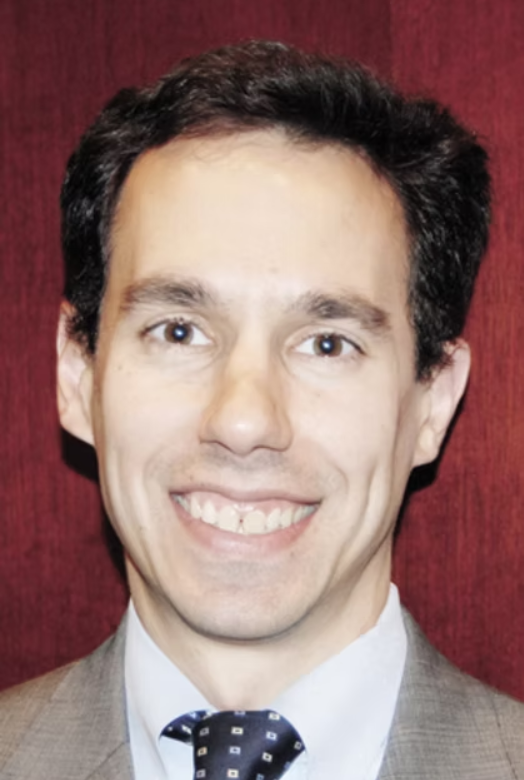
Governor, Legislature score big wins for business 2nd year in a row
Glenn Hamer, President & CEO, Arizona Chamber of Commerce and Industry (File photo)
If Yogi Berra were a political analyst, he might describe the May 3 passage of HB2815 as the second consecutive year that the Legislature passed a once-in-a-generation competitiveness package.
The work put in on this year’s package is a testament to the commitment of Gov. Jan Brewer, House Speaker Andy Tobin and Senate President Steve Pierce to make Arizona the absolute best place to grow a thriving business.
The centerpiece of the bill was a landmark cut in the capital gains tax. Before passage of HB 2815, Arizona taxed capital gains like regular income. But thanks to the Legislature, we will phase in reductions of 10 percent, then 20 percent and finally 25 percent in the tax on capital gains, resulting in a 3.4 percent effective tax rate on capital gains.
To read more, click here
President Pierce appears on Arizona Horizon
Senate President Steve Pierce sat down with House Speaker Andy Tobin and Arizona Horizon host Ted Simons to talk about the just-completed legislative session.