



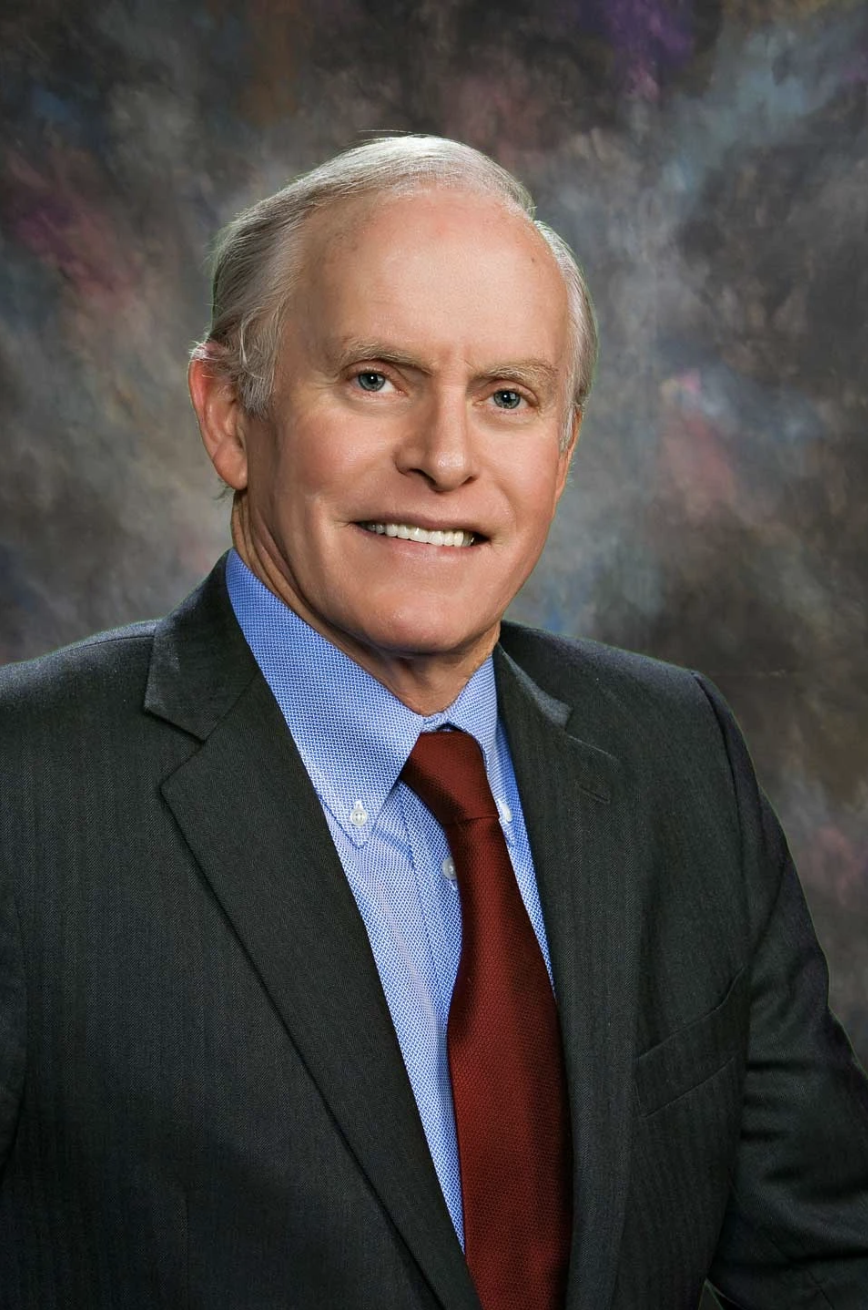
President-elect Pierce on the filings to the Arizona Supreme Court on the Colleen Mathis removal
“The Governor and the State Senate have clear constitutional authority to remove an IRC member. When the Court inserts itself into this process, it has an obligation to explain its actions clearly. On Thursday the Court not only disregarded the actions of the Governor, but also more than two-thirds of the State Senate. The Court owes the people of Arizona an explanation on their intervention, and Ms. Mathis must not return to the IRC until we get those answers.”

Senate and Governor Brewer file legal motions to Supreme Court
Call for clarity on Court’s ruling to reinstate IRC Chair.
This afternoon Governor Brewer and the Arizona State Senate filed legal motions with the Arizona Supreme Court. The Governor and Senate are requesting the Court reconsider last week’s ruling to reinstate IRC Chair Colleen Mathis. The Governor and Senate are also asking the Court to clarify the order reinstating Mathis and to stay the order.
Respondents’ Joint Motion for Expedited Consideration.
Respondents’ Joint Motion to Reconsider.
#2699273 v1 – MOTION TO STAY Reinstatement Order.
https://azsenaterepublicans.files.wordpress.com/2011/11/respondents-joint-motion-to-reconsider.pdf
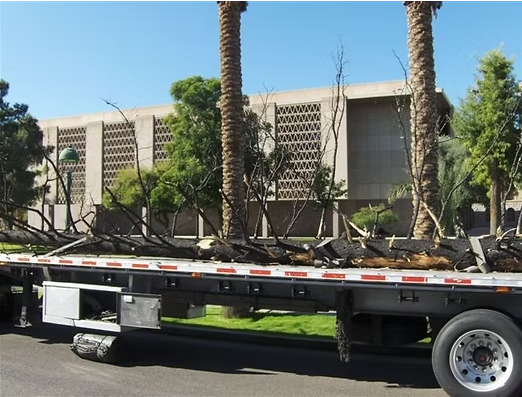
A 40-foot reminder of the devastation in Arizona’s forests
Senator Sylvia Allen organized an event on November 17 to remind the people of Arizona of the devastation of this summer’s wildfires and the federal government’s incompetence with forest management. Her constituents from District 5 brought a 40-foot Blue Spruce tree to the Capitol, burned and destroyed in a summer fire. Since the fires were extinguished, the media have been quick to move on to other stories, but the devastation isn’t going away for the people of Arizona.
Senator Allen made the following comments at the event.
The fire season is over but the consequences are not. Arizona forests are still in a state of emergency. We must aggressively thin and log to return our forest to pre-settlement stands of trees that our ecosystem can support.
The fires left thousands upon thousands of trees dead, and the consequences will be a clogged forest of trees that are falling over and emitting CO2 for years to come.
“Studies show that the consequences of the burned soil will impact the regeneration of the Ponderosa Pine,” say the forestry scientists at the Ecological Institute in Flagstaff.
The consequence of flooding is felt every time we have a thunderstorm. The silt has entered our streams and killed endangered fish.
The consequence to the economy of a lost summer of tourism is still being borne by our rural citizens and cannot be overstated.
Further catastrophic fires are still in Arizona’s future. Arizona’s forest is in a state-of-emergency and will be for decades if the federal government does not act now. The over- growth of trees that clog the forest must be dealt with now and the federal policies roadblocks must be removed now.
We must aggressively thin and log to return our forest to pre-settlement stands of trees that our ecosystem can support.
If the Forest Service will not act now, then the State of Arizona needs to step up in this emergency and take over management of our forestlands.
Senator Steve Pierce chosen as new Senate President
The Majority Caucus on Thursday chose Senator Steve Pierce of Prescott as the new Senate President. Senator Andy Biggs of Gilbert will remain Majority Leader, and Senator Frank Antenori of Tucson will serve as Majority Whip.
Senator Pierce is a third-generation Arizonan and a rancher from Prescott. Senator Pierce told reporters gathered outside the Caucus meeting that the Leadership team will continue the good things that Senate President Russell Pearce started. “He did a wonderful job. He did not deserve what happened to him,” said Senator Pierce.
Senator Pierce says the economy and jobs will continue to be the primary focus of the Legislature’s work.
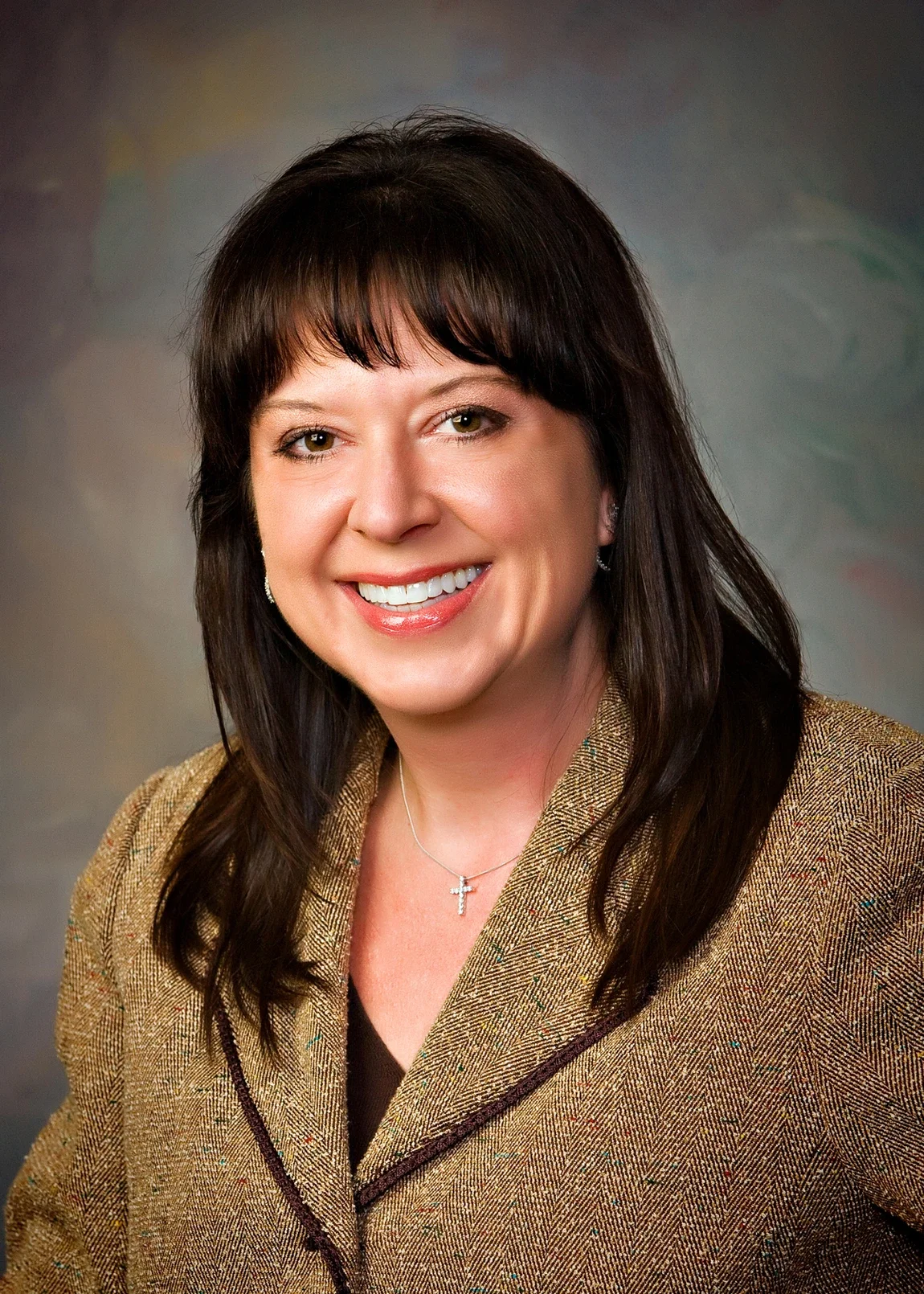
“School choice and private school vouchers” by Senator Michele Reagan
School choice in Arizona involves several components:
1) Open enrollment for public district schools.
2) Public charter schools
3) Individual and corporate scholarship tax credits.
4) Accommodating homeschool laws.
5) Distance learning opportunities.
6) Now empowerment savings accounts for disabled students.
Scholarship tax credits or private school tuition tax credits as some may know them, have been repeatedly challenged by the teacher’s union, the School Board’s Association, and the ACLU. However, they have been ruled constitutional by the Arizona Supreme Court in 1999 (Kotterman v. Killian), the Arizona court of Appeals in 2009 (Green v. Garriott), and finally by the U.S. Supreme Court in 2011 (Arizona Christian School Tuition Organization v. Winn.)
A critical holding by both the U.S. Supreme Court and the Arizona Supreme Court was that these donations are and remain private funds not government expenditures. Thus, scholarship tax credits do not involve government assistance to private schools according to the courts. Because the average scholarship awarded pursuant to both the individual and the corporate scholarship tax credits average less than $2,500, which is less than 1/3 of what it costs from all sources to educate the same student in a public school, whether district or charter, the savings as a result of the scholarships to the taxpayers are substantial. The roughly 28,000 students who are beneficiaries of the approximately $50 million donated pursuant to these tax credits results in savings to Arizona taxpayers of millions every year. If we add the students who receive scholarships from the corporate scholarship tax credit donations the amount saved is even greater.
The corporate tax credit donations are subject to a statewide aggregate cap – about $24 million this year – and are limited by a requirement that the students receiving the scholarship come from families of modest or low income and the students must be “switchers.” They must come from a public school or be entering kindergarten.
It is also apparent from quality academic peer reviewed research that when school choice becomes meaningful, in other words when there is substantial competition; there is improvement in student academic achievement for both the student exercising the choice option as well as the student remaining in a public district school which needs to respond to the competition. We have many excellent public schools in Arizona and they are certainly capable of holding their own in a competitive environment.
In Arizona we briefly had in place a voucher program for disabled and displaced children, but it was declared unconstitutional by our Supreme Court (Caine v. Horne.) As a result of that decision, unless there is a constitutional amendment, vouchers, unlike scholarship tax credits, are simply not an option in Arizona.
Earlier this year the legislature passed and the Governor signed into law what are known as empowerment savings accounts for disabled students. These accounts involve setting aside 90% of what would have been spent at a public district school for the same student and using the funds at the direction of the parents for a variety of educational purposes such as tutoring, private school tuition, therapy, curriculum, and even for college education for these disabled students.
Sadly, the teacher’s union and the School Board’s Association have filed a lawsuit to try to slam the door on these disabled students for whom we should be increasing not limiting educational opportunities.
Marines Celebrate Birthday at Senate
November 10 was the 236th birthday of the United States Marine Corps, and Arizona Marines chose to celebrate on the Senate floor. The Marine Corps was founded in Philadelphia, Pennsylvania on November 10, 1775. Arizona is home to the Marine Corps Air Station in Yuma, 6th Engineer Support Battalion in Tucson, 6th Engineer Support Battalion at Luke Air Force Base and Marine Corps Recruiting Station Phoenix. The birthday ceremony included brief words from Commanding Officer Major Mike Ford and the Guest of Honor, the Honorable Michael D. Ryan, Justice, Arizona Supreme Court (Ret.). A proclamation from Governor Janice K. Brewer was read, recognizing November as “Marine Corps Month”.
The Marines honored the 59 year-old tradition of cutting the ceremonial birthday cake, which has come to symbolize the passing of tradition from generation to generation as the oldest and youngest Marines present are recognized during this event.
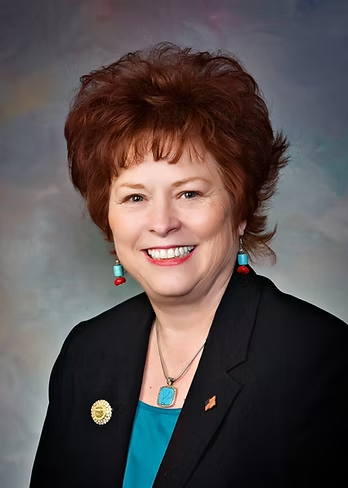
Democrats’ Method of Governing: Boycott Meetings and Start Recalls
As Republicans prepare for another legislative session focused on getting Arizona back to work and improving our economy, Democrats have embraced a curious strategy of boycotting meetings and threatening recalls against Republicans who don’t vote with them.
“Recalls have never and were never meant to be used against lawmakers whose sole fault was they disagreed with you on the issues. They’re designed to target people who may have committed crimes or were guilty of gross misconduct in office,” says SenatorSylvia Allen, President Pro Tem of the Senate.
“But Democrats are now talking about making this their go-to strategy. Contact some outside interests, pay people to collect signatures, and bingo, you have a recall election. This is no way to govern.”
Democrats also boycotted meetings for the recent Joint Legislative Committee on Redistricting, even though many members of their party complained about the draft maps and the process.
Democrats are also twisting last night’s recall election results into a referendum against enforcement of illegal immigration. SB 1070 remains widely popular in Arizona, and the bulk of the law is being enforced in our state.
“SB 1070 mirrored federal immigration law. We must have legislation like this, because there is no physical barrier at the border. The border is not secure,” says Senator Allen.
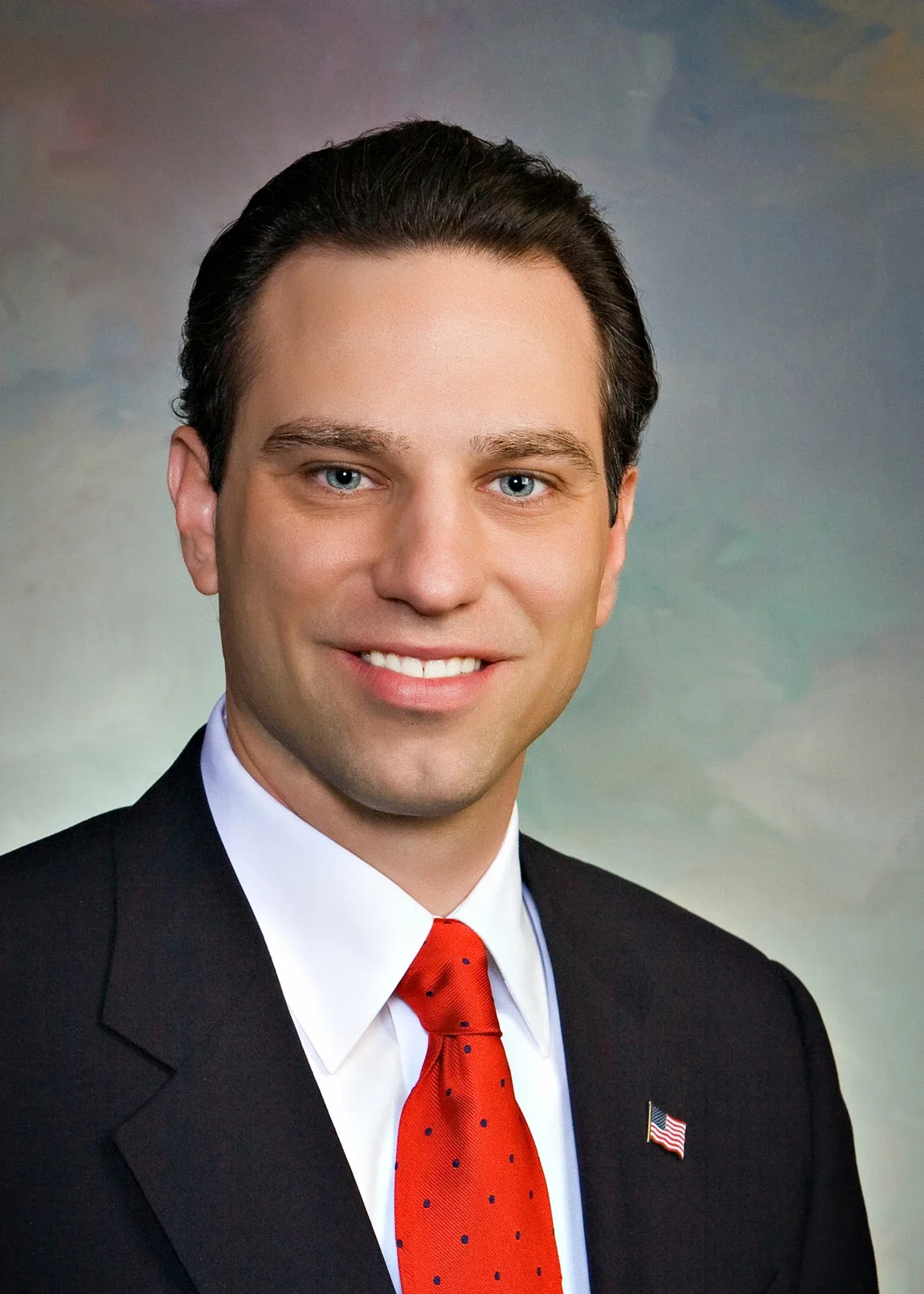
Senator Smith to Arizona Teachers: I want to hear from you!
My name is Steve Smith, current Arizona Senator from District 23, and I need input from teachers from all grade levels and subject areas in K-12 education. In this upcoming session, I plan on introducing performance-pay legislation in the hopes to provide an opportunity for great teachers in Arizona to be properly compensated for their achievements in the classroom.
So that you know my background, I currently serve on the Senate Education committee and I come from a family of teachers. My wife, brother, sister, cousin, and mother-in-law are all currently teaching and my step-father was a teacher in inner-city Detroit for 40 years – so this issue is near and dear to me. I have spent countless hours researching a multitude of models and discussing the feasibility of different options with the Department of Education, Superintendents, and Principals. What I need now is the most important part: feedback from the people this bill is designed to help, the teachers themselves. Too many times we find that when the government creates laws they do not consult with the very people the laws affect, but not this time.
The goal of this legislation is to have a fair and uniform set of standards in place, unlike the current method. K-12 teachers would have a clear understanding of what results are necessary in order to collect their performance pay, which would be in addition to their regular base salary.
The criteria would not comprise just from standardized testing results, but from an array of other indicators like in-class testing, overall student class performance, overall performance of the school, in-class observations, etc. The questions that remain are:
What are the criteria that you, the teacher, would like to see?
How would you want to be evaluated, and what is fair and reasonable?
Would you prefer to see performance pay based on a per-student model or an overall classroom model?
How should art, physical education, music, and other elective teachers be evaluated?
How would you involve the parents of the students more?
What thoughts in general to you have towards this discussion?
Again, your input is imperative and valuable, so please send your comments/ideas to me directly by no later than December 15 at stevesmith@azleg.gov
Thank you very much and keep up the outstanding work!
Sincerely,
Senator Steve Smith
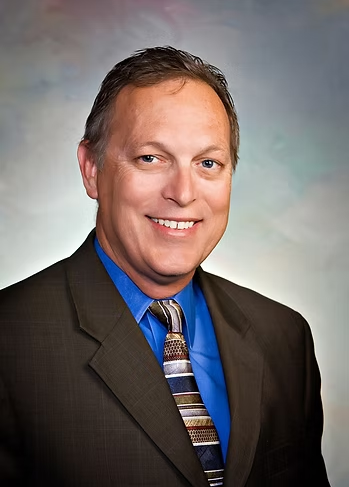
Majority Leader Biggs on the Removal of IRC Chair Mathis
When the drafters of Proposition 106 took their idea to the ballot in 2000, they knew they had to address the possibility of the State needing to remove a Commission member. They wrote that a Commission member could be removed by the Governor, with the support of two-thirds of the State Senate, for acts considered “gross misconduct” or “substantial neglect of duty”.
Thank goodness they included that in the proposition approved by Arizona voters. Because of that wording, and the overwhelming evidence that Chair Colleen Mathis committed “gross misconduct” and “substantial neglect of duty”, the Governor was able to remove Ms. Mathis before she could do any more damage to our state.
We have to get past the arguments of which party benefits by which map. That’s not what this is about. To make the decision to remove a member of the IRC, we must look at their actions in office. Take the partisan blinders off and look at how Ms. Mathis committed “substantial neglect of duty”.
She admitted meeting in violation of open-meeting laws in a pursuit “of consensus” on awarding the mapping consultant contract.
There is evidence that Ms. Mathis fudged the scoring on the mapping consultant in order that her preferred company was chosen. One political commentator indicated that her actions resembled bid rigging.
She failed to disclose on her application that her husband was the Treasurer of Democratic candidate for the Legislature Nancy Young-Wright.
Contrary to the Constitution she appointed two vice-chairmen instead of one.
Her presentation of a donut-hole map, and the instructions to the Commission was a violation of the Constitutional requirement that the maps work from a grid and make adjustments to that grid.
She privately created her own Congressional district map and forced a vote on that map on the same day it was introduced.
This list of her misconduct does not even include the pages of unconstitutional activities discovered during the course of the Joint Legislative hearings on the Independent Redistricting Commission.
We don’t even need to speculate on the partisan motivations behind all these actions. The actions themselves are more than enough to remove her.
Proposition 106 included very specific guidelines on the role of the Legislature in the redistricting process. This Legislature has followed those guidelines to the letter. Legislative leaders selected four of the five members. The Legislature reviewed the conduct and product of the Commission and made comments to the IRC. Members did this by convening a joint bipartisan commission, although Democrats shirked their duty by “boycotting” meetings. The State Senate has followed the requirement to review and confirm/refuse in the case of the Governor’s removal of a commissioner. Once the Senate received the Governor’s call of a special session and findings outlined in her removal letter to the former IRC Chair, the Senate had a duty to act.
As the weeks go on, many will discuss whether the IRC system is even the best way to draw Congressional and Legislative maps. But that is the system we are under right now, the Governor and Legislature worked in a Constitutional manner and removed a Commission member for a series of unconstitutional acts
Mathis’ unconstitutional acts continue even after removal from office
The chair of the Independent Redistricting Commission has been removed from office, but her unconstitutional acts are still affecting the work of the Commission.
The IRC is in gridlock because Colleen Mathis made the head-scratching suggestion to select two vice-chairs for the Commission. That is a blatant violation of the Arizona Constitution. Article 4 Part 2 of the Constitution reads:
The five commissioners shall then select by majority vote one of their members to serve as vice-chair.
At the time of the vote to select two vice-chairs, the IRC was made aware of the unconstitutional decision, and Ms. Mathis chose to ignore advice to follow the Constitution. Not only was this unconstitutional, but Mathis’ act has had the predictable impact on the IRC. With two vice-chairs, it will be almost impossible for the IRC to act on anything.
The Governor and Senate realized evidence was overwhelming that Ms. Mathis had committed “gross misconduct” and “substantial neglect of duty”. What they perhaps didn’t realize was the impact her unconstitutional reign would have even after she left the IRC.
Senator Sylvia Allen on the Constitutional removal of Colleen Mathis
On Tuesday the Senate confirmed the Governor’s removal of the Independent Redistricting Commission Chair Colleen Mathis. This action should have been taken back in June, but it was taken now because the maps produced by the IRC under the direction of the Chair are unconstitutional in all six criteria that must be considered:
The U.S.Voting Rights Act
Equal Population
Geographical Compactness
Respect for Communities of Interest
Use of Visible Geographic features
Competitiveness
We believe that Ms. Mathis has presided over a dysfunctional process riddled with incompetence and that she has failed in her one, overriding goal: to produce constitutional maps.
The Chair prevented Republican Commission members from hiring their own counsel, and she engineered the awarding of a mapping consultant contract to a partisan firm that clearly was in over its head. The awarding of the contract to Strategic Telemetry was done under a cloud of open meeting violations and alleged bid-rigging. Those evaluations were then put through a paper shredder so that nothing can be verified.
She has refused to cooperate with the Attorney General’s open meeting law investigation of the IRC.
The IRC abandoned the use of grid maps, contrary to the Arizona Constitution.
Dramatic changes were made to the draft maps over the weekend of September 24, in private and without the full Commission. The following Monday, commissioners were asked to view and approve the entirely new maps.
After seven days of testimony in front of the Joint Legislative Committee on Redistricting, there is overwhelming evidence that the IRC has produced unconstitutional congressional and legislative draft maps.
You can read the report here: http://www.azleg.gov/alisPDFs/JLRC_Recommendation_FINAL_withExs.pdf
The law provides for the actions that the Governor and the Legislature took Tuesday. When Proposition 106 was passed by the people, provisions were included for removal of any Commissioner if they did not function properly and within the law.
I heard a consistent complaint over and over from many in my District who attended the IRC meeting. They felt strongly that the commissioners did not listen or care about the testimony given concerning their proposed maps. Early in the process, maps from my District had been drawn and submitted to the Commission. These maps had strong support of the vast majority of my District. These maps met the Constitutional criteria and would have kept eastern rural Arizonatogether. In my District alone, 15 cities and towns passed resolutions in support of our maps and against the IRC maps. The five eastern counties all testified that we would lose rural representation under the new maps and that the four new districts drawn out of the original District 5 did not meet the Constitutional criteria.
More than ten years ago, Prop 106 (the Creation of an Independent Redistricting Commission) was sold to the public by persuading them that it would be “independent” – that is, free from all partisanship. Please understand that NOTHING is ever free from politics or partisanship but if it is held accountable to the people through their vote and voice, then we have a better check on the process.
Before the IRC (Prop 106), the state Constitution put the responsibility for redistricting in the hands of the Legislature, approved by the Governor. This constitutional process held the Legislature/Governor accountable to the people who, through their vote and voice, could express their desires and concerns. Through this process, my 15 cities and towns and five counties’ resolutions would have had more of an impact on the Legislature than on an “independent” commission composed of people who feel no responsibility to or consequences from the voters.
By creating an “independent” commission that is totally unaccountable to the people, the people’s voice has been lost, and all that matters is the individual partisanship pressure the commissioners feel from special interests. We need to repeal the law that created the IRC and put this process back in the hands of the people, as it was originally constitutionally designed.
IRC Chair’s failure to produce Constitutional maps meant Governor had little choice but to remove he
Statement by Arizona Senate Majority Whip Steve Pierce.
Governor Brewer determined last night that Independent Redistricting Commission Chair Colleen Mathis committed gross misconduct in office, and the State Senate concurred in an overwhelming vote to approve Mathis’ removal from office. The decision to remove Ms. Mathis followed overwhelming evidence that she led a commission that failed at its one core mission: to produce Constitutional maps.
The Arizona Constitution provides for the Legislature to comment on draft maps submitted by the IRC. The Joint Legislative Committee on Redistricting was formed and I co-chaired the committee with Representative Jim Weiers. The committee was made up of four Republicans and two Democrats.
Over seven days, we heard from the public. They came from all over the state, places such as Yuma, Colorado City and Bisbee. Speaker after speaker told us how they felt the IRC had let them down. They gave clear reasons why these draft maps were unconstitutional. They described how their districts were not made up of “communities of interest” and how the IRC focused on “competiveness”, at the expense of “compactness” and “geographic features”, another clear violation of the Constitution.
We heard from experts who offered evidence the IRC Chair and her commission had violated not one but all six Constitutional criteria for drawing Congressional and Legislative maps. Amazingly, some of these draft maps were not even drawn by the full commission, but instead by Chairman Mathis, at home over one weekend. That Monday, commission members were shown the maps and told to vote on them.
All of this gerrymandering came on top of an already clouded redistricting process The Chair conspired with the Democrats to hire the counsel for the Republicans! Those same three hired a mapping consultant with clear ties to the White House, and that decision is now the target of a state investigation over open meeting violations. That investigation is crawling along, because Mathis, Jose Herrera and Linda McNulty are stonewalling investigators. And the response by the three to any accusation leveled at them seems to be to hire another high-priced attorney, at taxpayer expense.
Even though Ms. Mathis is a registered Independent, the Democrats are reacting as if we are going after one of their own. They are making wild partisan charges and now even threatening to recall four Republican Senators for simply voting for Mathis’ removal. Lately, that seems to be the knee-jerk response by Democrats to any lawmaker they disagree with.
The Constitution provides for the Governor to call for the removal of an IRC member for neglect of duty or gross misconduct and the State Senate to approve or reject that decision. That is exactly what happened last night. For critics to react to that decision with threats of a recall is outrageous. This is the democratic process, but it’s apparently not the Democrats’ process.
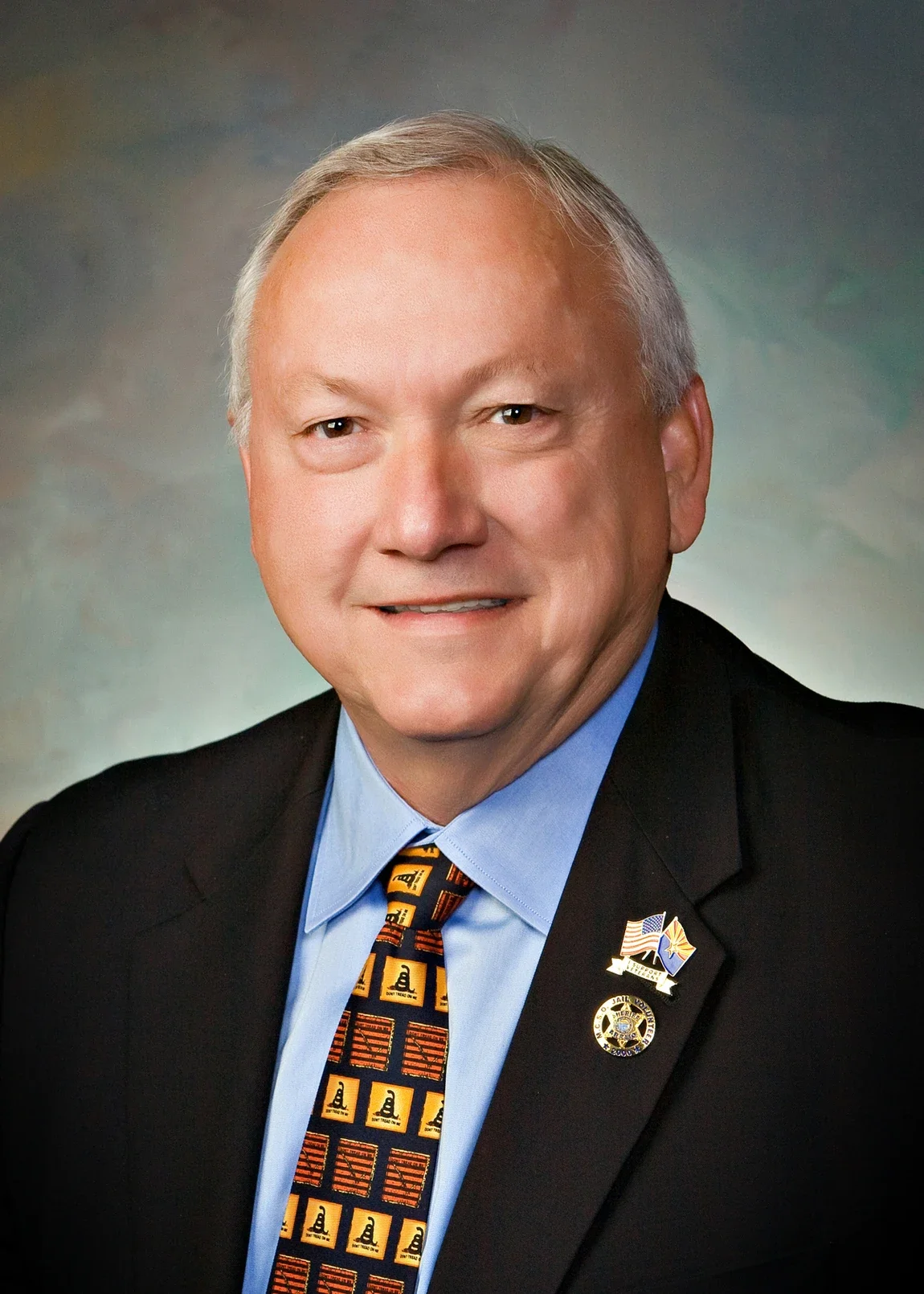
Super Bowl, Tourism Growth show Arizona is a great place to visit
Newly-released tourism figures and the choice of Arizona to host the 2015 Super Bowl is fresh evidence that Arizona is not seeing a downturn due to the state’s tough stand on illegal immigration.
National Football League owners voted recently to bring Super Bowl XLIX to University of Phoenix Stadium in 2015. The Super Bowl brings hundreds of millions of dollars to our state’s economy.
“The benefits of the Super Bowl will be felt throughout the Phoenix area and the state,” says Senate President Russell Pearce. “We showed the world in 2008 we could host the big game here, and this vote was a strong endorsement of Arizona.”
“Critics of SB 1070 were shaking in fear that our tough stance on illegal immigration would cause visitors to turn their backs on our great state. Do you really think the NFL would award another Super Bowl to Arizona if this was the case? Let’s put an end to the myth about tourist boycotts. Look at the new numbers on tourism”, says President Pearce.
A report from Dean Runyan Associates shows travel spending in Arizona is up 7.9% from 2009. Gross sales at state hotels are up more than 12% from last year. Figures from Smith Travel Research show hotel occupancy inScottsdaleis up 4% from last year, and revenue per available hotel room up 8.6%.
Democrats Have an Odd Way of “Boycotting” Committee Meetings
Democratic Leadership dismisses Committee, then obsesses with every move. Democrats in the House and Senate have dismissed the Joint Legislative Committee on Redistricting as a “divisive partisan game”, but as Republican Committee members perform their Constitutional duty, the Democrats are the ones playing games.
The Joint Legislative Committee on Redistricting was formed under the Legislature’s comment authority in the Arizona Constitution. It is a bipartisan committee comprised of four Republicans and two Democrats. Just minutes before its first hearing on October 21, Democratic leadership announced it wouldn’t take part in the Committee. That “boycott” has taken a strange turn.
“Their chairs are empty, but they’re sure taking part,” says Senator Steve Pierce, a Republican from Prescott. “They are launching attacks on those testifying, they are going on Twitter to make accusations. They’re the partisan ones in this.”
In the six days of hearings, the Committee has listened to dozens of citizens who have been let down by the Independent Redistricting Commission. The Joint Committee will collect the information from these citizens and present a report to the IRC, as detailed in the Arizona Constitution.
Sen. Biggs on the decision for LD 18 voters
Mesa’s District 18 has one of the most effective legislative leaders in recent history, but a group of outsiders has hijacked the will of Mesa voters, forcing a new election and raising the real possibility that Senate President Russell Pearce could be forced out of office. With early voting beginning in the district, it is time for voters to look at the two men running in this race and decide which one of them best represents them at the State Capitol.
The residents of District 18 don’t just have an effective Senator who understands their needs and works to make the East Valley and State of Arizona better places. They have a Senate President who successfully engineered one of the most effective sessions in memory. President Pearce promised voters a truly balanced budget, and he delivered with a package that balanced the books without crippling state agencies. I know how hard he worked to make it happen, because I was right there alongside him, at many of the discussions leading up to the budget plan. President Pearce is a former Appropriations chair, who knows the state budget back and forth, up and down. His experience is invaluable, and all Arizonans are benefitting from it.
When our Caucus voted for Russell to become Senate President, detractors questioned whether he would be able to lead a group with such different opinions on the issues. As session progressed the answer became a clear “yes”. Even when he personally strongly opposed a bill, the President made sure the sponsor got a fair shake. I probably don’t need to tell you that has not always been the case at the Legislature.
After watching the recent hour-and-a-half candidate debate, I still have no idea where Mr. Lewis stands on the issues important to Mesa voters. He speaks in vague platitudes and sound bites, but there is no “there” there. It’s pretty clear why he does this. On the issues, the voters stand with Russell Pearce, and to come out publicly against those issues would be deadly to Lewis’ candidacy.
One thing I did pick up is that he is embarrassed by Mesa and Arizona, and in his warped world Arizona is like 1964 Alabama. Not quite .Alabama is actually trying to become 2011 Arizona, joining 34 states in adopting tough legislation on illegal immigration. Alabama would also like to have the job creation numbers we have in Arizona. President Pearce’s focus on the economy and jobs is making a difference in this state, and better days are ahead. Arizona can’t afford Jerry Lewis.
Since Mr. Lewis won’t let us know where he stands, we are left to try to learn more about his comrades behind the recall. Randy Parraz is a failed Democrat candidate for U.S. Senate and an open borders advocate. Chad Snow is a lawyer who represents illegal aliens suing their employers. With supporters from the loony left, are voters sure they want to put an unknown, inexperienced and unproven candidate in office?
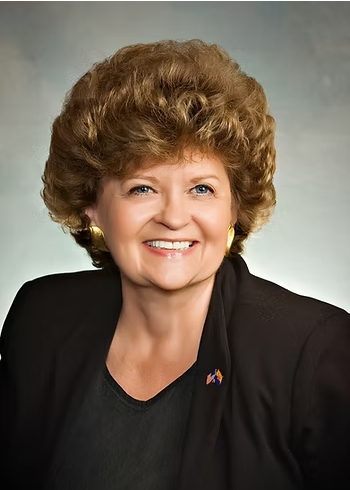
Sen. Griffin on the Independent Redistricting Commission
By State Senator Gail Griffin
I understand the commission plans on submitting their final maps to the U.S. Department of Justice by Nov. 24. The DOJ then has to approve or reject the maps.
I firmly believe that this unelected, unaccountable commission has grossly violated their responsibility to the citizens of Arizona. Prop 106 clearly defined what this commission must do. They are to draw legislative and congressional districts that are not Gerrymandered for partisan advantage. They have failed miserably in that task.
To read the rest of the article published in the Sierra Vista Herald, click here: http://www.svherald.com/content/news/2011/10/22/230550
Joint Legislative Committee on Redistricting Concludes First Day of Hearings
(Phoenix, State Capitol)—The Joint Legislative Committee on Redistricting has wrapped up its first day of hearings. The committee is comprised of Republicans and Democrats from the Senate and House. Committee members today learned about the process the Arizona Independent Redistricting Commission took in drawing preliminary Congressional and
Legislative maps.
A large part of today’s four-hour meeting was devoted to public testimony. Committee members listened to citizens frustrated with the draft maps, with many focused on the issue of communities of interest.
“These folks made some good points. You’ve got a Congressional district proposed by the IRC that goes from Yuma, up through Yavapai County and then back down, wrapping into Fountain Hills. It’s hard to see how that is a community of interest,” says Senator Steve Pierce, co-chair of the committee.
This committee was formed to comply with the Arizona Constitution, which specifically authorizes the Legislature’s comment authority.
Both Republican and Democratic lawmakers have voiced concerns about the proposed maps from the IRC, but Democratic leadership abruptly chose to “boycott” today’s hearing, and their two Members were not present.
“I find that an odd decision,” says Senator Pierce. “We’ve heard complaints from both sides of the aisle on some of the questionable decisions made with the maps. Senate and House leadership lived up to their Constitutional duties and formed a bipartisan committee to look at the maps and hear from Arizonans. Then, just minutes before our first hearing, they run off.”
The Joint Legislative Committee on Redistricting will meet again on Monday, October 24 at 1 p.m. in House Hearing Room 4.
Arizona’s Quiet Comeback by Sen. Al Melvin
If you follow coverage of the economy in the U.S. and around the world, you know there is much hand-wringing that we could fall into another recession.Europe can’t seem to work its way out of a debt crisis, and here at home, the only response from the Obama Administration seems to be throwing more money at the problem.
Here in Arizona, we’ve handled things much differently. Republican leadership in the Legislature joined with the Governor in focusing on a balanced budget, with reasonable reductions to state agencies and tax cuts to reinvigorate the economy. While many states chose to raise taxes, and some have done little to reduce their deficits, we chose to live within our means, and spend only money that we have in our account.
Well, we are now seeing the results of those difficult decisions, and Arizona is making a strong economic comeback. This isn’t political spin. It’s based on numbers in monthly reports from non-partisan sources. For whatever reason, you don’t see these reports in the media, so I wanted to share them with you now.
Arizona is growing jobs faster than just about any state in the country. A new report from the Bureau of Labor Statistics shows only 20 states grew jobs in August. Arizona came in 2nd, with 15,400 new jobs. Not only that, the only reason Minnesota placed ahead of us was because of rehiring workers after a government shutdown. In reality, Arizona is number one in job growth in the U.S.
I see it firsthand, talking to the people who create jobs in southern Arizona. Many companies are looking for people to hire. Trucking, mining and financial service firms are hiring hundreds of new employees.
Moody’s Analytics, an economic consulting firm, likes the look of Arizona going forward. Its study released in late September predicts our state to grow jobs by 1.2%, one of the best numbers in America.
The Joint Legislative Budget Committee just released its fiscal summary for August, and revenues are 8.6% above the previous year. General Fund collections are $44.2 million above this year’s budget forecast. Unlike many states, Arizona is growing.
And the news is likely to get better in Arizona. The Arizona Competitiveness Package signed into law this spring puts large and small companies in an outstanding position to expand operations and hire workers. Our first priority is to help existing businesses who are already employing Arizonans. We will then do our best to attract companies to come here from other states and countries. Make no doubt about it: firms now know Arizona is “open for business”, and we are all going to benefit.
The past couple years have been difficult, and we have made some tough decisions on cuts in spending. Because we bit the bullet and didn’t delay, the days of large cuts are behind us. And as these encouraging economic numbers continue to come in, I am convinced we made the right call.
Legislators are already working on some exciting proposals for next session, including a new jobs bill and the Small Business Job Creation Act. The Republican legislature is committed to making Arizona a safe haven for our businesses and our people through small government, with lower taxes and fewer regulations. This legislature is pro-business. We know people need jobs for their lives, liberty and pursuit of happiness, as was intended by our nation’s founders.
Rep. Michele Bachmann meets with Senators
Congresswoman and 2012 Presidential candidate Michele Bachmann came to the Arizona Capitol today, to discuss border security with Senate leaders and law enforcement. Rep. Bachmann wanted to hear personally how Arizona is bearing the brunt of the Federal Government’s inaction on enforcement. The Congresswoman also wanted to learn more about the border fence initiative, led by Senator Steve Smith.
The website: www.buildtheborderfence.com is set up to gather private donations for building a border fence.
Rep. Bachmann heard stories from border lawmakers, including Senator Gail Griffin, who has seen border smugglers moving through her land, ten miles from the border. Senator Sylvia Allen described how the border in a sense has moved north into Pinal County, 70-80 miles from the U.S. Mexico border.
Cochise County Sheriff Larry Dever described his frustration over the disconnect between the Department of Justice and Homeland Security. Congressman Trent Franks shared his concerns over the connection between a lack of border security and national security. Rep. Bachmann agreed with Rep. Franks that it is a terrorism issue.
Rep. Bachmann talked about how it is not right for Arizona to be punished for what the Feds aren’t doing with the border. She also described a recent town hall in Iowa, where border security was top-of-mind for many participants, even though they live in the heartland of America, not along the border.
After the 45 minute meeting in the Senate, Rep. Bachmann walked over to the Old Capitol to meet with reporters and take questions about the meeting.
Statement by President Pearce on Independent Redistricting Commission’s proposed congressional and l
“As early as Friday, the Arizona Independent Redistricting Commission is expected to release a proposed map of legislative districts to be used for the next ten years. This comes just days after the commission chair rushed through a proposed congressional map, over the objection of other commissioners who had no opportunity to evaluate it. If the legislative map contains all of the Constitutional flaws of the congressional map, we must consider remedies quickly. Arizona deserves better than this clearly partisan mapping by the commission chair and the two Democratic appointees.
This commission has already failed in three key missions. It is anything but independent. It is producing dangerously partisan maps that blatantly disenfranchise Republicans and weave through the state, searching for any Democrat advantage. It is incompetent, running weeks behind schedule and working with a mapping firm that has faulty data and more questions than answers. And it is secretive, facing an Attorney General investigation over open meeting law violations and limiting public comment.
The Governor had it right yesterday when she called the congressional map “gerrymandering at its worst”. This gang of three on the commission is desperate to create districts that give Democrats their “dream maps”.
Arizonans need to speak out against this outrage, before it is too late. The IRC will be holding hearings open to the public throughout October. If their streaming video works, you can watch the hearings at www.azredistricting.org
I ask the citizens of the state to get involved. Don’t let them tear apart our communities! Look at the maps that come out for legislative races. Then, speak out.”