



Pres. Pearce to appear on HORIZON tonight
Senate President Russell Pearce will appear on HORIZON tonight at 7 p.m. on Channel 8.


Pres. Pearce appears on Fox News Channel
Pres. Russell Pearce appeard on the Fox News Channel Friday morning to talk about Arizona’s big victory at the U.S. Supreme Court.
http://video.foxnews.com/v/963382679001/big-win-for-arizona-immigration-law/

Sen. Gail Griffin’s Letter to Arizona Attorney General Tom Horne
The calls come in every day from my constituents. “What is going on with gas prices?” “What’s causing the rise?” “Is anybody doing anything about it?’ Every time we pass a service station the price is higher than the day before. Mr. Attorney General, I am calling on you to investigate soaring gas prices.
In January 2009, when Barack Obama became President, unleaded gas was $1.84/gallon in Phoenix. It now averages $3.72/gallon. In Tucson, at the time of his inauguration, gas was $1.73/gallon. It is now $3.62/gallon. Prices in the two cities have gone up more than 100%, doubling in just over two years. Arizonans need some answers.
Gas prices have a tremendous impact on the budgets of our citizens. They’re filling their tanks once a week, and spending $40-100 each time. In addition, high gas prices mean higher prices at grocery stores and department stores.
Smart people have been trying to figure out what has caused the sharp increase in gas prices since the beginning of the Obama administration. U.S. demand for gas is flat, and inventories are plentiful. Some have suggested the administration’s cancelling of dozens of oil and gas drilling permits have played a role. After the Gulf oil spill, the White House imposed a long moratorium on offshore drilling. Did this help cause the spike?
Arizonans need an answer, as they await relief at the pumps. I ask that you help solve the mystery, and investigate this pressing problem.

Major Victory for Arizona and the American Worker
The U.S. Supreme Court has handed our great state a significant victory. It upheld our 2007 law penalizing businesses for knowingly hiring workers who are here illegally. No longer will companies be able to ignore the rule of law and hire illegal aliens, shutting out legal Arizona workers. With the highest unemployment in a generation, we must do all we can to get Arizona back to work, and this ruling means those here legally will not have to compete with the illegal crowd. That is great news.
In 2007, I sponsored HB 2779, the “Fair and Legal Employment Act”, because I knew something needed to be done to stop the profits-over-patriotism crowd. These companies ignored the law and hired illegals, because it was cheap labor, but certainly not cheap to theArizonataxpayer. In the cost of $2.6 billion to educate, medicate and incarcerate illegal aliens. Now, with t
his Supreme Court ruling, the state has the clear right to require employers to verify work eligibility status of all new employees. The E-verify system puts the responsibility for verifying documents on the government, with 99.7% accuracy.
Now that our efforts have proven to not only be the right thing to do but to also be politically popular, you are seeing people who have fought us looking to claim credit. Then-Gov. Napolitano did sign HB 2779, but that’s not the whole story. She opposed this bill and just about every effort we made to crack down on illegal immigration, but the writing was on the wall. We were collecting thousands of signatures to put a tougher measure on the ballot. Napolitano had no choice but to sign this bill, to avoid that tougher law. All you have to do is look at her efforts as Secretary of Homeland Security to know that she believes in non-enforcement of our immigration laws.
The message is now clear to any business that is still considering hiring illegals. If you do so, you will face sanctions, and you could lose your license to operate. This is indeed a “death penalty” for those businesses that choose to hire those here illegally. Fewer illegals means more job openings for citizens looking for work. We are hoping to bring down the “help wanted” sign in our state.
Illegal aliens are getting the message that they are not welcome in Arizona. Tens of thousands of illegals have left the state since we began our efforts to crack down on illegal immigration. It is working, and our state’s taxpayers are paying less for emergency care at our hospitals and paying less for education at our schools. Our efforts are making a difference, and we will keep up the fight, with attrition by enforcement.
So what does this new ruling mean for the fate of SB 1070? I’d say it looks good. In his majority ruling, Chief Justice John Roberts wrote that the employer sanctions law “falls well within the confines of the authority Congress chose to leave to the states.” That is at the heart of the fight over SB 1070, and Justice Roberts is making it clear a state has the right, and in fact the duty, to uphold and enforce federal laws. It is becoming pretty clear that the U.S. Supreme Court will uphold SB 1070.
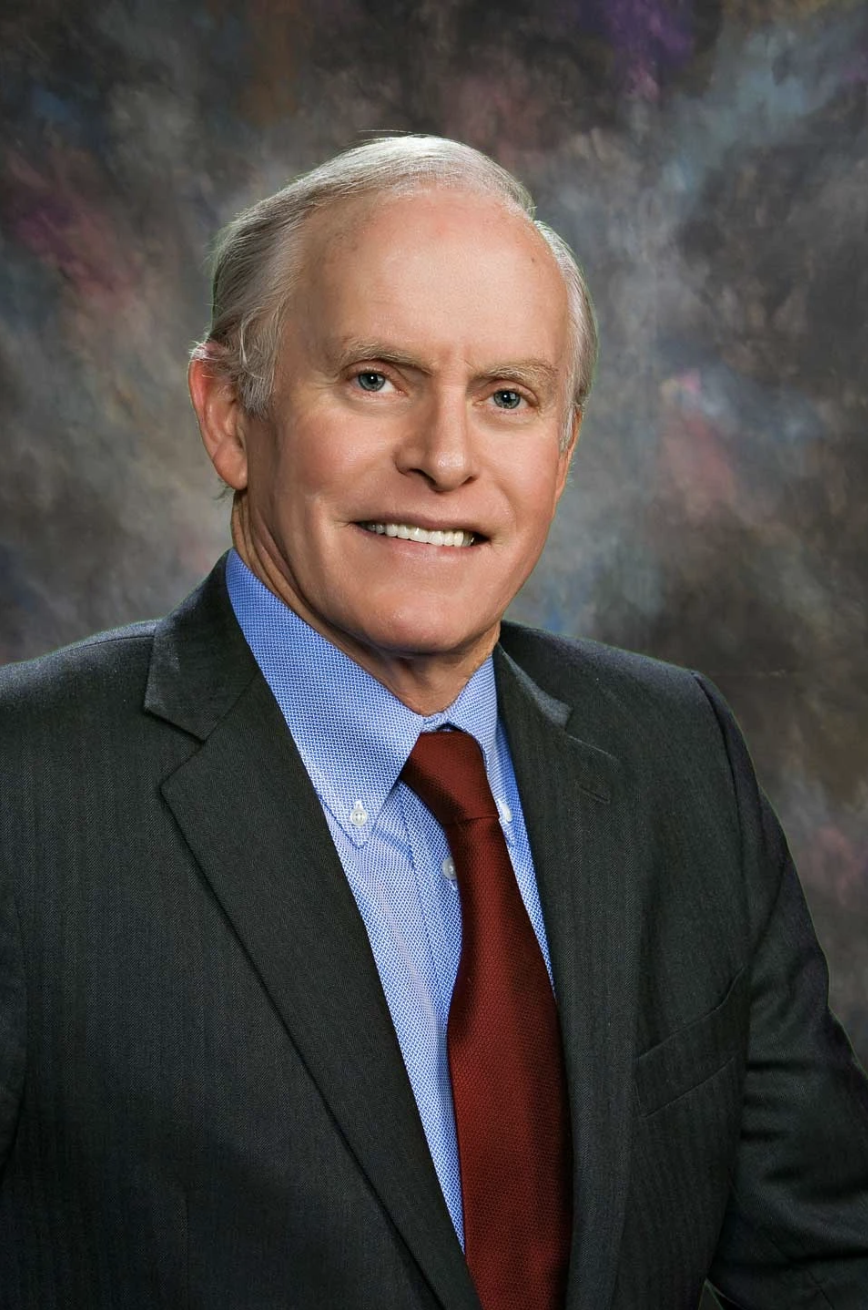
Sen. Steve Pierce on tax changes
Yavapai County Assessor Pamela Pearsall has been telling residents that the Legislature is raising property taxes on homeowners. Whether it is intentional or not, she is giving an incomplete picture, and it is misleading residents.
The Legislature lowered the Class 1 property assessments this session, as part of the Governor’s Arizona Competitiveness Package. If no adjustments had been made, property taxes would have been shifted to all other property classifications, and Ms. Pearsall would be correct. But we did make an adjustment. The Homeowner’s Rebate is being increased. Everyone already gets the HR or Homeowners Rebate and you probably don’t even know it. By filing the new affidavit, everyone will be aware that they are receiving the increased rebate. Additionally, the Homeowner’s Rebate Affidavit will expose those who are claiming the rebate illegally. Rental properties have never been eligible for the rebate, but it has been happening, at a cost to you the taxpayer. HR is being used by bank owned properties, REOs, second homes, vacation homes, to which it was never intended to be. The Homeowner’s Rebate was intended to be for taxpayers on their primary residence ONLY.
Our Arizona businesses face some of the highest taxes in the country, higher than in California. Business property is currently taxed at twice the amount of residential property. In order to make Arizona competitive and attract out-of-state businesses to relocate, the Commercial Property Assessment Ratio will be reduced from 20% to 18%. This will help our economy and bring much needed jobs and revenue to the State. The homeowners rebate has been in existence for 30 years. During this time the HR percentages have changed numerous times, in 2013 the homeowner’s rebate percentage will be increased. This HR increase is designed to keep homeowner’s taxes from increasing while helping draw new business to Arizona. It is not a new tax. We only want you to know that it is there, it was increased for you, and it is illuminating those that are abusing it and costing you, the taxpayer money from the general fund.
I understand and appreciate there are going to be disagreements on the state’s taxing policies. I also believe you should hear the whole story, not just a partial one that suits the County Assessor.
Statement by Judicial Watch and its Client AZ State Senate President Russell Pearce on Supreme Court
(Washington, DC) — Judicial Watch President Tom Fitton and Judicial Watch client Arizona State Senate President Russell Pearce offered the following statements today regarding the Supreme Court’s decision upholding the constitutionality of Arizona’s “Legal Arizona Workers Act,” legislation crafted by Pearce to penalize Arizona businesses that knowingly hire illegal aliens (Chamber of Commerce v. Whiting, et. al,(No. 09-115)). The decision also upholds the constitutionality of the provision requiring all Arizona employers to use the E-verify system to confirm the eligibility of new employees.
“This Supreme Court decision is a tremendous victory for the rule of law. This decision will have an enormous impact on states across the country seeking to ease the burdens caused by rampant illegal immigration. State Senate President Pearce carefully crafted this legislation to be entirely consistent with federal law. And we are pleased the Supreme Court recognized once again the critical role states must play in enforcing our nation’s immigration laws. The Obama administration’s plan of lax illegal immigration enforcement, sanctuary policies and amnesty only serve to worsen the illegal immigration problem. The High Court rightly called the Obama administration’s legal arguments attacking Arizona’s commonsense statute ‘contrary to common sense’ and having ‘no basis in law, fact, or logic…’ It’s time to take the only approach that works: law enforcement,” said Judicial Watch President Tom Fitton.
I applaud the Supreme Court’s decision today upholding the Legal Arizona Workers Act. This legislation is based on a simple but powerful solution to the illegal immigration crisis: enforce the law. It would be ideal if the federal government would do its job and secure the border.
However, in the absence of leadership inWashington, states like Arizona have a responsibility to protect their citizens and uphold the law. This decision ensures that scofflaw businesses that put profits over patriotism can and will be punished. At the same time it will encourage illegal aliens in search of employment in Arizona to look elsewhere,” said Arizona State Senate President Russell Pearce.
On October 28, 2010, Judicial Watch filed an amicus curiae (friend of the court) brief on behalf of Arizona State Senate President Russell Pearce with the United States Supreme Court. In writing his opinion in the recent Supreme Court ruling, Chief Justice Roberts echoed Judicial Watch’s principle argument: “Arizona has taken the route least likely to cause tension with federal law. It relies solely on the federal government’s own determination of who is an unauthorized alien, and it requires Arizona employers to use the federal government’s own system for checking employee status.”
U.S. Supreme Court Supports Arizona Law on Illegal Immigration
(Phoenix, State Capitol) —The U.S. Supreme Court this morning upheld an Arizona law that penalize
s companies for knowingly hiring illegal aliens and requires firms to use the E-verify system.
The law came out of HB 2779, the Fair and Legal Employment Act, sponsored in 2007 by then-Rep. Russell Pearce, now Senate President.
“Arizona was the first state in the country to enact legislation to prevent illegal aliens from working. Now, the highest court in the land has given its legal authority to this law. Arizonans should be proud,” says Pres. Pearce.
Then-Gov. Janet Napolitano signed the bill into law, but that was only because of the threat of a tougher initiative going to the ballot. “Make no mistake, Gov. Napolitano did NOT support this legislation, and serving in the Obama administration, she has been fighting us all along the way.
Now that a huge majority of Arizonans are behind this, she is trying to rewrite history, and suggest she is a strong supporter. We know the truth,” says Pres. Pearce.
In his ruling for the majority, Chief Justice John Roberts said the employer sanctions law “falls well within the confines of the authority Congress chose to leave to the states.”
“That is an important statement. That sends a pretty clear signal to me that we are headed for U.S. Supreme Court support for SB 1070, as well,” says Pearce. “This is a huge victory for America and the American worker. It is a defeat for the open-borders, profits-over-patriotism crowd. It is a death penalty for employers who continue to hire illegals and displace American workers.”
Sen. Gray on HORIZON
Sen. Linda Gray appeared on HORIZON on May 24 to talk about DUI legislation
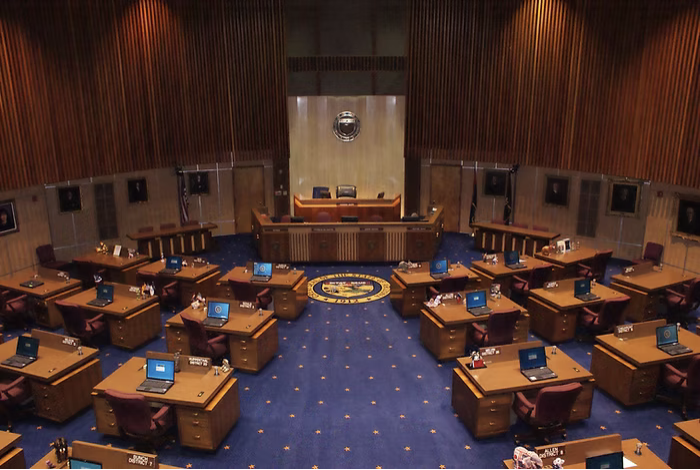
Accomplishments of the 50th Legislature
The Arizona State Senate convened in January with a primary objective to respond to the voter mandates of an improved economy and a responsible approach to the state’s budget crisis. Setting the goals and priorities of the Republican caucus at the onset of session enabled legislators to take proactive measures with efficiency and effectiveness. In addition to enacting an economic recovery package and a gimmick-free budget, the Legislature also achieved major reforms in the state’s retirement system and regulatory structure. A wide range of key policy areas were addressed, all within the traditional 100 day timeline established for the Legislature to conclude its business. Some of the key proposals are outlined as follows:
Budget
2012 State Budget
This session, the Arizona Legislature passed the first truly balanced budget in five years—no gimmicks, no new borrowing, and no new rollovers. The enacted budget made responsible and crucial reductions. These carefully considered reductions were necessary now to avoid even deeper cuts in the near future.
It is imperative that the legislature have oversight of federal funds when making policy and funding decisions. SB 1561/HB 2577 requires budget units to track noncustodial federal monies separately from other accounts or funds. The bill also authorizes the Legislature to appropriate noncustodial federal monies. The Governor, however, vetoed this measure.
Economic Recovery and Tax Reduction
Arizona Competitiveness Package
One of the Legislature’s goals is to re-establish Arizona as a national economic leader. The Arizona Competitiveness Package gets the job done. This proposal includes a mix of targeted business incentives and broad tax reforms designed to reinvigorate Arizona’s economy in order to create jobs. The tax reductions are a step in the right direction for attracting and retaining businesses. The Arizona Commerce Department is replaced with the Arizona Commerce Authority, a public-private board comprised of Arizona leaders. The package includes a deal closing fund, a quality jobs program, and a job training program. Multi-state corporations in Arizona will see their sales factor move from 80% to 100%. Corporate income taxes are cut from 6.96% to 4.9%. Property taxes are cut, with Class 1 assessment ratio reduced from 20% to 18%. There is an additional 5% accelerated depreciation schedule for prospective acquisitions of commercial personal property.
Invest Arizona
A perfect complement to the Arizona Competitiveness Package, SB 1041 makes the state one of the most aggressive in America for luring new companies. It provides tax credits to benefit new and expanding companies. The measure requires significant reinvestment in the state through new capital expansion and improvements to existing infrastructure, which will additionally spur job growth. Incentives are not dependent on the type of industry, size of company, or whether they are rural or urban. The bill is intended to attract all types of industries to bring new technology and innovation to Arizona.
Pension Reform
The State Retirement System has been headed for collapse. SB 1609 made the necessary reforms to keep the system afloat. It maintains generous benefits for employees while strengthening the funded status of the state retirement plans. For the Public Safety Personnel Retirement System, SB 1609 reforms the cost-of-living-adjustment (benefit increase) mechanism to better insulate from volatile market performance, asks employees to contribute a reasonable amount for their retirement benefits and phases out the controversial DROP Program. For employees in the state retirement plan (ASRS), the “points” system is eliminated and age thresholds for retirement are established. For all retirement plans, SB 1609 prohibits a person convicted of a felony involving the person’s official duties from being able to collect a pension and reforms the service purchase process
Better Business Practices
The Legislature made great strides in improving the workers compensation system. HB 2584 created a pilot program for self-insured employers to manage their health care costs by directing injured employees to physicians within their network of providers. This one year program will allow employers to demonstrate to the Industrial Commission of Arizona (ICA) that they can contain costs, improve the quality health care their employees deserve and show better return to work outcomes. While it is necessary to provide long-term medical care for injured workers, oftentimes questionable uses of controlled substances have remained unchecked due to statutory prohibitions. HB 2616 allows interested parties to request supporting medical information (to be submitted to theICA) regarding the use of narcotics, particularly opium based controlled substances that exceed normal doses or appropriate use. Employers can request a change of physician if they don’t comply with the reporting requirements.
The voter approved Medical Marijuana Act created certain ambiguities between patient rights and employer rights in addressing drug use on the job to ensure worker safety. HB 2541 as amended in the Senate would allow an employer to exclude an employee who is a medical marijuana patient from performing safety sensitive jobs, reassign the employee to another position or place the employee on paid or unpaid leave if an employee used, possessed or was impaired by drugs during employment hours. Employers will have access to the medical marijuana verification system to confirm that employees hold a valid registry identification card.
HB 2619 will avert a potentially significant federal unemployment insurance (UI) tax increase onArizona businesses. Reeling from an economy with an unemployment rate that has not improved over the last several years, Arizona had depleted its unemployment insurance fund and borrowed from the US Department of Labor to pay benefits to unemployed workers If businesses do not pay off the balance of an interest free loan from the federal government by 2012, they could risk double jeopardy and see an increase in costs rise from the current tax rate of 0.8% up to 4.1%.
SB 1363 gave business owners relief by prohibiting protesters from obstructing entrance to the workplace, making threats to a person entering or leaving a business and assembling in an un-peaceful manner. Businesses may post a trespass policy publicly with the Secretary of State, which would be accessible to law enforcement. Should business property rights be hindered by picketing, enforcement actions could be taken.
Being a Right to Work state, it is not appropriate for government entities to impose terms of union collective bargaining agreements in the public bidding process. SB 1403 prevents state agencies, local governments and the Arizona Corporation Commission (ACC) from conditioning the award of contracts on the demands of unions in project labor agreements. Businesses should not have to add to the costs of a project, particularly using taxpayer money, because government dictated how a project is completed, with whom at what cost.
SB 1365, the Paycheck Protection Act, requires public and private employers to obtain authorization from employees prior to deducting any payment from an employee’s check for political purposes. If an employer disregards this direction, the employer is subject to a civil penalty of at least $10K.
Illegal Immigration/Border Security
Strengthening Arizona’s immigration laws and fortifying access to services and government authorized identification have been top legislative priorities. HB 2102 requires an individual to present a government issued document that contains the individual’s photograph in order to obtain a license to operate a business, perform a professional service that requires a license, or to obtain fingerprint clearance. In that regard, SB 1465 will prohibit the acceptance of consular identification cards as a valid form of identification. This is intended to curtail use of this form of identification in order to derive public benefits in this country.
Enforcing laws against human smuggling operations is another important measure in containing the state’s ongoing immigration problem. While the Legislature has already imposed stiff penalties against human smugglers and businesses and individuals who facilitate illegal immigration by selling or leasing properties used as drop houses, HB 2405/SB1368 lengthens the sentencing for these felony offenses, without probation, pardon or release until the full term is served.
Frustrated by the lack of federal response toArizona’s illegal immigration problem, legislators have responded through resolutions seeking consideration of possible solutions to address illegal border crossings and the economic impact on the state. Examples include asking the US Department of Labor to establish a daily commuter worker pilot program and implementing a comprehensive border security plan. Better use of electronic surveillance, an increase in Border Patrol agents and improved/expedited prosecution of crimes committed by illegal aliens are excellent first steps to resolving a significant national challenge.
Illegal immigration has placed a tremendous financial burden on the state’s prison system. SB 1046 requires Immigration and Customs and Enforcement (ICE) to take custody of a minor for immigration proceedings and also directs the state’s juvenile corrections system to notify ICE if juvenile offenders who have been previously discharged to return to the United States without legal authorization.
Arizona enacted comprehensive immigration reform in 2010 with the passage of SB 1070. The landmark legislation immediately met legal challenges and a subsequent court ruling imposed an injunction on key provisions of the law. It is anticipated that the legal challenges will ultimately be considered by the Supreme Court. As such, the Legislature saw fit to permit the Speaker of the House and the Senate President to enjoin in the legal proceedings to offer proper perspective on the legislation and represent their respective chambers in court. This legislation was upheld in federal court, allowing the Legislature a seat at the legal table.
Using private funds, SB1406 allows the Governor to enter into an interstate compact to create a border fence along the Arizona-Mexico border. The fence would be located on private, state or federal property, if permitted.
Arizonavoters will have a say next year on an important issue. SCR 1020 asks voters to enact the “Crime Victims Protection Act”, which ensures crime victims are not liable for damages incurred by a person injured during the commission of a felony. Illegal immigrants should not be able to get punitive damages.
There has been ongoing discussion at the state and federal level as to what level of engagement the National Guard should have along Arizona’s borders. Current law acknowledges the Arizona National Guard as a militia that can be called into service, and the Arizona State Guard, which can be organized and also placed into action. SB 1495 empowers the Governor to solidify the Arizona State Guard utilizing unused monies appropriated to the National Guard to build a stronger presence along the border to enforce immigration laws. SB1495 allows the Governor to establish the Arizona State Guard for any reason the Governor considers necessary.
Education Reform
The Education Relief Act is a wide-ranging education bill that promotes efficiency by giving schools flexibility, cutting red tape and freeing up dollars for the classroom. SB 1263 maintains funding in the classroom site fund, encourages electronic record keeping, and gives the State Board for Charter Schools the ability to establish a fund for approved gifts or grants.
The Dropout Recovery Program is established with SB1303, which helps high school students who have dropped out of school find a flexible option to earn their diploma.
As part of a school improvement plan for an underperforming school, SB 2706 directs the State Board of Education to implement guidelines for supplementary training in reading instruction for teachers who teach kindergarten through grade three.
Parents want to be informed about what is being taught in their child’s school. SB 1453 establishes parental consent in the course content for public schools. Parents have the option to request alternative assignments for their children if the parent deems the material unfit or inappropriate.
In order to protect young athletes from incurring additional head injuries during a school athletic event, the Legislature passed SB 1521. It requires school district governing boards to implement enhanced policies and procedures regarding concussions and head injuries of students participating in school-sponsored athletic activities.
Arizona Empowerment Scholarships are created in SB 1553 These accounts are for students with a qualifying disability, consisting of 90% of the base level support for that particular student. This bill helps to establish opportunities that will highly benefit a disabled student’s education.
For some school districts, unification and consolidation provides the best remedy. HB 2219 creates a joint legislative study committee to examine unification and consolidation of school districts. Unification can greatly reduce waste in school districts and save taxpayer dollars.
During these hard economic times, it is important for schools to spend unencumbered funds where they are needed most. HB 2301 lifts restrictions placed on extracurricular activity funds and allows schools to spend 50% of that money on short-term capital items.
Arizona is doing all it can to make higher education affordable for our nation’s veterans. SB1223/HB2410 grants in-state student status for the purposes of tuition at any Arizona public university or community college to any person honorably discharged from the United Stated Armed Forces and their immediate family.
Judicial Reform
The issue of judicial reform will go to the voters. SCR 1001 asks the people of Arizona to approve necessary changes to the judicial merit selection and retention system. It provides more options to the Governor in appointing judges by expanding the list of qualified applicants. It extends judicial terms of office, increases the retirement age for judges and narrows the influence of the State Bar in the nomination process for judges. Additionally, it improves accountability by providing a central place for citizens to access court decisions and makes the retention process more transparent through additional public hearings.
The Legislature also improved the probate process. SB1499 provides transparency, accountability and protection for the most vulnerable Arizonans. It places reasonable time limits on how long a professional has to submit bills, requires disclosure of compensation, outlines factors for determining the extent to which compensation is appropriate and allows the court to sanction parties for engaging in frivolous legal actions at the expense of a ward. The bill requires training for judges and commissioners on probate cases, specifies the duties and responsibilities a fiduciary must have to the person under protection and requires the court to substitute a guardian/conservator if it is in the person’s best interest, instead of requiring a higher threshold for removal.
Healthcare
HB 2620 moves the current system of medical information sharing into a new era that will improve efficiencies in the delivery of health care. Creating a Health Information Organization that will manage medical records with proper securities in place can benefit providers and patients alike by reducing paperwork and medical errors, decreasing health care costs by eliminating unnecessary diagnostic testing and assuring that health care providers have accurate and timely information. A critical element of the legislation is to provide individuals the right to opt out of sharing their personal medical history, or enabling them to select which types of medical information can be shared among providers and insurers.
In order to break commercial barriers and allow Arizona consumers to obtain affordable insurance, SB 1593 allows insurance companies from other states to register with Arizona’s Department of Insurance and offer health care coverage as long as they meet the benefit requirements of the state where they are headquartered. Arizona insurers can compete with these companies, as they will also be able to match the same level of coverage offered by out of state insurers. Fostering healthy competition in this market has been a much sought after goal among our legislators to mitigate the skyrocketing costs of health care.
Health Savings Accounts (HSAs) are making a comeback in the health care arena. Employers and employees are finding it advantageous to manage their health care expenses and be responsible for their own health care decisions. With state budgets under duress, many states are looking at HSAs as a model for providing health care benefits. HB 2556 allows individual and corporate income tax credits for employers who provide qualified health insurance plans to their employees beginning in TY 2012.
2nd Amendment Rights
The Firearms Omnibus, SB 1201, prevents the disarming of citizens in public establishments unless the establishment itself is secured (law enforcement or an armed security officer is present and metal detectors or x-ray machines are in use). The facility must also be in compliance with posting and locker requirements. SB 1201 affirms the rights of private property owners to restrict weapons on their property if it is not being used for a government purpose.
Second Amendment rights don’t end on a university campus. SB 1467 prohibits the governing board of an educational institution from adopting or enforcing any policy or rule prohibiting the lawful possession or carrying of a weapon on a public right-of-way. The Governor, however, vetoed this measure.
HB 2645 permits a person found to be a prohibited possessor of a firearm to petition the court to restore the person’s right to own a firearm, and stipulates that a retired peace officer may not be prohibited from carrying a firearm, with exceptions
SB 1610 establishes the Colt Single Action Army Revolver as the state firearm.
Tort Reform
Oftentimes the cost of litigation, particularly in the appeals process, is too steep for a defendant to pursue their just course of action. In order to appeal, they must post an appeal bond equal to or higher than the judgment awarded in the trial. SB 1212 sets a cap on the appeal bond to be either 55% of the appellant’s net worth or $25 million. This will allow defendants an opportunity to affordably appeal their cases, rather than be forced into a settlement without due process.
Medical malpractice lawsuits remain a deterrent for recruitment and retention of physicians in this state. High medical malpractice insurance premiums and the threat of litigation, particularly within specialty practices, have contributed to the increased use of defensive medicine and ultimately the increased cost of health care. Students enrolled in medical school or health care training programs are sometimes named in malpractice claims, which places an undue burden for the instructional institution to defend not only the facility but the student as well. SB 1429 ensures that a student in an accredited medical training program is not liable for a malpractice action and does not owe an independent duty of care under supervised instruction. The student is not exempt if gross negligence is established, and the bill does not remove liability from the supervising licensed healthcare provider for the student’s actions.
Election Reform
The legislature enacted measures to prevent abuses in our initiative and referendum processes. SB 1167 specifies that a challenge to the legality of a referendum measure or any proposed amendment to the Constitution ordered by the Legislature must be filed within 20 days after the referendum is filed with the Secretary of State if the referendum is filled in an odd numbered year and 10 days after filing in an even numbered year.
SB 1412 strengthens election integrity through the creation of several felony offenses targeting voter fraud, such as selling/offering to sell a ballot, collecting ballots but not turning them in, soliciting ballots by misrepresenting oneself as an election official or engaging in a pattern of ballot fraud. SB 1412 also requires county recorders to provide “tamper evident” envelopes for early ballots and requires any person who brings ten or more early ballots to a polling site to provide photo identification to the election official accepting the ballots.
Election reform will be on the ballot next year. SCR 1025 asks voters to prohibit the state and political subdivisions from using public funds for political campaigns.
SB 1472 requires the Commission on Judicial Performance Review to provide biographical information and a listing of specific published decisions for appellate judges to the Secretary of State for electronic publication at least 60 days before a primary election.
Strengthening the Family
SB 1560 brings transparency and consistency to the foster care process by streamlining processes to allow kids who are in out-of-home placements to find stable, permanent homes. The bill requires DES to provide a 15-day notice prior to a hearing to remove a child from a foster placement if the foster parent is a “prospective permanent placement”. It requires DES to have a court order prior to taking any action that might be inconsistent with the case plan and states that if an alleged parent fails to take a paternity test requested by the court or DES, the failure is prima facie evidence that the child has been abandoned by the alleged parent. SB 1560 also requires providers to make every reasonable effort to schedule appointments, visitations or activities for kids in out-of-home placements outside of school hours.
A number of bills protecting the unborn were passed by the Legislature and signed by the Governor. HB 2416/SB 1246 establishes additional requirements for physicians to obtain the voluntary and informed consent of a woman seeking an abortion and prohibits the use of telemedicine to provide an abortion and defines terms. HB 2384/SB 1265 prohibits qualifying charitable organizations from providing, paying for, promoting, providing coverage of or referrals for abortions. It also prohibits the use or allocation of state university or community college student tuition or fees for training to perform abortions. SB 1030 prohibits a physician’s assistant from prescribing medication intended to perform or induce an abortion.
Privatization
SB 1589 requires the Director of the Arizona Department of Transportation to authorize third parties to perform duties that would normally be performed by the Motor Vehicle Division.
HB 2154, an emergency measure, requires the Arizona Department of Corrections to issue a Request for Information within 30 days after the effective date, for the privatization of all correctional health services, including all medical and dental services. The bill prohibits the ADC from bidding or competing to provide medical services. It mandates that ADC award a contract to the best qualified bidder.
SB 1270 is the Arizona Department of Transportation Omnibus. The bill makes various changes to transportation laws that reduce the bureaucracy and enhance public-private partnerships.
Government Reform
SB 1329 prohibits a taxpayer-paid public employee from lobbying or engaging in political activities during the employee’s work hours. The bill additionally prohibits a public entity from using taxpayer monies for rallies, protests or lobbying efforts (specific exemptions provided for designated public lobbyists and employee representatives).
The Legislature came to the assistance of homeowners in dispute with their Homeowners Associations (HOAs) a few years ago by establishing an administrative hearing process to resolve conflicts. This was intended to mitigate the high cost of litigation that a property owner would have to undertake if they challenged their HOAs. Unfortunately, the Arizona Court of Appeals ruled that the process was unconstitutional, citing that the designation of authority to appeal an HOA ruling through the Department of Fire, Building and Life Safety (DFBLS) was not the appropriate jurisdiction. SB 1148 responds to the court ruling by clarifying in statute that DFBLS does indeed hold an additional purpose of resolving disputes and may interpret statutes relating to common interest communities that may not be directly licensed by that department.
Families need to be better informed on their options when placing loved ones in care facilities. SB 1190 requires the Department of Economic Security to hold meetings with individuals who live in state intermediate care facilities, skilled nursing facilities or intermediate care facilities and their parents/guardians to present all the different placement options, including placement with private service providers.
Arizona’s “Regulatory Bill of Rights” provisions have been extended to local jurisdictions. SB 1598 establishes the rights for people regulated by cities, towns, counties and flood control districts. For too long, cities have dragged their feet in getting the permitting process completed, so businesses can start or expand. This bill ensures fair and open regulation by local governments.
SB 1116 prohibits universities and university employees from engaging in various advocacy-related practices. The bill is specified to restrict universities and personnel from using taxpayer dollars in order to advocate for their specific policy. This legislation does not impact the free exchange of ideas and knowledge in regards to policy issues.
The home building industry is a prime driver of the state’s economy. In an effort to promote economic competitiveness and job creation, the Legislature adopted SB 1525, model legislation to curb impact fee abuse inArizona. At its core, this measure ensures that new homeowners pay their share of the cost of services and ensures that they actually receive those services.
More than 40% of Arizonaland is federal property. SB1546 broadens the classification of property subject to the state’s eminent domain laws by including property possessed by the United States Government. This would open up development to thousands of acres of land inArizona that is currently off limits.
HB 2665 is a regulatory reform measure that assists business owners in complying with environmental laws. Proper notice as to what documents are required for an inspection, what specific allegations a business must address and due process to correct on site deficiencies will reduce ongoing correspondence and legal proceedings with the state’s environmental agency. The bill is intended to improve the business climate in Arizona.
Sentencing Reform
SB 1200 establishes continuous alcohol monitoring as an alternative to part of the jail sentence for a person convicted of specific DUI offenses. This is a cost-effective way to manage offenders while ensuring public safety. There are incentives for DUI offenders to get an ignition interlock device and to comply with post-sentencing DUI requirements through reductions in the amount of time that they are subject to an ignition interlock device. The bill allows for the electronic submission of administrative suspension materials and makes numerous other DUI-related statutory changes.
Governor Signs Sen. Allen’s Gila College Bill
Arizona Governor Jan Brewer last week signed Senate Bill 1213 into law. The measure, which had been modified several times, was sponsored by Republican Senator Sylvia Allen. It allows the Gila Community College District to become independent from Eastern Arizona College at Thatcher. The local college district presently has a contract with EAC for operating college campuses at Globe, Payson and Safford.
Click here for full article:
http://www.silverbelt.com/v2_news_articles.php?heading=0&page=72&story_id=2624
Sen. Rich Crandall Talks Education Legislation on Horizon
Sen. Rich Crandall was on Horizon last night to talk about budget cuts and other legislation passed this session regarding public education.
President Pearce Sees Brighter Days Ahead for Arizona
An op-ed written by President Pearce and Speaker Adams was published in the Arizona Republic this morning. You can read it below:
“If you had told Arizonans in January that the Legislature would pass a truly balanced budget, save a state retirement system on the verge of collapse, inject millions of dollars into the economy with a major Jobs Bills, and do it all in 100 days, it would have seemed like a pretty tall order. But your Legislature did just that in this Centennial Session.
The challenges were enormous as we began the 50th Regular Session. Arizona had a 26 year high unemployment rate, a billion-dollar budget deficit, and we were spending much more than we were bringing in. Republican leadership in the House and Senate, with the support of Governor Brewer, knew we couldn’t go on like this, or we would risk the financial future of our children and grandchildren. So we committed to turning Arizona around.
The result of that commitment: the first balanced budget in five years, with no new gimmicks, no new rollovers and no new borrowing. It was done in the worst economic climate most of us have lived through. Lawmakers could have taken the easy route and relied on more games, but we knew voters sent us here to make tough decisions.
We also knew going into the year that we needed to create jobs in this state if we were ever going to see brighter days. That’s why we passed a historic and compressive Jobs Bill in the first 40 days of the session that represents the largest permanent tax cut in Arizona history.
For years, politicians had kicked the can down the road, refusing to address soaring entitlement spending and flaws in our vulnerable pension system. Well, we took on both.
In fact, our pension system was so upside-down that our commitments to teachers, firemen and police officers were in grave jeopardy. Under our comprehensive plan, elected officials will pay more for our retirement. We’ve also done our best to block the potential for people to abuse the system through double-dipping and other schemes revealed in a series by the Arizona Republic.
Standing up to the Obama administration, we are working to renegotiate our Medicaid program, which is more generous than 44 states, has more than 1 in 5 Arizonans on medical welfare and will explode like a time bomb under Obamacare if we don’t reform it now.
We did all this while also addressing border security and violent crime in our neighborhoods, and even passing legislation to give parents more choices in education.
Our problems aren’t all solved. There’s still plenty of work to do and lots of tough decisions to come in the months and years ahead.
But by telling the truth to the people of Arizona and making bold decisions over the last 100 days, we are one giant step closer to brighter days for the great state of Arizona.”

Education Relief Act Awaiting Governor’s Signature
The Arizona State Senate on Tuesday passed SB 1263, the Education Relief Act, after being passed by the House on Monday, sending it to the Governor for her signature. SB 1263, sponsored by Mesa Republican Rich Crandall, is a wide-ranging education bill that encourages efficiency by giving schools flexibility, cutting red tape, and freeing up dollars for the classroom.
“If signed by the Governor, SB 1263 will give much needed regulatory relief to school districts across the state, but more importantly, the bill maintains millions of dollars in funding for teachers and the classroom for the coming school year,” says Sen. Crandall, the Senate Education Committee Chair.
“SB 1263 is very comprehensive. It provides some minor relief, such as the ability to maintain electronic records instead of paper copies, but there are also major items included such as maintaining funding in the classroom site fund,” says Janice Palmer, Director of Government Relations for the Arizona School Boards Association. “Probably every district in the state will benefit from some provision included in SB 1263.” says Palmer.
Vail School DistrictSuperintendent Calvin Baker is an enthusiastic supporter of SB 1263. “The most significant provision in the bill for our district is the leveling of the Classroom Site Fund. This is going to protect $350,000 worth of teachers’ base pay. With teachers already taking a hit, protecting them from a second hit is essential, and it is contingent upon the Governor’s signature,” says Superintendent Baker.
The bill is also being praised for its innovation in moving toward an electronic payment system with County School Superintendents. “The ability to process warrants electronically makes sense. Our schools are struggling just to find enough space to file public records, and with this bill, storage will not be an issue. These may seem like small changes, but they add up and are extremely vital for streamlining and efficiency in schools,” says Baker.
Becky Hill, education lobbyist for Hill Advocacy, notes that although some of the bill’s provisions seem small, “every little bit helps. The provisions of this bill pull back on unnecessary tasks that are often unrelated to school, creating efficiency in the districts by saving time and money at a time when revenues are already so tight.”
One other significant provision of the Education Relief Act is the temporary ability to increase bonding capacity for maintenance, repairs and construction of schools. “This bill makes up for a promise a previous legislature made that we haven’t been able to keep. In 1998, the state settled a lawsuit on school construction by agreeing to pay for all future construction, repairs and maintenance of schools out of the General Fund,” says Sen. Crandall. He continues, “Because of our economic situation, we have not funded this obligation for the last four years, and we probably won’t for the next few. For those districts that already have a voter approved bond, we provide them with some of the flexibility they used to have before the 1998 lawsuit. It’s the right thing to do.”
The bill will also give the State Board for Charter Schools the ability to establish a fund for approved gifts or grants in the form of money or property.
Governor Brewer has this week to act on signing the measure.

Sen. Melvin Defends Votes on Budget
I appreciate the opportunity to defend myself and respond to your newspaper’s indictment of my votes in favor of our state’s budget.
You lament the cuts that have been made and the fact that I did not pursue higher taxes as a solution to our state’s budget woes. You suggest that letting criminals out of jail earlier would save us money. And you refer again and again to “the children” as victims of the budget that was passed, particularly in the area of education.
Your advocacy for liberal solutions is not a surprise. You have endorsed my liberal opponents in every race I have ever run. You were a cheerleader for the big-spending policies of then-Gov. Janet Napolitano that dug the hole that Arizona now finds itself in. You have a knee-jerk reaction against the education reforms that would provide parents with more and better choices for their children’s education, denying them a better education for less money.
You ignore the inefficiencies that are present in our university systems that increase the cost of an education without improving the quality of that education. In many cases, these are expenses that often have nothing to do with the education of the students.
The facts are that Arizona has, for the first time in a long time, passed a budget that is honest, gimmick-free, and balanced. This is what the voters demanded, it is what we campaigned on, and it is what we were elected to do.
Your newspaper disagreed with the voters and their choices in almost every race, but today’s economic environment demands that government’s insatiable desire for taxpayer dollars be tamed and that fiscal sanity is finally restored to the public arena. Every two years the Democratic candidates for office talk about raising taxes as a core pillar of their platform. The voters continue to reject that plan because they are already overtaxed in a dismal economic environment.
We would all be better off if the politicians in Washington, D.C., took their responsibility to balance the budget as seriously as we did here in Arizona. If our economy improves and our tax receipts exceed projections then we will certainly be revisiting some of the tougher cuts that we have had to make. Until then, the East Valley Tribune had it right in their editorial when they wrote about the budget, “Whether you’re a big corporation, a small business, a newspaper or the state government, the amount of money going out cannot be greater than what’s coming in. That’s Economics 101.”
They concluded, “The Legislature’s actions aren’t going to be popular, but they are necessary to reverse government’s free-spending ways of the last decade and keep our state out of debt.”
Sen. Allen on AZ’s Balanced Budget
Friday we passed the final budget for Fiscal Year 2012 – a truly balanced budget, something we haven’t had in five years. There are no gimmicks, no rollovers, and no borrowing. Senate leadership stood firm on our commitment to not allow accounting tricks in the budget. Borrowing simply increases the hole we are in and passes the buck to future legislatures and generations. These difficult but necessary decisions on reductions provide the framework for Ari zona ’s future prosperity.
In the November elections, the public made it clear that they expected the state to balance the books and not push the tough decisions down the road. That is what we did and we did the right thing for Arizona and the right thing for all our citizens.
Click here for full article:
Pres. Pearce’s Letter to Chamber of Commerce President
Dear Todd,
Thank you for your letter of March 14th and your willingness to dialogue on the issues that face our great state. We have many areas of agreement and a few areas of profound disagreement, but I believe our disagreement is more a result of our responsibilities than any ideology. Like you I love Arizona and America.
Many of you are CEO’s or are in senior management positions of major corporations. Your responsibilities are to your shareholders and your employees. As a State Senator from Legislative District 18 my responsibilities are to the people of my district, the Constitution and the law. As the President of Arizona’s State Senate my responsibilities are to the people of this great state and to the men and women who serve with me in this body.
From your position, and as you articulated in your letter, your concerns deal with practical and almost entirely fiscal concerns. From your desire to focus on Arizona’s structural deficit and economic environment, to lamenting the costs your companies suffered–ostensibly as a result of boycotts against our state resulting from legislation passed in previous years.
Of course the job of an elected official is neatly and adequate defined by an oath of office that we take, in a practice that certainly does not exist in your own professions. Before we can begin to serve in this capacity, we pledge that we:
“do solemnly swear that I will support the Constitution of the United States and the Constitution and laws of the State of Arizona; that I will bear true faith and allegiance to the same, and defend them against all enemies, foreign and domestic, and that I will faithfully and impartially discharge the duties of the office of State Senator according to the best of my ability, so help me God.”
As you can tell, it is a much broader fiduciary responsibility that we are tasked with.
As mentioned before, the good news is that we have several areas that we do agree on. We all agree that Arizona must address its structural deficit and insure a strong economic environment. Your letter gives the sense that we only have time to accomplish these tasks if we are not side-tracked by efforts to deal with illegal immigration, but as the already completed passage of the Jobs Bill shows (which included the largest tax cuts in state history), your Legislature is capable of making progress on multiple fronts at the same time. We are also hard at work on producing a real balanced budget that, for the first time in far too many years, will not rely on gimmicks or gadgets to balance. We are all as excited as you are about that and the important signals it sends to the job creators among us.
Demands on our respective time makes it all but impossible for me to address, in this letter, the folly of sacrificing our state’s sovereignty or of waiting for the federal government to act on a matter that they have refused to take serious action on for so many years, particularly when the President and his cabinet members have made it clear that the steps they prefer would only serve to make the problem worse. And you are likely already aware that Arizona has inherent authority and responsibility to enforce immigration laws — the states have never been pre-empted from enforcement of immigration laws, it has always been a joint responsibility.
But time does allow, and it is important to realize that, contrary to the claim in your letter, Arizona is not going it alone. Nearly half of the states in this great nation are now debating legislation that mirrors our SB1070. More than a dozen states are currently debating legislation that would prompt the Supreme Court to reaffirm the original and proper intent of the 14th Amendment. We are most definitely not alone.
The end of your letter also offers a false choice between proceeding with our own legislation OR pressing the federal government for meaningful reform. In fact, we have been pressing for meaningful reform (enforcement) for years, and we have been ignored. Doing what we can here to deal with problems while also pressing the Federal Government is the very definition of “doing all that we can.”
Your letter gives the sense that the Legislature has been doing well on this topic but that we have finally gone too far, thus necessitating a call from the business community to leave well enough alone and let the federal government handle it from here. Yet as I look at the names and signatures on the letter I do not recognize anyone who has supported any of the efforts we have made over the last nearly ten years. I do see names of those who have opposed many of the efforts we have made. If we are to be honest with each other, and we must, there are many among you who have long fought against each and every effort we have made to deal with the epic problems we face, and your call to cease and desist is neither new nor the result of any recent activity or impact.
Yet look at the progress that Arizona has made as a result of the steps we have taken. Since we have begun tackling these problems — getting Americans back to work, stopping the abuse of our welfare system, demanding our laws be enforced, and proving that Attrition by Enforcement actually works:
· We have had between 100,000 and 200,000 illegal aliens leave the state voluntarily — that means jobs for Americans and a huge reduction in costs to Arizona taxpayers.
· We have had a reduction in violent crime of over 3 times the national average.
· For the first time in state history we have a declining prison population and similar declines in our county jail populations, saving millions of dollars while creating safer neighborhoods.
· We have saved over $400 million in K-12 spending because of declining enrollment, and those savings do not yet include the 2010 numbers.
In spite of the progress made, our work is not yet done. Please allow me to bring to the attention of some of my constituents (all of you), the concerns and suffering of so many of my other constituents:
· We still spend $2.7 Billion annually to educate, medicate and incarcerate our illegal population – remember those numbers when you lament cuts we must make to state services as a result of our budget deficit.
· We are dealing with beheadings in Chandler and contract killings in Casa Grande.
· 12 brave Phoenix Police officers have been killed or maimed by illegal aliens, as well as Robert Krentz, Agent Brian Terry, DPS Officer Martin, etc.
· Countless citizens have also been killed or maimed by illegal aliens.
· There are thousands of shattered lives left behind after unspeakable rapes, kidnappings, assaults, and other violent crimes being committed by illegal aliens.
· Thousands of law-abiding, hard-working Arizonans (and their families) are unable to find work because they cannot compete in labor markets that have been undercut by illegal labor
· And much, much more…
Can you imagine how impressive a letter signed by all of those people would be? The media would never report on it, but you can be sure that their letter would implore me to take my oath of office seriously and my moral responsibility seriously and to do everything within my power to protect our people and uphold our laws.
Nor are you the only business owners I hear from. I hear regularly from hundreds of business owners who struggle to compete against competitors who gain an unfair advantage by employing those here illegally. It distorts the marketplace and punishes good people while rewarding cheats and criminals. I assume that we can all agree that this is not a just or healthy process or outcome, and those who are breaking the law should be punished for it.
You will understand that my oath of office, as well as my love for this state and its people, means that I may not and will not ignore the damages resulting from illegal immigration. I must also fulfill my duty to the lawful citizens and residents of this great state who have a Constitutional right to protection from those who break our laws.
Which brings us to the trickiest part of being a legislator — finding the compromise that allows the most progress to be made for everyone. I have no doubt that we will pass many of the bills we have been debating, although I am certain that each will be adjusted in some manner to address the concerns that you, other groups and individuals, and other legislators have. For that reason, it is important that you and everyone else stays involved and remains vocal.
Constructive advice/criticism is fine with me and it will always be welcome. But we need to have agreement from the outset that our goal is a strong state, with a strong economy, with proper respect for the rule of law, and a genuine commitment to protecting the lives, jobs, and long-term well-being of every Arizonan person and company.
So let us recommit to doing everything that we can for Arizona and its law-abiding people and businesses.
Let us pledge to remain in contact and to keep the lines of communication open. Let us rededicate ourselves to being responsible in our choice of words and in our use of rhetoric.
Then, we can and most certainly will get results.
Please distribute copies of this letter to all the businesses that signed the Chamber’s letter.
Sincerely,
RUSSELL PEARCE
President of the Senate

Sen. Gray Earns NHTSA Public Service Award
As Chair of the Senate’s Public Safety and Human Services Committee, Sen. Linda Gray has sponsored her fair share of legislation aimed at protecting and preserving the well-being and safety of Arizona’s citizens. Most notable, perhaps, is Sen. Gray’s past and present support of strengthened DUI laws, including her primary sponsorship of this session’s SB 1200. Such legislation has earned her several awards from Mothers Against Drunk Driving (MADD), and is now garnering her recognition from the National Highway Traffic Safety Administration.
NHTSA has selected the Senator to receive its prestigious Award for Public Service as a result of her commitment to making our highways safer. According to the administration, highway fatalities are at their lowest number since 1950, thanks in large part to a significant reduction in alcohol-related driving fatalities. NHTSA recognizes that this accomplishment is due in large part to the dedication of highway safety leaders such as Sen. Gray.
“I am honored to be recognized by the NHTSA. The true reward here is seeing a remarkable decline in highway fatalities, especially the 46% reduction in DUI fatalities. The ignition interlock data shows us that the device has prevented a drunk driver from starting their vehicle literally thousands of times”. There is still a lot of work that needs to be done to protect and maintain public safety on our roadways, and I intend to continue working tirelessly toward this cause.”
The NHTSA award luncheon will be held at noon on Monday, March 28, during the 2011 Lifesavers Conference at the Phoenix Convention Center.